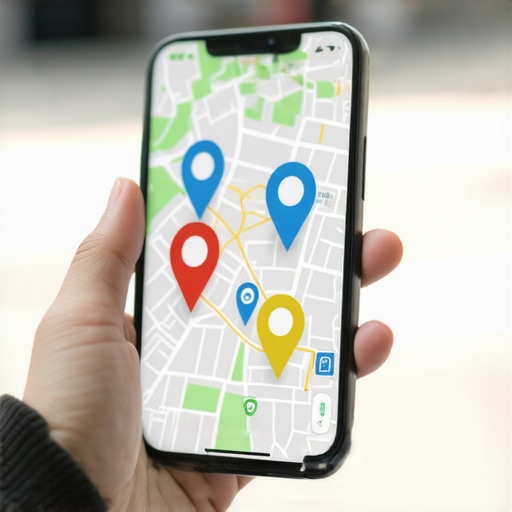
I spent three months staring at my Google Business Profile like it was a broken toaster. I had the reviews, I had the right categories, but my phone just wouldn’t ring. Meanwhile, the guy three blocks over—whose shop is honestly a bit of a mess—was absolutely dominating the local 3-pack. It drove me crazy until I actually looked at our listings side-by-side. My profile was ‘perfect’ and sterile. His was a chaotic, beautiful mess of grainy, real-life customer photos showing exactly what it was like to be in his shop. That’s when the lightbulb finally flickered on. I was trying to win at map pack seo by being corporate, when I should have been being local.
Stop Hiding Behind Professional Stock Photography
We’ve all been told that high-res, professional shots are the way to go. And while they look nice on a brochure, Google’s algorithm and—more importantly—your neighbors want to see the truth. When I finally started encouraging my regulars to post their own shots, my google maps optimization efforts actually started to pay off. It turns out, those business photos that were failing to convert were just too fake. I made the mistake of thinking ‘polished’ meant ‘trustworthy’ early on, and it cost me months of traffic. You don’t need a DSLR; you need a customer with a smartphone and a smile.
Does snapping a picture really change where my pin sits?
It sounds a bit like magic, doesn’t it? But there is actual data backing this up. According to research from BrightLocal, businesses with more than 100 images on their Google Business Profile get 520% more calls than the average business. That is not a typo. When you combine that volume with the fact that reviews with photos move the needle significantly more than plain text, you start to see the bridge between ‘just a photo’ and finding a way to rank higher in the 3 pack. Customers aren’t just looking for your address; they are looking for visual proof that you are the real deal. Have you ever felt like you’re doing everything ‘by the book’ but still getting outranked by a messier competitor? It is incredibly frustrating, but the fix is simpler than you think. Today, I am going to show you exactly how to turn those customer snapshots into ranking gold.The first thing you need to realize is that Google is a data-hungry machine, and images are its favorite snack. To truly rank higher in the 3 pack, you have to stop treating your profile like a static yellow pages ad and start treating it like a living social feed. When I finally decided to get serious, I stopped asking customers for ‘a review’ and started asking them to ‘show me what you bought.’ It sounds like a small distinction, but it changed everything. I remember a local boutique owner I worked with who was terrified of her messy back-stock area. We decided to embrace it, posting ‘behind the scenes’ shots of new inventory arriving. Within two weeks, her visibility spiked because she was providing fresh, relevant signals that her competitors—with their three-year-old professional photos—simply weren’t.
Turn Your Customers Into Your Best Content Creators
You cannot be everywhere at once, and frankly, your own photos carry less weight than those from a third party. Google trusts the public more than it trusts you. To win at google maps optimization, you need a steady stream of user-generated content. I’ve found that the best way to do this is to incentivize the action, not the rating. Put a small sign at your register or on your tables that says, ‘Love your look? Post a photo to our Google profile!’ This creates a natural ‘review velocity’ that tells the algorithm your business is currently popular and highly relevant. This is a core part of affordable local SEO services that anyone can do without a marketing budget.
Put the Right Data Behind the Lens
It’s not just about what is in the photo, but the data attached to it. While Google has gotten better at reading the contents of an image using AI, the location data (EXIF data) embedded in a smartphone photo is like a homing beacon for local search. When a customer takes a photo at your shop, that photo is geotaged to your exact coordinates. This is exactly the specific photo metadata that actually helps your local map rank because it confirms to Google that people are physically visiting your location. I once saw a plumber jump from page three to the top of the 3-pack just by having his technicians take a quick snap of the completed job at the customer’s house. It proved he was actually working in the neighborhoods he claimed to serve.
Ditch the Generic Categories to Carve Your Own Path
If you are listed as just a ‘Restaurant’ or ‘Consultant,’ you are fighting a losing battle against the giants. You need to stop using generic categories and get specific. I spent weeks wondering why a client’s specialized Italian deli wasn’t ranking, only to realize they were listed under ‘Grocery Store.’ We changed their primary category to ‘Italian Grocery Store’ and added specific secondary categories for their sandwich counter. Suddenly, they weren’t just another shop; they were the local authority. This is how you optimize your business category for maximum impact.
Update your profile more often than you check your mail
Freshness is a ranking factor that most people ignore. If your last post or photo was from 2022, Google assumes you might be out of business. You need to leverage Google Posts at least once a week. Think of it like a micro-blog. Share a quick update, a new product, or even a ‘photo of the week’ from a customer. This constant activity keeps your pin ‘warm’ in the algorithm’s eyes and ensures you don’t fall victim to the lack of fresh content that sinks so many local listings.
It is easy to get caught up in the basics, but once you start seeing some movement, you hit a plateau that feels impossible to break. Most ‘gurus’ will tell you to just get more reviews, but I have seen businesses with 500 five-star ratings get absolutely crushed by a competitor with 40 reviews and a better technical foundation. The biggest lie in the industry is that you are stuck within a two-mile radius of your office. In my experience, you can actually outrun your physical location if you know how to signal authority correctly.
Don’t let the city center limit your reach
Everyone assumes proximity is an unbreakable wall, but that is a myth that keeps small businesses small. While Google does prefer closer results, the 2023 Whitespark Local Search Ranking Factors study confirmed that ‘on-page signals’ from your actual website are becoming more influential than ever. I have seen shops rank further from their physical office simply because their website content was more geographically relevant than the guy next door. You are likely falling into the hidden proximity trap because your website treats your city like a single point on a map instead of a collection of neighborhoods.
Why are those massive view counts failing to ring your phone?
This is the ‘Oops’ factor that breaks most people’s hearts. You log in to your dashboard, see that your views are up 300%, but your bank account hasn’t noticed. The truth is that profile views do not lead to phone calls if your profile lacks specific trust signals. I once consulted for a law firm that was ‘ranking’ for high-volume keywords, but they were getting zero leads. Why? Because they were stuffing their business name with keywords, which made them look like a spammy lead-gen site rather than a reputable firm. Google might show you, but humans won’t click. If you have ever wondered why your phone stops ringing even when you are in the top 3, you need to look at your conversion elements, not just your rank.
Another common trap is the ‘set it and forget it’ citation mindset. People waste hundreds of dollars on low-quality local directories that do absolutely nothing for their map pin. In reality, you need to identify which local citations actually move the needle. Often, a single link from a local little league sponsorship or a neighborhood news site will do more for your map pack seo than fifty generic ‘Yellow Page’ clones. And whatever you do, never change your primary phone number without a transition plan; I’ve seen map traffic drop instantly because a business broke their NAP (Name, Address, Phone) consistency across the web. Have you ever fallen into this trap or seen your rankings vanish after a small edit? Let me know in the comments below.
Once the initial excitement of seeing your name in the top 3 wears off, the real work of preservation begins. I’ve seen businesses climb to the top of the mountain only to slide right back down because they thought map pack seo was a one-and-done project. It isn’t. You need a way to see exactly where your influence ends, which is why I live and breathe by grid tracking tools. Instead of a single ranking number, these tools give you a multi-point scan of your city. It’s the best way to track your map rank across a whole city because it reveals the ‘shadow zones’ where your competitors are eating your lunch.
The tech that keeps my pin from disappearing
I personally use Local Falcon for my monthly check-ups because it visualizes the proximity filter in a way that spreadsheets just can’t. If I see a cluster of red dots in a nearby neighborhood, I know it’s time to double down on hyperlocal content that mentions that specific area. By seeing the actual reach of your google maps optimization efforts, you can pivot your strategy before your phone stops ringing.
How do I maintain my map rank without losing my mind?
Consistency is your only defense against the inevitable ‘ranking decay.’ You have to realize that every time a competitor gets a new review or updates their site, your relative position is at risk. This is why your map listing needs fresh content every single week. I set a recurring calendar alert for Tuesday mornings to upload one customer-centric photo and one Google Post. It takes ten minutes, but it keeps the ‘freshness’ signal active. Even the experts at Sterling Sky, like the renowned Joy Hawkins, suggest that staying active is one of the few ways to combat the shifting nature of the ‘Vicinity’ update, which tightened the leash on how far a business can rank.
Watch your competitors before they replace you
You aren’t just fighting an algorithm; you’re fighting other business owners who want your phone to stop ringing. One of my favorite advanced moves is to monitor the ‘suggested edits’ on rival listings. People often try to spam their way to the top by adding keywords to their business name. If you catch them, you can fix the suggested edits and level the playing field. This isn’t being petty; it’s protecting your maps visibility from unfair tactics. I also recommend checking your own ‘Questions & Answers’ section every few days. Most owners ignore it, but you can use the QA section to outshine other local listings by answering common customer hurdles before they even call you.
The future of local search is more human than you think
Looking ahead, I predict that AI-driven search—like Google’s SGE—will start prioritizing businesses that have the most ‘human’ signals, like video reviews and direct chat interactions. To truly rank higher in the 3 pack long-term, you need to be more than just a pin; you need to be a resource. Start by going into your Google Business Profile right now and setting up a custom ‘Welcome’ message for your chat feature. It’s an easy win that most of your competitors are too lazy to do, and it shows both Google and your customers that you are ready to help the second they find you.
The One Thing That Actually Broke My Map Plateau
I learned the hard way that authenticity beats perfection every single time. For months, I tried to make my business look like a Fortune 500 company on Google Maps, only to realize that my neighbors weren’t looking for a corporate titan—they were looking for a local solution. One of the biggest shifts came when I realized why high ratings alone will not move your map pin. You need actual engagement and localized relevance to bridge that gap. I stopped chasing the ‘perfect’ score and started chasing real-world interactions that Google could see and measure.
- Stop obsessing over a perfect 5.0 score; a 4.8 with high engagement looks much more authentic to a human.
- Stop ignoring the ‘neighborhood’ aspect; Google knows if you’re actually participating in the community or just hovering over it.
- Realize that why generic SEO advice is ruining your local map rankings is usually because it ignores the physical location element entirely.
My Personal Local SEO Field Kit
You don’t need a massive budget to see results, but you do need the right lens to view your progress. Here are the three resources I check every single week to ensure my google maps optimization is actually working:
- Local Falcon: This is non-negotiable for visualizing your rank across a grid. It stops you from guessing and shows you the exact street where your visibility drops off.
- BrightLocal’s Research: They provide the best data on consumer behavior, which helps me understand which photos or reviews actually drive the most phone calls.
- Sterling Sky (Joy Hawkins): When an algorithm update hits, this is my first stop for honest, data-backed analysis on how the Map Pack is shifting.
Build Something That Google Can’t Ignore
At the end of the day, your Google Business Profile is a digital storefront. If you treat it with the same care you treat your physical location, the rankings will follow. Don’t be afraid of the ‘messy’ parts of your business; often, those are the exact trust signals that lead to a phone call. Focus on a simple local link strategy that moves your map pin fast and keep providing value to your customers. Your local visibility isn’t just about a pin on a map; it’s about being the most helpful, visible option in your city. Have you ever noticed a ‘messy’ competitor outranking you, and what’s the one thing you’re going to change on your profile today to beat them? Let me know in the comments!