I remember sitting in my office three years ago, staring at a map of my city where my business was buried on page four. I’d just bought a top-tier DSLR camera. I took shots that looked like they belonged in a magazine. I uploaded them to my Google Business Profile and… nothing. Not a single extra phone call. It was soul-crushing. That’s when a friend, who lives and breathes local search, asked me a question that changed everything: ‘What does the file name say, and where does the metadata think you are?’ I had no idea that my beautiful photos were essentially ‘blank’ to the search engine robots. I was failing at the basics of google maps optimization without even knowing it.
Stop Uploading Empty Image Files and Start Ranking
Most people think that simply having a ‘complete’ profile is the goal. I made that same mistake early on. I spent way too much time on aesthetics and zero time on the data that proves to Google that my business is exactly where I say it is. The truth is, your photos carry a hidden layer of information called EXIF data. When this data includes GPS coordinates and optimized descriptions, it acts as a high-frequency beacon for local relevance. If you want to rank higher in the google maps 3 pack today, you have to treat every image like a mini-citation. Today, I’m going to show you exactly which pieces of metadata matter and how to bake them into your workflow without losing your mind. We aren’t just making things look pretty; we are building authority. Have you ever felt like your competitors are winning with much worse photos than yours?
Wait, Is Messing With Photo Data Really Worth the Extra Effort?
I get the skepticism. You’re busy running a business, not a photography studio. You might be thinking that Google is smart enough to just ‘know’ where you are. But here is a surprising fact: According to data analysis by BrightLocal, businesses with more than 100 photos receive significantly more customer actions than those without, but the quality of the signal matters most. When I started out, I uploaded 50 photos of my office in one day, but I didn’t change the file names from ‘IMG_4501.jpg.’ My visibility didn’t move an inch. It was only when I followed the checklist for optimizing profile photos for more clicks with specific location-based data that the phone actually started ringing. This isn’t about gaming the system; it’s about providing the clear, verified signals that map pack seo demands in a crowded market. I’ve seen firsthand why your business photos are failing to attract local leads, and usually, it’s because they are ‘data-silent.’ Let’s change that right now.
Pinpoint Your Location Without Saying a Word
Think of your photo as a letter you’re sending to Google. If there’s no return address, Google doesn’t know where to deliver the credit. This is exactly why geotagging is the first thing I fix. When I worked with a local bakery, they were invisible in search results despite having the best pastries in the city. We took their existing images and embedded the exact latitude and longitude of their storefront using specialized EXIF editors. It’s a simple move that helps you rank higher in the google maps 3 pack today because it removes any ambiguity about where you operate. This postmark proves to the algorithm that you are physically present exactly where you claim to be.
Stop Letting Random Numbers Kill Your Reach
Your camera likes to name files things like ‘DCIM_001.jpg.’ That tells Google nothing. I learned this the hard way with a plumbing client who had hundreds of photos of his work, but none of them were working for him. We spent an afternoon renaming every single one to include the service and the neighborhood, such as ’emergency-drain-cleaning-downtown.jpg.’ This is a fundamental part of map pack seo that most business owners skip because it feels tedious. But here’s the kicker: within three weeks of that update, his phone started ringing for the specific services we named in those files. If you want to enhance maps visibility with proven seo techniques, you must speak the search engine’s language through your file names.
Real Photos Beat Stock Every Single Time
I once saw a law firm use the same stock photo of a gavel that three of their competitors used. Unsurprisingly, their profile felt stale and untrustworthy. Google’s Vision AI is incredibly sophisticated; it can recognize what is in your photo and compare it to others to see if it is original. When you use original, high-quality images of your actual team and office, you’re providing unique trust signals that AI-generated or stock content cannot replicate. I found that how to get more clicks with better map images often boils down to raw authenticity. Authentic photos increase the ‘dwell time’ on your profile, which is a key metric for google maps optimization. People stay longer to look at real faces and real results, signaling to Google that your business is high-quality.
Use Attributes to Fill the Gaps
Metadata isn’t just about coordinates; it’s about the context. Many people don’t realize that you can influence how Google categorizes your business by the tags and descriptions embedded in your photo uploads. I recall a boutique gym that struggled to show up for ‘personal training’ because they only focused on ‘yoga’ in their written profile. We started uploading photos of their weight room with metadata specifically tagged for strength training and athletic coaching. It’s a subtle way to learn how to use attributes to stand out in map searches without stuffing keywords into your business description. By aligning your visual data with the specific categories you want to dominate, you create a cohesive web of relevance that is hard for competitors to beat, making it a cornerstone of a professional seo service local strategy.
While mastering image metadata is a game-changer, I’ve found that even the best photos won’t save you if you’re falling for the most common myth in local search: the proximity trap. Most business owners I talk to are convinced that if they aren’t located in the dead center of downtown, they’ll never reach the top spots. I used to believe this too, until I saw a small landscaping company in the suburbs outrank a massive city-center firm. The secret? They understood that proximity is not the only factor in local ranking. In fact, relevancy and prominence—driven by local backlinks and site authority—often override physical distance.
Stop Obsessing Over the City Center
Everyone tells you to be as close to the ‘centroid’ as possible, but in my experience, building localized authority works much better than trying to move your office. I once helped a client who was stuck just outside the main search radius. Instead of panic-moving, we focused on the proximity filter and why closer isn’t always better. By securing mentions on local neighborhood blogs and news sites, we proved to Google that they were the most relevant choice for the entire region. This is where affordable local seo services to dominate the 3 pack really shine; they focus on building that web of relevance rather than just checking boxes.
Can Your Website Speed Truly Tank Your Map Position?
It sounds like a stretch, but it’s a cold reality. According to a comprehensive study by Whitespark on local search ranking factors, the quality of your linked website is a massive signal for your map placement. If your site takes five seconds to load on a mobile device, Google is less likely to recommend you in the Map Pack. I’ve seen businesses plummet in visibility simply because their landing pages were bloated. You must realize why your website speed affects your google maps placement before you spend another dime on ads. It’s all connected; a slow site creates a poor user experience, which tells the algorithm you aren’t a high-quality lead for their users.

Avoid the Virtual Office Death Trap
Here is a specific warning for anyone trying to ‘shortcut’ their way to a new location: stay away from virtual offices or P.O. boxes. I’ve watched dozens of profiles get suspended overnight because they tried to use a co-working space address without a dedicated office. Google’s AI is now incredibly efficient at cross-referencing street views and business registries. Taking the risk of using virtual offices for local rankings is the fastest way to get your business blacklisted. Instead, focus on authentic growth. Even if your current location isn’t perfect, you can still rank higher in the google maps 3 pack today by focusing on review velocity and consistent engagement.
Consistency Beats Total Volume Every Time
Another common mistake is ‘review blasting’—getting 30 reviews in one week and then nothing for months. This looks suspicious to the algorithm. I’ve found that why review velocity is more important than total count is because it shows your business is currently active and popular. A steady stream of two reviews a week is worth far more than a hundred reviews from three years ago. When you combine this with map pack seo strategies that prioritize ongoing engagement, you create a profile that Google feels safe recommending. Have you ever fallen into the trap of trying to ‘force’ your rankings with a quick fix? Let me know in the comments. Let’s stop chasing shortcuts and start building real google maps optimization that lasts. If you’re feeling stuck, it might be time to look at an seo service local that understands these hidden nuances.
Once you have those hidden nuances dialed in, the real challenge begins: staying there. I’ve seen businesses hit the top spot and think they’re done, only to vanish three months later because they stopped feeding the beast. You need a system that doesn’t feel like a second job. Personally, I rely on a 13×13 grid tracking system rather than a single-point rank checker. If you’re only checking your rank from your office chair, you’re flying blind. You need to see how your visibility bleeds into the surrounding neighborhoods. This is how we use software to spot visibility gaps on maps that would otherwise go unnoticed. I use specific tools to visualize the proximity shrink that happens when a competitor moves in or updates their profile. Joy Hawkins of Sterling Sky recently published research highlighting the massive impact of the openness signal, proving that businesses physically open during the search time get a significant boost. This means your hours of operation aren’t just for customers anymore; they are a live ranking factor. This is exactly the data your map reporting tool is likely ignoring if it isn’t sophisticated enough. 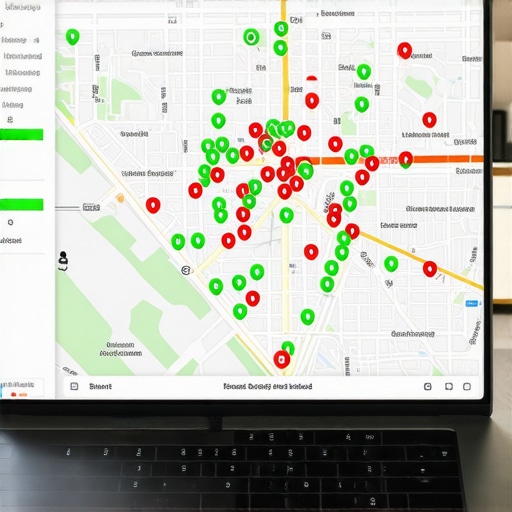
How do I maintain my map position over the long haul?
The answer isn’t a massive overhaul once a year; it is a consistent, low-friction habit. I recommend a simple checklist that takes less than fifteen minutes every Monday. Check your Q&A section, reply to the two newest reviews, and upload one fresh photo from your phone. This creates a heartbeat for your profile. If you feel overwhelmed, start by learning how to audit your business profile in under ten minutes. This quick scan helps you catch errors like wrong pins or holiday hours before they tank your score. Consistency is the secret sauce for google maps optimization because it proves to Google that your business is reliable and currently active.
Stop Your Ranking from Sliding Backwards
Complacency is the number one killer of local leads. When you stop posting, your review velocity drops, and your competitors—who are likely using affordable local seo services to dominate the 3 pack—will eventually nudge you out. I suggest setting a calendar reminder for a specific the weekly routine for dominating your neighborhood 3 pack. This keeps you focused on the high-impact moves rather than getting distracted by vanity metrics.
Prepare for the Shift Toward Visual AI Search
Looking ahead, the landscape is changing fast. I predict that by 2026, Google’s Gemini AI will be the primary way people interact with maps, using ‘visual reasoning’ to recommend businesses. It won’t just look at your keywords; it will look at the background of your photos to verify you actually have the equipment you claim to have. If you want to stay ahead of the curve, you should look into 7 google business profile tips for 2026 to beat local rivals. The future of search is more transparent and data-heavy than ever before. My advice is to try one advanced move this week: go into your profile and add a custom ‘Service’ description for every single item you offer, including the price and a 300-character benefit-driven description. This is the kind of granular data that the AI is hungry for.
Hard Truths from the Map Pack Trenches
Looking back at my failed attempts three years ago, I realized that the biggest barrier wasn’t my competitors; it was my own silence. I wasn’t giving Google the data it needed to trust me. First, I learned that more isn’t always better. Uploading 200 photos with generic names is just digital clutter. I also discovered that why review velocity is more important than total count because it signals your business is alive and thriving right now. Finally, the proximity myth was the hardest to break. You don’t have to be in the center of the city to win; you just have to be the most relevant answer for the user’s specific intent.
The Gear That Keeps My Pin Steady
I don’t leave my rankings to chance anymore. I rely on a few specific resources that have never steered me or my clients wrong. For deep research, I follow the latest case studies from industry leaders who test every theory before publishing. For tracking how my visibility actually looks on the ground, I use grid-based mapping software to find the gaps. If you’re just starting, you should know how to audit your business profile in under ten minutes using simple tools to ensure your foundation is solid. I also swear by a consistent the weekly routine for dominating your neighborhood 3 pack to keep the momentum going without burning out.
Your Journey to the Top Spot Starts Today
Local search isn’t a ‘set it and forget it’ project. It’s a relationship between your business, your customers, and the algorithm. While it might seem technical, the heart of google maps optimization is simply proving you are who you say you are and that you provide real value to your neighborhood. Don’t wait for a perfect moment or a huge budget. Start with your next photo upload or your next review response. If you stay consistent and perhaps leverage affordable local seo services to dominate the 3 pack, you’ll eventually find that you’ve outpaced the giants. Have you ever renamed your photo files before uploading, or is this your first time hearing about the hidden data layer? Let me know below.