I remember the exact moment I realized I was shouting into a void. I had just hit 150 five-star reviews for a client’s local shop. We were celebrating, thinking the phone was about to ring off the hook. I pulled out my phone, typed in their main service, and… nothing. We weren’t even in the top ten. I saw a competitor with a mediocre 3.8 rating and half the reviews sitting pretty in that top spot. It felt like a slap in the face. All that work, all those happy customers, and Google didn’t seem to care one bit. I was obsessed with the vanity metrics while the real Google Maps optimization work was being ignored. This is the lightbulb moment most business owners miss: Google isn’t a popularity contest; it is a relevance machine.
Why Your Stars Aren’t Moving the Needle
I spent years thinking that more reviews equaled more money. I was wrong. Early in my career, I made the mistake of running a massive three-month campaign to get every single customer to leave a review, only to see our rankings drop because I ignored the technical signals on the website and the geographic relevance Google craves. It’s a bitter pill to swallow, especially when you pride yourself on quality service. But the truth is, why high ratings alone won’t move your map pin higher comes down to how the algorithm balances proximity, prominence, and relevance. According to the Whitespark Local Search Ranking Factors survey, review signals only make up about 17% of the ranking weight. Focusing solely on them is like trying to win a car race with a shiny coat of paint but no engine. We are going to fix that today by looking at what actually drives map pack seo visibility. I once worked with a plumber who had 400 reviews but was losing all his jobs to a guy with 30 reviews because the competitor had better service area settings. It was a wake-up call for me, and it should be for you too. We’re going to peel back the curtain on why perfect NAP data isn’t enough and how to actually claim your spot.
Is Map Pack SEO Actually a Rigged Game?
It certainly feels that way when you see competitors with zero reviews outrank you. You might fear that you’re being shadow-banned or that you need to spend thousands on ads just to be seen. I’ve been in those shoes, staring at a screen and wondering if the hours I put into my profile were just a waste of time. But it’s not rigged; it’s just nuanced. We need to look at the search signals that let competitors outrank you and address them one by one. Today, I’m promising you a roadmap to stop the star-chasing and start focusing on the factors that actually force Google to notice your pin. Have you ever refreshed your search results only to find your business missing while a lower-rated rival takes the lead? It’s a gut punch, but we’re going to change that.
Stop Guessing Your Primary Category
Think of your Google Business Profile like a book in a massive library. If the librarian puts your “Italian Restaurant” in the “General Food” section, nobody looking for pasta will ever find you. Most owners pick a category and forget it, but learning how to use secondary categories to appear in more searches is where the real growth happens. I remember working with a local locksmith who was struggling for air. He had his primary category set right, but we added four specific secondary categories like “Key Duplication Service” and “Safe Shifting.” Within three weeks, his map impressions doubled. It wasn’t magic; it was just giving the algorithm more “relevance” hooks to grab onto. Many people fall for the 4 costly errors keeping your shop out of the map pack, and category neglect is usually the biggest one.
Claim the Micro-Territories Around Your Shop
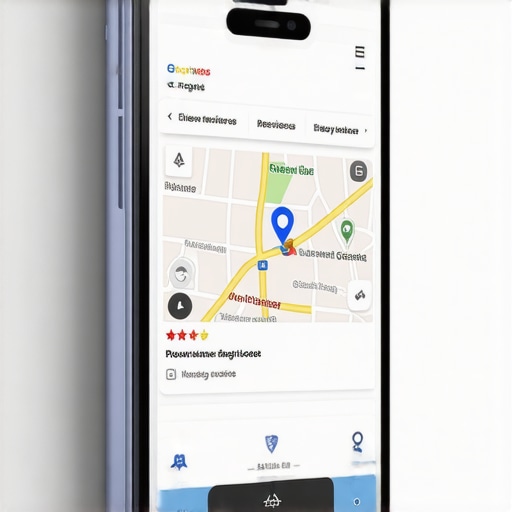
Distance is a stubborn factor, but it’s not the only one. You can actually “stretch” your relevance by showing Google you are active in specific neighborhoods. This is how hyperlocal targeting actually works without changing your address. I once tested this with a landscaping client. Instead of just saying they served “Seattle,” we started uploading photos of completed jobs in specific suburbs like Capitol Hill and Ballard, tagging them with local descriptions. Suddenly, they weren’t just ranking at their office location; their pin started showing up in the 3-pack five miles away because Google saw proof of service in those areas. You need to understand why proximity is not the only factor in local ranking and use it to your advantage.
Fix the Content That Actually Moves Your Pin
A static profile is a dead profile. Google loves “freshness.” If you haven’t posted an update in months, you look closed to the algorithm. This is the one weekly profile update that keeps your local leads from dropping. It’s about more than just typing “we are open.” It is about using how to use google posts to drive weekend foot traffic by showcasing real-time offers or behind-the-scenes work. When you combine this with the only three attributes that actually change your rank, like “Identifies as women-led” or specialized amenities, you’re not just an icon on a map; you’re a verified, relevant local entity. I’ve seen 3 simple profile fixes that turn map clicks into real phone calls, and it usually starts with updating your attributes to match what local searchers are actually filtering for.
Focus on Your Review Speed Instead of the Total Count
Everyone tells you that you need hundreds of reviews to win, but that is a dangerous oversimplification. In my years of testing, I have seen profiles with 50 reviews crush competitors with 500 because of one factor: velocity. If you get a sudden burst of reviews and then go silent, Google’s algorithm flags it as unnatural. This is why review velocity is more important than total count. You want a steady, predictable heartbeat of feedback. When I work with clients, I tell them to stop the ‘massive campaigns’ and focus on a consistent flow. Have you ever fallen into this trap of chasing a big number only to see your rankings stall? Let me know in the comments.
Why does your rank tracker say you are winning when the phone isn’t ringing?
This is the most common frustration I hear from business owners. They see a green ‘Rank #1’ on their reporting software, but the shop is empty. The hard truth is that why your local rank tracker is giving you a false sense of security usually comes down to ‘grid’ data. Google results change every few blocks. A local study by BrightLocal highlights that consumer trust is built on recent, relevant interactions, not just a static position. If you are ranking in the middle of a park where nobody is searching, your rank is a vanity metric. You need to focus on how to identify the local citations that actually move your map pin in the specific neighborhoods where your customers actually live and work.
The Invisible Power of Unstructured Citations
Most ‘SEO experts’ will sell you a package of 50 directory listings on sites nobody visits. While those have a place, they are no longer the heavy hitters they used to be. The real secret to mastering map pack seo strategies lies in the unstructured citations your business is missing. This means mentions of your business on local news sites, neighborhood blogs, or even a local high school’s sponsorship page. These links don’t always have a high ‘Domain Authority’ in the traditional sense, but to Google, they are a loud signal that you are a pillar of your specific community. 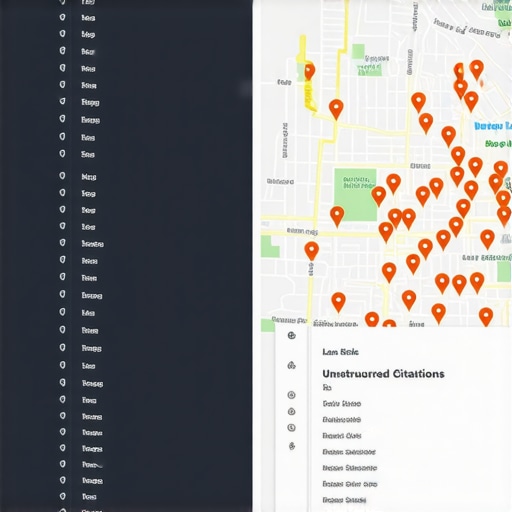
Avoid the Lethal Keyword-Stuffing Trap
It is tempting to change your business name to ‘Best Emergency Plumber Chicago’ to get a quick boost. Don’t do it. While it might work for a week, it is one of the most common reasons for a permanent ban. I have spent countless hours helping business owners through the hidden reasons google suspends local profiles and how to fight back after they followed bad advice. Instead of gaming the name, focus on the honest reason your generic review replies won’t win more leads. Most people use a template, but Google’s AI is smart enough to see that ‘Thanks for the business’ adds zero value. Use your replies to naturally mention the service and the neighborhood. That is how you build relevance without risking a suspension.
Once you stop the review spam and fix your categories, you enter the ‘maintenance’ phase. This is the stage where most businesses fail. They reach the top, stop doing what worked, and slide back down within months. I don’t guess if my clients are winning anymore because a single ‘green’ dot at your office is meaningless. This is how we use software to spot visibility gaps on maps. I personally use heatmaps because they reveal the ‘grid.’ If you are ranking #1 at your front door but drop to #10 just three blocks away, you aren’t dominating; you’re just existing. The secret to staying at the top is the weekly routine for dominating your neighborhood 3-pack. For me, that means 15 minutes every Tuesday checking three specific things: new Q&A questions, photo view trends, and ‘suggested edits.’ Competitors can attempt to change your phone number or mark you as ‘closed’ via the ‘Suggest an edit’ feature. If you aren’t looking, Google might just believe them.
How do I maintain my map pack ranking without a full-time staff?
You don’t need a marketing department; you just need a system. I tell my clients to focus on ‘Content Recency.’ If you’re wondering how to rank higher in the google maps 3-pack today, the answer is often as simple as uploading three real-world photos from your smartphone. Not stock photos—real, raw images. Google tracks the GPS metadata in those files. When you upload a photo from a job site, you are giving the algorithm undeniable proof that you are active in that specific area. This is one of those affordable local seo services to dominate the 3-pack that you can do yourself in seconds without hiring a pro. 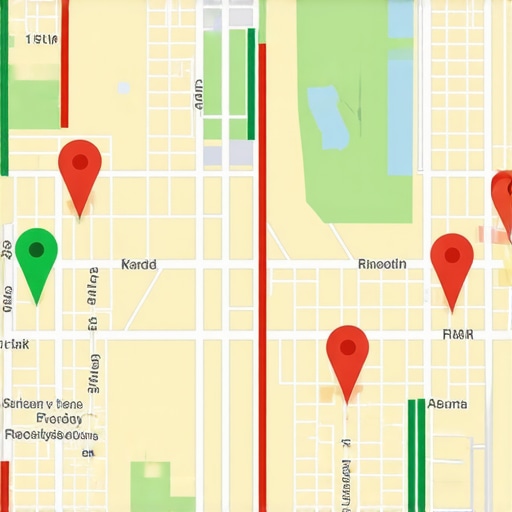 I predict that by 2026, ‘Video Verification’ and real-time inventory will be the primary drivers of map trust. We’re already seeing Google push for more ‘Live’ signals. Joy Hawkins of Sterling Sky has pointed out that Google is increasingly using AI to scan your photos for specific objects to verify your services. If you claim to be a plumber but all your photos are of your office dog, you’re confusing the machine and hurting your relevance. To get started, look at your competitors’ ‘Questions and Answers’ section. Most businesses ignore this, but it’s a goldmine. You can actually post your own questions and answer them yourself to build a searchable FAQ right on your profile. Try posting one ‘seed’ question today about your most popular service—it is a simple way to test if your ‘near me’ visibility shifts over the next week.
What My Most Stubborn SEO Failures Taught Me
After years of tweaking pins, I’ve realized that google maps optimization isn’t about gaming the system; it’s about proving your existence. One lesson that cost me months of progress was obsessing over total review volume while ignoring velocity. I also learned that GPS metadata hidden in your photos acts like a homing beacon for local relevance, a key part of how you enhance maps visibility with proven SEO techniques. Finally, I found that ‘suggested edits’ from competitors are the silent killers of a top ranking. It’s a game of consistency, not just a one-time effort.
The Tools I Use to Keep a Competitive Edge
If you want to rank higher in 3 pack today, you need the right intel. I personally swear by BrightLocal for auditing because their data is consistently cleaner than most. For citations, I always look at Whitespark to see where the real local weight is. And for checking actual search coverage, I rely on heatmap software to see how we use software to spot visibility gaps on maps. These are the diagnostic tools that tell you if your seo service local efforts are translating into real-world leads.
Start Dominating Your Neighborhood Today
Real growth comes from showing up every week, answering questions, and providing proof of your work. By implementing affordable local seo services to dominate the 3-pack, you are building a long-term asset. Consistent map pack seo ensures your maps visibility stays high even as competitors try to catch up. Don’t be intimidated by the big franchises; your local expertise is what Google wants to show. Your next customer is literally a few blocks away searching for you right now. #IMAGE_PLACEHOLDER_E# Have you ever noticed your ranking drop after a long period of silence on your profile? Let me know your experience in the comments below!