I will never forget the Tuesday morning I almost threw my laptop out the window. I had just spent six months religiously helping a local plumber collect nearly 200 glowing, five-star reviews. We were the kings of customer feedback in the neighborhood. Yet, when I searched for ‘plumber near me’ from the heart of downtown, a guy with a blank profile—literally zero reviews—was sitting pretty in the number one spot of the map pack. It felt like I was playing a rigged game. I was embarrassed, frustrated, and honestly, a bit confused. How could Google’s algorithm be so blind to the reputation we had built? This wasn’t just a fluke; it was a wake-up call that the rules of the game had changed while I was busy polishing trophies.
The Frustrating Truth About Why Ratings Aren’t Ranking You
If you have ever stared at your screen and wondered why high ratings alone won’t move your map pin, you are definitely not alone. It is a common misconception that the business with the most stars always wins the top prize. In reality, Google’s local algorithm is a complex beast that weighs proximity, relevance, and prominence above almost everything else. Sometimes, a competitor ranks higher simply because they have mastered the specific search signals that Google prioritizes over a pile of reviews. Early in my career, I made a massive mistake: I thought review volume was the only metric that mattered. I focused entirely on the human element and completely ignored the technical side of Google Maps optimization, like proper category selection and hyper-local backlinking. I assumed that if we were the most loved business, we would naturally be the most visible. I was wrong, and it cost my clients’ leads. Today, I want to pull back the curtain and show you exactly what those ‘review-less’ competitors are doing right—and how you can use seo service local strategies to reclaim your territory.
Is it even worth the effort if a ‘ghost’ profile can outrank me?
It is a valid fear. If someone with zero reputation can take the top spot, why bother with the hassle of asking customers for feedback? But here is the kicker: while they might rank, they often struggle to convert those clicks into actual phone calls. However, ranking is the first hurdle you have to clear. According to the 2023 Local Search Ranking Factors study by Whitespark, review signals only account for about 16% of the ranking factors for the local pack. That means a staggering 84% of the battle is fought in areas like on-page SEO, citation consistency, and proximity. We are going to fix your map pack seo by looking at the gaps in your profile that five-star ratings simply cannot fill. Have you ever felt like your perfect rating was basically invisible to local searchers? If you’re stuck behind a competitor who seemingly came out of nowhere, reach out to me here and let’s figure out which signal you’re missing.
When Proximity Trumps Reputation Every Single Time
One of the biggest reasons you are losing to a ‘nobody’ is simply where the searcher is standing at the moment they pull out their phone. Google’s ‘Possum’ update years ago tightened the reins on geographic distance. If that competitor with zero reviews is two blocks closer to the user than you are, Google might favor them just for the sake of ‘convenience.’ It is annoying, but it is a fundamental reality of maps visibility. But proximity is not a death sentence for your business; there are specific ways to signal authority that ‘stretch’ your reach further than your physical office location. We’ll dive into how to use those signals to ensure you aren’t just the best-rated, but the most relevant business in your entire city.Stop treating your primary category like a digital junk drawer. I have seen countless businesses pick five or six categories thinking they are casting a wider net, but in reality, they are just confusing the algorithm and diluting their maps visibility. Your primary category is the heavy lifter; it is the DNA of your profile. If you get this wrong, you are essentially telling Google you are a General Contractor when the neighborhood is actually searching for a Kitchen Remodeler. When I was working with a boutique gym in Austin, they were languishing because they listed themselves simply as a Fitness Center. The second we shifted the primary category to Yoga Studio to match the actual search volume in their specific zip code, their impressions spiked within days. This is a core part of how to rank higher in the google maps 3 pack today. 
Look Beyond Generic Directories for Real Authority
Everyone tells you to get listed on Yelp and Yellow Pages. While you should do that, it is the bare minimum. If you want to outrank that competitor who seems to have a cheat code, you need to find the unstructured citations your business is missing. Think of these as digital street cred. A mention on a local high school sports blog or a link from a neighborhood association’s news page carries more weight for seo service local results than a thousand generic directory listings. These signals tell Google that you are not just a business on a list—you are a recognized pillar of the community.
Stop Responding to Reviews Like a Bot
I have seen too many owners copy and paste Thank you for your business onto every single five-star review. Not only does this look robotic to potential customers, but it is a massive wasted opportunity for map pack seo. You need to master the review reply secret that actually wins more map clicks. When a customer mentions a specific service—like emergency pipe repair—your reply should naturally echo that relevance. It is not about keyword stuffing; it is about confirming to the algorithm that you actually provide the services searchers are looking for. This is one of the subtle search signals that let competitors outrank you without better reviews.
Build Local Backlinks That Move the Needle
Most people think of backlinks as a game for national websites, but for google maps optimization, small and hyper-local wins every time. I once spent three weeks chasing a guest post on a major tech site for a local HVAC client. It did absolutely nothing for their map position. Then, we spent one afternoon getting a link from a local hardware store’s Recommended Partners page. That single, tiny link moved their pin more than the high-authority tech site ever could. You must focus on the specific backlink types that actually push your profile into the 3-pack. Geographic relevance beats domain authority in the local game. If the site you are linking from is physically located in your target city, Google treats it as a massive vote of confidence for your local presence.You have probably heard the common advice: ‘just get more reviews and you will rank.’ It sounds logical, but in my experience, chasing raw numbers is a fool’s errand that often leads to a plateau. Everyone says volume is king, but I have seen businesses with 500 reviews get buried by a competitor with 50 simply because the smaller player understood review velocity and keyword density. If you are blindly collecting stars without a strategy, you are falling for the review mistake that makes your 5-star rating invisible to local searchers. Google’s algorithm is looking for consistency, not a massive, one-time spike that screams ‘bought reviews.’
Why does my map rank drop as soon as I cross the street?
This is the proximity paradox that drives business owners crazy. You might see yourself in the number one spot while sitting in your office, but move three blocks away and you disappear. This happens because your maps visibility is often restricted to a tight ‘proximity bubble’ that the algorithm creates around your verified address. If you are not seeing the leads you expect, why your local rank tracker is giving you a false sense of security is likely because it is only checking from a single point. To break out of this bubble, you need to signal relevance across a wider area through geographic content and localized backlinks. 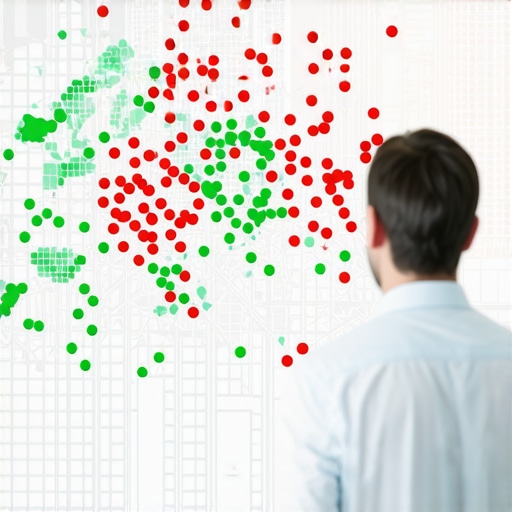
The ‘Oops’ factor that leads to instant suspension
There is a dangerous trap I see daily: keyword stuffing your business name. It is incredibly tempting to change your name on Google to ‘Best Emergency Plumber Chicago’ to try and rank higher in 3 pack results. While this can provide a temporary boost, it is the number one reason for account suspension in 2024. Google is on a manual review spree, and if your legal paperwork doesn’t match your profile name, you could lose everything overnight. Instead of risking your entire digital presence, you should stop stuffing keywords in your profile and fix these 3 map visibility gaps instead. Focus on your attributes and service descriptions—they are safer and increasingly influential for seo service local success.
Mastering the art of review velocity and relevance
A study by BrightLocal recently highlighted that consumers and search engines alike are looking for ‘fresh’ reviews. If your last five-star rating was six months ago, you are a ghost to the algorithm. Furthermore, you need to encourage customers to use specific nouns in their feedback. When a client mentions a specific service like ‘tankless water heater installation,’ it acts as a massive trust signal for that specific keyword. This is exactly how the specific review phrases that actually move the needle for your map rank work in the real world. It is not just about being a ‘good business’; it is about being the ‘relevant solution’ for a specific search query. However, be careful not to over-automate this process; why asking every customer for a review is actually hurting your map rank often comes down to creating a pattern that looks unnatural to spam filters. Have you ever fallen into this trap of focusing on quantity over quality? Let me know in the comments. To truly master map pack seo, you must stop thinking like a business owner and start thinking like a data scientist. We have to look at the quiet signals—the ones your competitors are ignoring—to stay ahead. If you are ready to stop guessing, google maps optimization is a game of inches, and we are going to take every mile we can.
Stop guessing and start mapping your real visibility
I have a love-hate relationship with most SEO tools. Most of them give you a single number—’You are rank #2’—but they don’t tell you where. When I started using grid-tracking software, it changed everything. Instead of one data point, I could see a heat map over the entire city. I realized we were #1 at the office, but #10 just three blocks away. This is why your local rank tracker is giving you a false sense of security. Personally, I rely on tools that offer these spatial grids because they reveal exactly where your ‘proximity bubble’ ends. Once you see the gaps, you can focus your google maps optimization on those specific dead zones. I don’t just look at the numbers; I look at the physical map. This is exactly how we use local seo software to spot the visibility gaps your competitors miss. If you aren’t seeing a visual representation of your reach, you are flying blind. 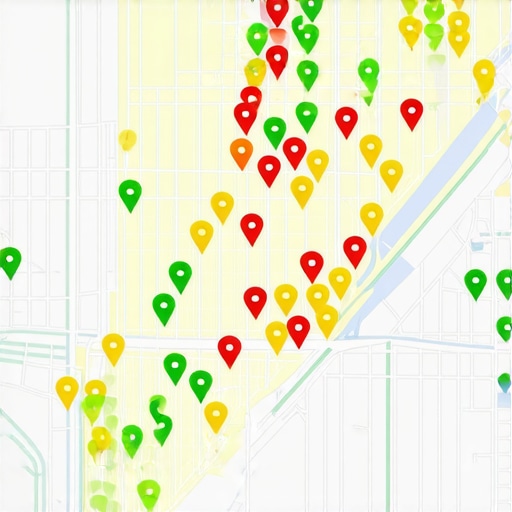
How do I maintain my spot in the local 3-pack over the long haul?
Maintenance is not about massive overhauls; it is about the ‘boring’ consistency that your competitors are too lazy to do. I recommend a 15-minute weekly audit. Check for ‘suggested edits’ from competitors who might be trying to change your phone number or business hours behind your back. Post one Google Update—not a generic ad, but a real, unedited photo of your team working. This routine is part of the weekly routine for dominating your neighborhood 3-pack. Joy Hawkins, a renowned local search expert at Sterling Sky, has frequently pointed out that Google often tests small changes in the local algorithm that can temporarily shift rankings; staying active tells the algorithm you are still the most reliable and relevant choice. If you let your profile go dormant for a month, your maps visibility will inevitably start to bleed out to the guy who is actually showing Google he is ‘open for business.’
Look ahead to the era of spatial search
We are moving toward a world where Google isn’t just looking at keywords, but at ‘spatial relevance’ and user intent in real-time. By 2026, I predict that indoor mapping and real-time foot traffic data will play an even larger role in map pack seo. You need to start preparing your map listing for the 2026 spatial search shift now by ensuring your business attributes are hyper-specific. Don’t just list ‘restroom’; list ‘gender-neutral restroom’ or ‘wheelchair accessible seating’ if it applies. These tiny details are 7 google business profile tips for 2026 to beat local rivals that most people are ignoring. If you want to rank higher in 3 pack results consistently, you have to be the business that provides the most high-quality data to the machine. My best advice? Go into your dashboard right now and find one attribute you haven’t checked off yet—it might be the very thing that triggers a click today. If you’re feeling overwhelmed by the technical shifts, reach out to me here and let’s build a plan that sticks.
The Brutal Truth I Found After Auditing 500 Map Listings
If there is one thing I have learned from years of staring at heat maps, it is that Google rewards momentum over perfection. You do not need to be the biggest brand in the city to win; you just need to be the most active and relevant in your specific corner. I used to think that google maps optimization was a set-it-and-forget-it task, but I realized that the algorithm treats a stagnant profile as a dead business. Another lightbulb moment was discovering the quiet signals that actually push you into the 3-pack, which are often tiny inconsistencies in your data that you would never notice without a deep audit. Finally, remember that your profile is for humans, not just bots. I have seen owners fix a map listing that stopped generating real phone calls simply by swapping out a grainy stock photo for a real picture of their team in action.
My Personal Arsenal for Beating the Algorithm
I do not make any moves without a trusted toolkit. First, I always keep an eye on Sterling Sky’s research; they are the gold standard for testing what actually moves the needle versus what is just SEO hearsay. For my daily seo service local workflow, I rely on grid-tracking software because maps visibility is never uniform across a city. I also highly recommend digging into Whitespark’s annual surveys to see how the weight of different signals shifts over time. If you want to enhance maps visibility with proven seo techniques, these sources are your compass in the ever-changing landscape of local search.
#IMAGE_PLACEHOLDER_E#
Claim Your Digital Territory Today
The road to the top of the map pack is not a sprint; it is a strategic climb. While the technical side of map pack seo can feel like a lot to juggle, the rewards of seeing your phone start ringing again are worth every minute of effort. You now have the blueprint to rank higher in 3 pack results by focusing on relevance, proximity, and authentic customer engagement. Do not wait for the 2026 shift to catch you off guard—start refining your attributes and building those hyper-local connections today. You are more than capable of outmaneuvering the multi-million dollar chains if you focus on your neighborhood better than they can. Have you ever noticed your ranking drop just by walking to the other side of your parking lot? Let me know in the comments below!