
I remember sitting in my home office at 2 AM, manually typing my business name into the 47th directory site that looked like it was designed in the late nineties. I thought I was ‘doing SEO.’ In reality, I was just wasting my life on sites that hadn’t seen a real human visitor in a decade. I’ve been there, staring at a spreadsheet of 200 ‘must-have’ citations, feeling the soul-crushing weight of repetitive data entry, all for the sake of a map pin that refused to move. It’s a trap I fell into early in my career, and I see local business owners falling into it every single day. We’re told more is better, but in the world of local search, more is often just more noise. Today, I want to show you how to break that cycle and focus on the moves that actually put you in front of customers.
Your business listing shouldn’t live in a digital ghost town
I made a massive mistake early on: I prioritized quantity over quality. I once submitted a client to over 300 directories in a single month thinking it would guarantee a top spot, but their rankings actually dropped because Google flagged the activity as spammy. I learned the hard way that why generic directory listings are no longer enough is a reality every business owner needs to face. Google has gotten way smarter. They don’t care about a link from a site that has zero traffic and zero relevance to your neighborhood. They care about signals that prove you are a real, active part of your community. Improving your maps visibility requires a scalpel, not a sledgehammer.
Is this citation game actually worth the hype?
You might be wondering if building citations is dead altogether. Not quite, but the old-school way of doing them certainly is. I spent weeks on a campaign that yielded exactly zero phone calls because I was focused on the wrong metrics. It was a wake-up call that sent me back to the drawing board. Have you ever spent hours filling out profiles only to feel like you’re shouting into a void?
The day I stopped chasing numbers and started winning the 3-pack
Everything changed when I stopped treating my business like a data point and started treating it like a local landmark. I shifted my focus to google maps optimization that emphasizes real-world trust over digital volume. I realized that a single mention from a local news outlet or a neighborhood blog was worth a thousand generic directory links. To rank higher in 3 pack results, you need to prove you’re the best choice for the user’s specific problem right now. According to research by BrightLocal, the importance of traditional citations has steadily declined as Google prioritizes things like proximity, reviews, and on-page signals. This is why you need to stop wasting time on citations that don’t move the needle and start investing in map pack seo that actually translates to foot traffic. [IMAGE_PLACEHOLDER] You do not need a fancy seo service local to tell you that quality beats quantity every time. We’re going to look at how to identify which links actually matter and how to build a profile that Google can’t ignore.
Fix the foundation before you try to build the house
I once worked with a local baker who couldn’t figure out why their shop was invisible despite having hundreds of reviews. After digging through their digital footprint, we found three different addresses listed across the web—remnants of moves from years prior. Google’s algorithm saw three different businesses, trusted none of them, and buried them all. This is where why perfect nap data is no longer enough to move your map pin if you have conflicting ghosts from the past. To rank higher in 3 pack results, your first job is a digital audit. Think of your business info like a radio frequency; if you’re broadcasting on 98.1, 98.5, and 99.0, your audience just hears static. Use a tool to find every instance of your Name, Address, and Phone number (NAP) and force them into 100% alignment.
Pick the right labels so Google actually knows what you do
Most business owners treat google maps optimization like a one-time setup, but it’s actually an ongoing categorization game. I’ve seen HVAC companies miss out on thousands of dollars in leads because they only selected ‘HVAC Contractor’ and ignored ‘Air Conditioning Repair’ or ‘Heating Equipment Supplier.’ You have to how to optimize your business category for the local 3-pack by utilizing every relevant secondary category Google allows. It’s like a library; if you only put your book in the ‘Non-fiction’ section, you’re missing the readers in ‘History,’ ‘Biography,’ and ‘Reference.’ By being specific, you help the algorithm connect the dots between a user’s search intent and your specific services. 
Hunt for links that actually move the needle
Stop buying generic ‘SEO packages’ that promise 500 directory links. Instead, look for the specific backlink types that push profiles into the 3-pack—specifically, local ones. I once saw a client’s ranking jump five spots in a week just because they got a mention on a neighborhood association’s ‘Recommended Vendors’ page. This is the simple local link strategy that moves your map pin fast because it provides a proximity signal that a high-authority global site never could. You need to how to identify which local citations actually move the needle by looking for sites that are physically relevant to your city. A link from the local Little League or a city-specific blog is worth more than ten ‘high DR’ guest posts from a generic site.
Keep the engine running with real activity
Finally, you have to understand that a stagnant profile is a dying profile. Google prioritizes businesses that show signs of life. I’ve watched competitors with half the total reviews outrank industry titans simply because they were getting new feedback every week. This is exactly why review velocity is more important than total count. If you got 50 reviews three years ago and nothing since, Google assumes you’ve closed up shop. Integrating map pack seo into your daily routine means uploading a real-time photo of a finished job or replying to a customer question within an hour. This activity signals to the algorithm that you are active, reliable, and ready to serve the next customer who clicks your pin.Let’s get one thing straight: having the most reviews doesn’t guarantee you a seat at the table. I’ve seen business owners spend thousands on a seo service local only to be baffled when a guy with twelve reviews stays glued to the top spot. The truth is, why competitors with zero reviews sometimes rank higher often comes down to their specific local relevance and how they’ve optimized their data behind the scenes. Most experts will tell you to just keep collecting stars, but why high ratings alone will not move your map pin is a hard pill to swallow when you’re doing everything ‘right’ and seeing no results.
Stop obsessing over the city center and find your real service area
One of the biggest traps I see is the ‘centroid’ obsession. Years ago, being closest to the middle of town was the holy grail of google maps optimization. Today, understanding why proximity is not the only factor in local ranking has become the cornerstone of high-level map pack seo. Google’s algorithm is smarter now; it looks for prominence—how much the local web talks about you in relation to a specific neighborhood. If you are a plumber three miles away but you have a dozen of the specific backlink types that push profiles into the 3-pack from local community blogs, you can easily leapfrog the guy sitting right in the center of the search grid.
Why does that competitor with zero reviews still own the top spot?
It feels like a glitch in the matrix, right? You have 200 five-star reviews and they have nothing, yet they are winning. This usually happens because of unstructured citations—mentions of your business that aren’t in a formal directory. According to the Whitespark Local Search Ranking Factors study, signals like local news mentions and your website’s overall organic authority play a massive role in map placement. This is why your website content matters more for map rankings than you think. If your site is a ghost town, your map pin will eventually follow suit. 
Don’t fall for the virtual office shortcut
I once saw a law firm lose 80% of their leads overnight because they tried to cheat proximity by using a virtual office in a neighboring city. Google eventually sniffed it out. Understanding the risk of using virtual offices for local rankings is vital before you try to expand your digital footprint. They want to see a real door, real signage, and real people. If you try to fake it, you’re not just risking your rank; you’re risking a permanent ban. This is the hidden proximity trap keeping your business out of the 3-pack that most beginners fall into when they get impatient for growth.
Verify your data before the algorithm does it for you
I’ve had many clients ask how to verify your business without waiting for a postcard, and while there are faster methods, the real focus should be on the integrity of that data. If your profile is verified but your information is inconsistent across the web, you’re just broadcasting a louder lie. You need to understand why your local keyword rankings often dont match real world phone leads. You can rank for a search term, but if your phone number is wrong on even two major local directories, Google loses trust. Have you ever fallen into this trap? Let me know in the comments. We need to talk about why your profile traffic is falling despite verification because it’s usually a sign that your trust signals are decaying. To truly rank higher in 3 pack results, you have to play the long game of consistency over quick hacks.I used to think that as long as I was green on my rank tracker, the phone would ring. I was wrong. I’ve seen businesses with ‘perfect’ rankings suffer from why your call volume dropped while rankings stayed the same because they forgot that a map pin is a lead generation tool, not a trophy. To stay ahead, you need to shift from ‘setting it up’ to ‘keeping it running.’ This is where the real work—and the real money—is made.
The software I use to find the gaps you can’t see
I personally swear by grid-based tracking. Looking at a single ranking number for your city is a rookie mistake because your visibility is actually a shifting heat map. I use tools that show me exactly where our signal drops off, block by block. This is how we use software to spot visibility gaps on maps that would otherwise stay hidden. If I see a ‘red zone’ just two miles east of a client’s shop, I know we need more hyperlocal signals from that specific neighborhood. It’s about being a sniper, not a carpet bomber.
Stop trusting the single number on your rank tracker
Most reporting tools give you a comfortable, static number, but why your local keyword tracking is probably lying to you is a conversation I have with every new partner. The ‘Google Opossum’ update proved that proximity filters can hide your business from a user just because a competitor is physically closer to them at that exact second. Joy Hawkins from Sterling Sky, a leading authority in local search, often highlights how Google’s ‘vicinity’ algorithm changes can fluctuate based on time of day and mobile signal strength. If you aren’t monitoring the ‘why’ behind the movement, you’re just guessing.
How do I maintain my map pack position over the long haul?
Maintenance isn’t a monthly task; it’s a weekly discipline. I’ve developed a rhythm that keeps the algorithm happy without eating up my entire life. The weekly routine for dominating your neighborhood 3-pack involves three non-negotiables: responding to every single review (even the ones without text), uploading at least two ‘behind the scenes’ photos, and checking for ‘suggested edits’ from competitors. If you leave your profile alone for a month, you’re basically telling Google that your business is stagnant. 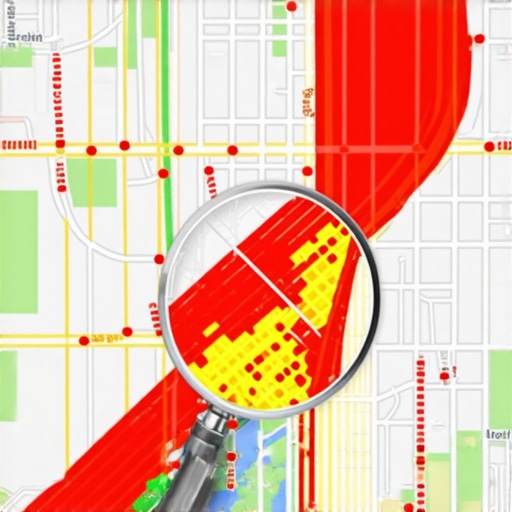
Where local search is heading by 2026
Looking ahead, I expect Google to move further away from text-based signals and deeper into ‘Entity’ verification. AI-driven search (SGE) is already starting to summarize what people say about you in reviews rather than just looking at your business description. This is why 7 google business profile tips for 2026 to beat local rivals focuses so heavily on the ‘quality’ of interaction. You can’t just spam keywords anymore; you have to prove you are the most helpful answer in the room. I predict that high-resolution, context-rich photos will become a primary ranking factor as Google’s Vision AI gets better at ‘reading’ what happens inside your store. If you’re still using stock photos, you’re already behind because why your business photos are failing to attract local leads is often tied to a lack of authenticity. Try this today: Go to your profile and seed three common customer questions into your Q&A section yourself, then answer them. It’s one of the fastest ways to how to use the qa-section to convert map searchers before they even visit your website.
The One Truth I Had to Accept About Map Pack Victory
If there is one thing a decade in local SEO has taught me, it is that Google rewards active neighbors, not digital phantoms. I spent years trying to game the system with sheer volume, but the real breakthrough came when I realized that the quiet signals that actually push you into the 3-pack aren’t found in a spreadsheet of 500 directories. They are found in the way you interact with your community every day. I learned that a single photo of a real project uploaded on a Tuesday afternoon is worth more than a month’s worth of keyword-stuffed descriptions. The algorithm isn’t just looking for data; it’s looking for proof of life. When I stopped trying to ‘trick’ the map and started feeding it authentic, local proof, my rankings—and my phone calls—finally stabilized.
The Only Resources I Trust to Keep My Business Visible
You don’t need a hundred tools to win this game; you just need the right ones that reveal what the naked eye misses. I personally rely on grid-tracking software because it stops me from lying to myself about my reach. Most owners see one ‘green’ ranking and think they’ve won, but the data your map reporting tool is likely ignoring often hides the fact that you’re invisible just three blocks away. I also recommend keeping a close eye on industry authorities like Whitespark for their annual ranking factor studies—they provide the ‘why’ behind the ‘what.’ Finally, never underestimate the power of your own smartphone; it is the most potent tool in your arsenal for capturing the authentic moments that drive maps visibility.
Start Moving Your Map Pin Before the Day Ends
The beauty of local search is that you don’t need a million-dollar budget to beat a national chain. You just need to be more present, more accurate, and more human. If you’ve been struggling to rank higher in 3 pack results, stop looking for the ‘magic button’ and start focusing on the foundations we’ve discussed. Respond to that review you’ve been ignoring, fix that one inconsistent phone number on a local blog, and post a real photo of your team. These small, deliberate actions build the trust that eventually forces Google to put you at the top. If you ever feel stuck or overwhelmed by the technical side, feel free to contact us for a second pair of eyes. The future of your local business is waiting for you to claim your spot on the map. Have you noticed a specific type of review or photo that seemed to suddenly boost your visibility? Let me know in the comments below!