
I remember sitting in my home office at 2 AM, bleary-eyed, meticulously copying and pasting my business name, address, and phone number into the 47th ‘free’ business directory I’d found that week. I was convinced that once these went live, my phone would start ringing off the hook. I was chasing that elusive map pack SEO glory, thinking quantity was the only lever that mattered. The result? A whole lot of nothing. Not even a spam call. It was a total gut punch. I realized then that Google was way ahead of me, and it didn’t care about my business being listed on a dusty, low-traffic site that looked like it was built in 1998. Today, I want to show you why those generic lists are failing you and how to actually enhance maps visibility by focusing on what truly moves the needle. Have you ever spent a whole weekend building citations only to see zero movement in your local rankings? Let me know, because I’ve been in that exact same boat.
The Night I Realized 50 Directories Mean Nothing to Google
The hard truth is that perfect NAP data is no longer enough to dominate your local market. Years ago, I made the massive mistake of thinking that as long as I was everywhere, I’d be at the top. I ignored the context. I ignored where those links were coming from. Google’s algorithms have evolved to prioritize signals of real-world relevance and local authority over sheer volume. If your business is listed on a directory that has zero relevance to your niche or your city, Google effectively treats it as noise. This is exactly why generic directory listings are failing modern small businesses. They don’t prove you are a pillar of your community; they just prove you know how to fill out a form. According to a study by BrightLocal, the importance of traditional citations has steadily declined as Google emphasizes ‘behavioral signals’ and ‘local prominence.’ To truly win, you need 6 real-world fixes that go beyond just a name and an address.
Are all those citation packages actually worth the hype?
Most of the time, the answer is a resounding no. I’ve seen countless neighbors and clients throw hundreds of dollars at ‘citation cleanup’ services that just spray and pray. They promise to list you on 100+ sites, but 95 of those sites are digital ghost towns. Your maps visibility depends on quality and localized trust. One mention on a local neighborhood blog or a niche-specific trade association site is worth more than a hundred generic directory spots. If you want to rank higher in 3 pack results, you have to stop acting like a robot and start acting like a local leader. We are going to dive into how you can identify the spots that actually matter and stop wasting your precious time on the ones that don’t.
Stop Hunting for 100 Directories and Start Finding the ‘Holy Grail’ Three
Think of local SEO like a small-town election. You don’t win by getting a thousand strangers from across the country to say you’re a ‘nice person.’ You win by getting the local librarian, the high school football coach, and the guy who runs the diner to vouch for you. That is exactly how how to identify the local citations that actually move your map pin. I used to think a link from a generic ‘business directory’ was a vote. It’s not. It’s a brochure in a trash can. Instead, you need to hunt for ‘unstructured citations.’ These are mentions of your business name, address, and phone number on local blogs, neighborhood news sites, or even local charity event pages. I remember working with a local plumber who was absolutely losing his mind. He had 150 reviews—more than double his nearest competitor—but he was stuck on page two. We stopped buying citation packages and spent one afternoon getting him mentioned on a local high school’s sports sponsorship page and a neighborhood ‘best of’ blog. Within three weeks, he jumped to the number two spot. This is why plumbers in competitive cities are stealing the 3-pack without even touching their prices. They are proving they actually exist in the physical fabric of that specific town. 
Why Your Neighbors’ Chat Matters More than a 5-Star Sticker
We’ve all seen it: the shop with a 4.2 rating outranking the one with a perfect 5.0. It feels like a glitch, but it’s actually Google’s way of rewarding ‘behavioral signals.’ If someone searches for your service and then physically drives to your store, Google notices that ‘verified footfall.’ If you want to enhance maps visibility, you need to trigger these signals. One of the 6 real-world fixes I always recommend is using ‘neighborhood signals’ in your content. Don’t just say you serve ‘Chicago.’ Say you’re three blocks north of the historic Music Box Theatre. This level of detail helps google maps optimization because it provides a layer of geographic relevance that a generic listing can’t mimic.
Fix Your Service Area Before Google Hides You
I once saw a business accidentally hide themselves from 80% of their market because they got too greedy with their service area settings. They checked every box for every town within 50 miles. Google looked at that and thought, ‘There is no way a one-man shop covers three counties.’ Their visibility tanked. This is exactly why your service area settings are probably hiding you from the local 3-pack. You have to be realistic. Proximity is a massive ranking factor, and trying to trick the algorithm into thinking you are everywhere usually results in being nowhere. To truly rank higher in the google maps 3-pack today, you must tighten your focus. Start small, dominate your immediate two-mile radius, and then slowly build the ‘prominence’ needed to expand outward. It’s about building a digital footprint that matches your physical one.
Everyone tells you that reviews are the king of map pack SEO. They say if you just get more five-star stickers than the guy down the street, you’ll naturally rank higher in 3 pack results. But I’m here to tell you that’s a dangerous oversimplification. In fact, focusing purely on the quantity of reviews is often why your maps visibility hits a ceiling. I’ve seen businesses with 600 reviews get outranked by a competitor with 85. It feels like a glitch in the Matrix, but it’s actually Google’s way of prioritizing relevance over raw volume. If those 600 reviews are all generic ‘Great job!’ comments, they don’t provide the semantic data Google needs to understand what you actually do. You need the specific review phrases that actually move the needle by telling the algorithm exactly which services you provide in which neighborhoods. It’s about ‘review velocity’ and depth, not just a high-score tally.
Can a shop three miles away actually steal your local customers?
The common wisdom says that proximity is the ultimate ranking factor. People assume that if they are the closest business to a searcher, they will win. This is a myth. While proximity is heavy, ‘prominence’—or your digital authority—can often override a closer physical distance. According to the Whitespark Local Search Ranking Factors survey, prominence and relevance are increasingly weighted to allow high-authority businesses to ‘reach’ further into neighboring zip codes. This is why your distance from the city center isn’t the real reason you’re not in the 3-pack. If you build enough ‘neighborhood signals’ and local backlinks, you can effectively expand your radius. Have you ever fallen into this trap of thinking you’re just ‘too far away’ to compete? Let me know in the comments, because you might be giving up on leads that are rightfully yours.
One of the most common ‘Oops’ factors I see is the temptation to keyword-stuff your business name. It’s the oldest trick in the book: changing your name to ‘City Name + Service + Business Name.’ While it might give you a temporary sugar high in the rankings, it is the number one reason for profile suspensions today. Google has become incredibly aggressive with its ‘suggested edits’ and automated verification checks. This is one of the hidden reasons google suspends local profiles, and once you’re flagged, getting back into the algorithm’s good graces is an uphill battle. You are much better off using google maps optimization techniques that focus on your ‘From the Business’ description and real-world trust signals than trying to game the system with a fake name. If you want to enhance maps visibility, you have to play the long game. This includes things like review response speed, which many ignore. In fact, replying to reviews faster actually improves your map visibility because it signals to Google that you are an active, engaged business that provides a good user experience. Stop looking for the shortcut and start focusing on the high-level signals that actually prove you are the best local expert.
Stop Guessing and Start Seeing Your Ranking Heat Map
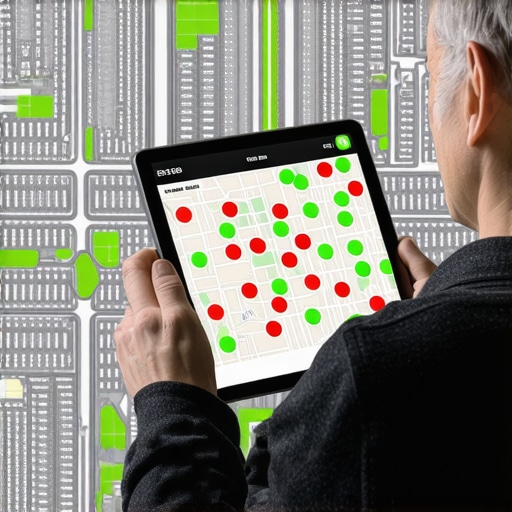
For the longest time, I was checking my rankings by literally driving three miles down the road and refreshing my phone. It was tedious and, frankly, inaccurate. Now, I rely on grid-tracking software to see exactly where my visibility drops off. This is how we use local seo software to spot the visibility gaps your competitors miss. When you look at a heat map and see green circles in one neighborhood and red in another, you stop guessing and start targeting. I personally use tools like Local Falcon because they show the ‘proximity bleed’ in real-time. If you want to mastering map pack seo strategies to boost local visibility, you need this bird’s-eye view. It’s the difference between blindly throwing money at ads and surgically fixing the areas where you are losing to a competitor with a better location signal.
How do I keep my map pin stuck at the top?
Maintenance is where most business owners fail. They do a massive push for a month and then ghost their profile. To rank higher in 3 pack results consistently, you need a rhythm. I call it the ’10-Minute Monday.’ Every Monday, I upload one fresh photo—not a stock photo, but a real shot of a job site or the office—and post one update. This is the one weekly profile update that keeps your local leads from dropping. Google loves active entities. Joy Hawkins of Sterling Sky has often noted that while posts themselves aren’t a direct ranking ‘booster’ like a backlink, the engagement they drive and the ‘freshness’ signal keep your profile from being deprioritized. You are essentially telling the algorithm, ‘Hey, we are still open, still busy, and still the best choice in this zip code.’
As we look toward the future, I genuinely believe the game is shifting from text-based relevance to visual and behavioral proof. I’m already preparing your map listing for the 2026 spatial search shift, where Augmented Reality (AR) will allow users to hold up their phones and see your 3-pack data overlaid on the actual street. To get ready, start uploading 360-degree photos and high-resolution videos of your storefront now. This builds maps visibility that a simple text description can’t touch. If you aren’t doing this, you are leaving the door open for affordable local seo services to dominate the 3 pack on your behalf, potentially using your own neighborhood signals against you. You need to google maps optimization that accounts for these visual cues today.
If you want to see an immediate jump, try this one advanced move: geotag your next five business photos with your exact latitude and longitude before uploading them. It sounds like a small technicality, but it’s a massive trust signal for map pack seo. If you’re tired of being the best-kept secret in town and want to enhance maps visibility once and for all, start treating your profile like a living social media page rather than a static phonebook entry. Reach out via our contact us page if you want to see how we specifically bridge these visibility gaps for businesses just like yours.
The Brutal Reality of Chasing Local Clicks
If there’s one thing I’ve learned after years of obsessing over map pack SEO, it’s that the algorithm rewards honesty over hacks. I used to think I could outsmart Google with a flurry of low-quality links, but the real breakthrough came when I realized that the unstructured citations your business is missing are often more valuable than the biggest business directories. Here is the ‘insider’ truth: Google doesn’t want to see a perfect profile; it wants to see a helpful one. One counterintuitive lesson? Sometimes, why asking every customer for a review is actually hurting your map rank because it looks unnatural to the spam filters. Focus on organic growth, respond to the reviews you already have with personality, and remember that maps visibility is earned through community engagement, not just data entry.
Gear That Keeps My Rankings Stable
I don’t fly blind anymore. To truly rank higher in 3 pack results, you need data that mirrors the real world. I swear by Local Falcon for geographic heat maps; it’s the only way to see if you’re actually winning the street corner or just your own office parking lot. I also religiously follow Sterling Sky’s blog because Joy Hawkins and her team do the deep-dive testing that most seo service local providers are too scared to try. Lastly, I suggest establishing the weekly routine for dominating your neighborhood 3-pack—it’s the only ‘tool’ that costs nothing but pays out in consistent leads. These aren’t just recommendations; they are the backbone of how I stay sane in an ever-changing search landscape.
#IMAGE_PLACEHOLDER_E#
Take Back Your Neighborhood
Local business is the heartbeat of any town, and you deserve to be found by the people you’re meant to serve. Don’t let the technical jargon of google maps optimization intimidate you. It’s all about proving your relevance one neighborhood signal at a time. Whether you choose to do it yourself or look into affordable local seo services to dominate the 3 pack, the most important step is simply starting. Your competitors are likely making the same old mistakes—stuffing keywords and buying ghost citations. By focusing on real-world trust, you aren’t just gaming a system; you’re building a brand. If you ever feel stuck, we are always here to help via our contact us page.
Have you noticed your map ranking change significantly after a specific neighborhood event or a new local mention? Let me know in the comments below!