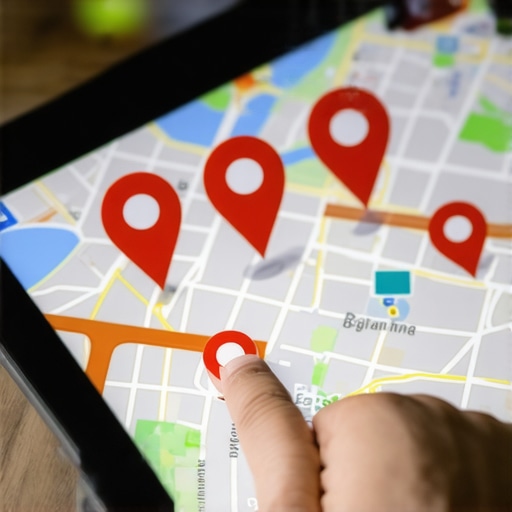
I remember sitting in my home office at 2 AM, squinting at my screen, rewriting my business description for the fiftieth time. I thought if I just added one more keyword, I’d magically appear in the 3-pack. It felt productive. It felt like I was doing real work. In reality? I was just rearranging deck chairs on a sinking ship while my maps visibility plummeted. I was so obsessed with the perfect prose that I’d probably forgotten more keywords than most people ever learn, yet my phone stayed silent. I missed three massive technical errors that were making me invisible to the very neighbors I wanted to serve. It was a frustrating, lonely realization that ‘trying harder’ at the wrong thing is just a fast track to burnout.
Stop Tinkering with Words and Start Fixing Data
I’ve worked with dozens of local business owners who fall into this same trap. We spend hours polishing a description that Google barely uses for ranking, while ignoring the fact that our map pin is slightly off or our service areas are poorly defined. I made a huge mistake early on—one that still makes me cringe. I thought I could outsmart the algorithm by stuffing keywords into my business name, thinking it was the ultimate shortcut. Instead of soaring to the top, I watched my listing get flagged and buried. It was a humbling lesson: Google cares about accuracy and trust signals far more than your ability to write a marketing blurb. If you are serious about google maps optimization, you have to look past the surface. Today, I want to help you stop the over-optimization madness. We are going to fix the three errors that are actually keeping you out of the winner’s circle and boost your local visibility by focusing on what moves the needle.
Does the description actually help you rank?
It’s the question everyone asks me over coffee. The short answer? Not as much as you think. While a good blurb is great for optimizing for humans, it isn’t a primary ranking signal for the algorithm. If you want to rank higher in the 3-pack, you need to stop obsessing over the adjectives and start looking at the ‘boring’ structural data. Have you ever spent a whole weekend ‘optimizing’ your profile only to see your traffic drop the following Monday? It’s a gut-punch, I know. But it’s usually because you’re touching things that don’t matter while ignoring the one map error that makes you look closed to Google’s bots.
The Invisible Data Traps Keeping You Off the Map
The first major hurdle is often the simplest: inaccurate location signals. I’ve seen brilliant businesses lose thousands in revenue because of inaccurate map pins or malicious suggested edits they never bothered to check. According to a survey by BrightLocal, roughly 68% of consumers say they would stop using a local business if they found incorrect information online. Think about that for a second. More than half of your potential customers will walk away before they even call you, just because your data is messy. When your digital footprint is inconsistent, you are essentially telling Google that you aren’t a reliable choice. We’re going to walk through how to audit your listing to ensure you aren’t one of the businesses currently stuck in the search results graveyard. It’s time to stop guessing and start fixing the real problems. Have you ever noticed your business pin showing up in the wrong spot on the street?
Stop Letting a Misplaced Pin Kill Your Traffic
Think of your map pin as a lighthouse. If the light is even five degrees off, ships aren’t hitting the harbor; they’re crashing into the rocks. I once spent three weeks wondering why a high-end boutique wasn’t getting walk-ins despite a beautiful profile. We finally realized their map pin was dropped in the middle of a pedestrian-only alleyway behind their store. Google’s GPS was literally telling customers to park in a loading zone and walk through a dumpster area. Once we learned how to fix inaccurate map pins that confuse your clients, their ‘request directions’ clicks turned into actual paying customers overnight. You need to zoom in as far as the satellite view allows and drag that pin to the exact front door. If Google thinks your entrance is in a different zip code or a back alley, it will throttle your visibility to protect the user experience. This is the bedrock of google maps optimization.
Pick the Specific Categories That Cut Through the Noise
Most people choose one primary category and call it a day. That’s like entering a marathon and only wearing one shoe. If you want to rank higher in the 3-pack, you have to embrace the power of secondary categories. I remember a messy situation with a local ‘General Contractor’ who was invisible for ‘Kitchen Remodeling’ and ‘Bathroom Renovations’ because he hadn’t specified those niches. We dove into how to optimize your business category for the local 3-pack and added four specific secondary labels. Within ten days, he was appearing in twice as many unique search queries. Don’t guess here. Look at what the top three guys in your city are using. If they all have ‘Emergency Plumber’ and you just have ‘Plumber,’ guess who Google is going to promote when a pipe bursts at midnight? Mastering how to use secondary categories to appear in more searches is the fastest way to widen your net without spending a dime on ads.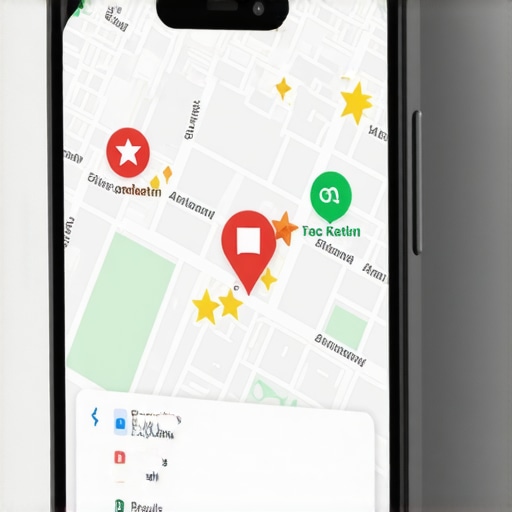
Make Your Website and Map Profile Speak the Same Language
Google is a giant confirmation machine. If your Google Business Profile says you serve ‘Downtown,’ but your website only mentions ‘The Greater Metro Area,’ Google gets nervous. It hates uncertainty. You must ensure that your local landing pages must match your business profile data perfectly. I’ve seen rankings tank simply because a business changed their phone number on their site but forgot to update the map listing. This creates a data mismatch that screams ‘unreliable’ to the algorithm. In fact, why your website content matters more for map rankings than you think boils down to ‘Local Justification.’ When a user searches for a specific service, Google scrapes your linked website to find proof that you actually do that thing. If the text on your homepage confirms what’s on your map profile, your authority scores skyrocket. This was the 5-minute profile edit that fixed our local conversion rate for a recent client: we simply added a small map embed and a matching NAP (Name, Address, Phone) footer to their contact page, and the algorithm finally ‘connected the dots’ between their digital home and their physical shop.
The dangerous myth that more reviews always equals better rankings
Everyone tells you to chase five-star reviews like your life depends on it. While they aren’t wrong, they are often missing the nuance that actually triggers the algorithm. I’ve seen businesses with 500 reviews get buried by a competitor with 50. Why? Because Google prioritizes quality and velocity over raw volume. According to the latest Local Search Ranking Factors study by Whitespark, ‘review velocity’—the steady pace at which you receive feedback—is a much stronger trust signal than a stagnant pile of old testimonials. If you suddenly dump fifty reviews onto your profile in a single weekend, you aren’t ‘optimizing’; you’re waving a red flag at Google’s spam filters. This is why review velocity is more important than total count in the long run.
Why does that guy down the street still outrank you with fewer reviews?
It’s the most common frustration I hear. You have the better shop, the better service, and more stars, but you’re still stuck at the bottom. Usually, this happens because of ‘Local Justification’ and proximity. If your competitor has a profile that is more ‘active’—meaning they are regularly updating their content—Google views them as more relevant to a real-time searcher. You need to understand the truth about how often you need to post to your profile to keep that engagement signal high. It’s not just about being there; it’s about proving you are still open and active today.
Beyond engagement, there’s a technical ‘trap’ that sinks more local businesses than almost anything else: the virtual office. I’ve talked to dozens of entrepreneurs who thought they could ‘expand’ their reach by renting a P.O. Box or a shared coworking space in the next town over. This is a massive mistake. Google’s AI is incredibly sophisticated at cross-referencing real estate data. When you fall into the risk of using virtual offices for local rankings, you aren’t just risking a dip in the 3-pack; you’re risking a permanent suspension that can take months to appeal. Google wants to see a physical, permanent sign and a door where customers can actually walk in.
Stop ignoring the data that actually matters
If you are still looking at your ‘total views’ in the dashboard and feeling good, you might be falling for vanity metrics. Often, the data your map reporting tool is likely ignoring is the actual ‘intent’ of those clicks. Are they clicking to call, or are they just looking for your address because they’re already on their way? If you don’t distinguish between the two, why your current map strategy is losing you money becomes painfully clear. You’re optimizing for eyeballs instead of revenue. We need to shift the focus to the real reason your competitor ranks with fewer reviews, which usually boils down to better behavioral signals and local relevance. Have you ever fallen into this trap of focusing on the wrong numbers? Let me know in the comments.
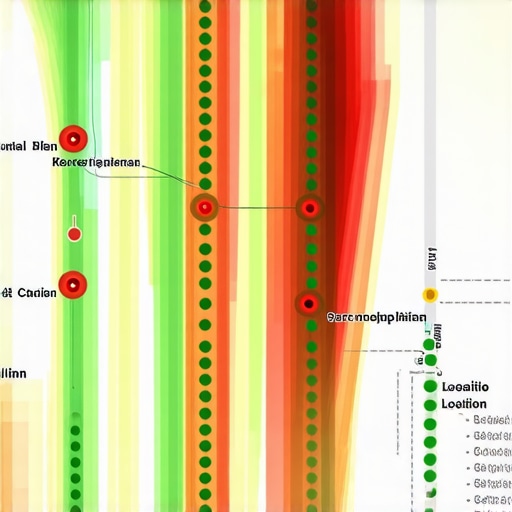
The biggest mistake I see business owners make after hitting the top is falling into the ‘set it and forget it’ trap. They think because they finally rank higher in the 3-pack, the work is done. But the map is a living, breathing marketplace. If you stop moving, your competitors will walk right over you. I personally use grid-tracking tools every Tuesday morning because why your local keyword tracking is probably lying to you is a lesson I learned the hard way. You might look like #1 while sitting at your desk, but two miles south, you might be invisible. You need to know the best way to track your map rank across a whole city so you can spot ‘dead zones’ before they impact your bottom line.
Stop guessing where you actually stand in the city
I don’t just look at my dashboard; I look at the spatial data. Google is increasingly using a ‘proximity filter’ that changes based on the time of day and traffic patterns. If you aren’t monitoring your visibility geographically, you’re flying blind. When I see a dip in a specific neighborhood, I don’t panic and rewrite my whole profile. Instead, I look for ways to use hyperlocal content to win the neighborhood map war. This usually means mentioned a specific local landmark or community project on my site that links back to my profile. This isn’t just about ‘SEO’; it’s about proving to the algorithm that you are a pillar of that specific community. This is exactly how affordable local seo services to dominate the 3 pack actually work—they focus on consistent, localized signals rather than expensive, broad campaigns.
Fresh photos are better than a thousand keywords
If you haven’t uploaded a photo in the last thirty days, Google thinks you’re getting lazy. I make it a point to snap a high-resolution photo of a completed project or a new piece of equipment every Friday. There is a direct correlation between why high-resolution store photos increase your map click-through rate and your ultimate ranking. Customers want to see what you’re doing now, not what you did three years ago. Darren Shaw, the founder of Whitespark and a leading expert in the niche, noted in his 2023 Local Search Ranking Factors study that ‘Business Signals’—including photo frequency—are becoming indispensable for maintaining authority. It’s a low-effort, high-reward habit that most of your competitors are too tired to maintain.
How do I keep my map ranking from slipping over time?
Consistency beats intensity every single time. You don’t need a ten-hour ‘SEO session’ once a year; you need ten minutes every week. I recommend a simple ‘Map Audit’ once a month. Check for those annoying suggested edits, reply to any new reviews, and post one update. When you understand the truth about how often you need to post to your profile, you realize that Google rewards steady activity over sudden bursts of keyword-stuffing. This steady pulse tells the algorithm you are open, active, and ready to serve customers.
The AI-driven future of the 3-pack
Looking ahead, the ‘3-pack’ is going to become even more interactive. We are already seeing Google use AI to ‘read’ the text inside your photos and match them to search queries. This means how to optimize your map listing for voice search queries will become the new frontier. People won’t just type ‘plumber’; they’ll ask their phone, ‘Who is the most reliable plumber near me for a leaky faucet?’ and Google will pull that answer from your reviews and your website content. If you want to stay ahead, mastering map pack seo strategies to boost local visibility today is your ticket to being the answer that the AI chooses tomorrow. My challenge to you? Go take one photo of your business right now—not a stock photo, a real one—and upload it with a caption that mentions your city name. It’s the smallest step you can take today that actually moves the needle.
Looking back at my years in the digital trenches, I’ve realized that the difference between a thriving local shop and one that’s invisible isn’t a massive marketing budget. It’s the willingness to stop chasing every shiny new trend and instead master the foundational data that Google actually trusts.
Hard-Won Lessons from the Local Search Trenches
I didn’t reach the top of the search results by following generic advice. I reached it by failing, analyzing, and pivoting. Here are the core truths that changed everything for me:
- Proximity isn’t your enemy. For a long time, I thought I was capped by how close I was to the city center. The reality is that you can rank further from your physical office by building deep local relevance through your content.
- Visual proof is the ultimate trust signal. A text review is nice, but I’ve found that local reviews with photos move the needle significantly more because they provide a layer of authenticity that the algorithm craves.
- Activity is non-negotiable. Google treats a stale profile like a closed business. I saw my rankings stabilize only when I accepted why your map listing needs fresh content every single week to show the world you’re still active.
The Gear and Guides That Keep My Businesses at the Top
You don’t need a hundred tools to succeed, but you do need the right ones. If you’re looking to take your google maps optimization to the next professional level, these are the resources I swear by:
- Whitespark’s Annual Study: This is my North Star for understanding which signals are gaining or losing weight in the current algorithm.
- Hyperlocal Link Building: Instead of chasing massive national blogs, I’ve seen better results focusing on how local community links drive more map clicks by connecting my business to the neighborhood.
- Grid-Based Ranking Tools: You cannot fix what you cannot see. I always use a grid tracker because it’s the best way to track your map rank across a whole city and find those hidden blind spots.
#IMAGE_PLACEHOLDER_E#
Your Journey to the Top Starts with One Small Edit
It’s easy to feel overwhelmed by the technical jargon of SEO, but remember: the 3-pack is designed to help real people find real solutions. When you focus on providing clear, accurate, and helpful information, the algorithm naturally starts to favor you. If you feel like you’ve hit a ceiling, don’t be afraid to look into affordable local seo services to dominate the 3 pack to help bridge the gap. You have the expertise and the passion for your craft; now you just need to make sure the map reflects that reality. Go make that one small update today and watch the momentum build. Which of these map errors have you encountered in your own business? Let me know in the comments below!