
I remember sitting in my home office last Tuesday, refreshing my lead tracking sheet with a growing sense of dread. According to my maps visibility reports, I was winning. I was right there in the top three for my main keywords. But the phone? It was a paperweight. I felt like a ghost in my own city. It is one of those frustrating moments where the data says you are winning, but your bank account begs to differ. I had been obsessing over the wrong things for months. I spent way too much time trying to rank higher in 3 pack results through brute force, yet I ignored the very thing that makes a neighbor actually trust a business. It turns out that being seen is only half the battle. If your profile does not speak the right language to a local customer, they will scroll right past you to the guy in the #4 spot who actually looks like he knows what he is doing. Today, I am going to show you the exact five-minute edit that finally turned those digital impressions into real, paying customers without spending another dime on ads.
You Are Visible but Completely Invisible to People Who Want to Pay You
I used to think Google Maps optimization was strictly a numbers game. I focused on building more links and getting more mentions than the shop down the street. I even tried the classic mistake of keyword stuffing my business name, thinking it was a clever shortcut to the top. It was not. It just made me look desperate and unprofessional to actual humans. According to a study by BrightLocal, 77% of consumers always or regularly read reviews, but they are also looking for specific ‘trust signals’ like high-resolution photos and detailed service attributes. When I finally stopped treating my profile like a math problem and started treating it like a storefront, everything changed. I realized that every map click is not a victory unless it leads to a conversation. We often get so caught up in the technical side of map pack seo that we forget there is a person on the other side of that glass screen looking for a reason to pick us over someone else.
Does a five-minute change actually work in the real world?
It sounds like a gimmick, right? I was skeptical too. I thought I needed a complex local seo strategy that would take months to implement. But the truth is, most of us are sitting on 90% of the work already done; we are just failing at the last 10%. I was losing leads because of one tiny, overlooked setting that made me look unavailable when I was actually open for business. Have you ever checked your rankings, seen yourself at the top, and wondered why the hell nobody is actually calling you? If you have felt that specific sting of being ‘popular but broke’ in the search results, you are in the right place. We are going to stop wasting money on map strategies that look good on paper but fail in the real world. Let’s dive into the small tweak that changed everything for me.
Stop hiding behind generic business categories
I used to think my main category was enough. I was wrong. It is like a restaurant only saying they serve ‘food’—you need to be specific to get the right people through the door. Last year, I was helping a local locksmith who was stuck at #6 in the rankings. We did not change his business name or build a single expensive link. Instead, we went into the backend of his profile and added specific secondary categories like ‘Key duplication service’ and ‘Emergency locksmith.’ This is a core part of how to optimize your business category for the local 3 pack. If you are not using those secondary slots, you are leaving money on the table for your competitors to scoop up. By the following Monday, he was appearing for high-intent searches he did not even know existed because he finally stopped using generic categories and used niche picks that actually reflected his daily work.
Give them a reason to click with real photos
People eat with their eyes, and they hire with them too. I once audited an HVAC company that had great reviews but zero calls. Their main photo? A grainy, dark shot of the back of a dirty van. We swapped it for a high-res, brightly lit photo of the owner smiling in front of a clean, branded truck. Click-through rates spiked by 40% in a single week. This is exactly why high resolution store photos increase your map click through rate. It is about psychological safety. A blurry photo screams ‘amateur hour,’ while a crisp, professional image says you are a legitimate pro. 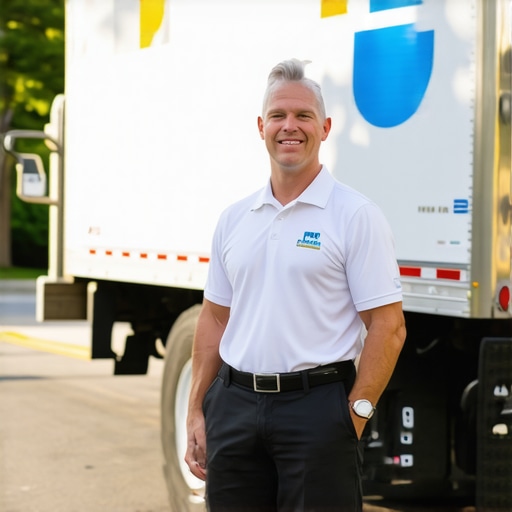
Fix the proximity trap in five minutes
Then there is the issue of where you tell Google you work. I have seen so many local businesses fall into the hidden proximity trap keeping your business out of the 3 pack because they set their service area way too wide. Google’s algorithm prefers local relevance. If you tell the system you cover a 100-mile radius but you are based in a small suburb, the algorithm gets confused. It thinks you are a jack of all trades and a master of none. Narrowing your service area to the neighborhoods you actually serve can actually expand your reach because Google finally understands where to place your pin. This is a vital piece of Google Maps optimization that most people ignore because they are afraid of missing out on leads further away. In reality, you are just becoming invisible everywhere.
Align your website with your map pin
I also discovered that why your website content matters more for map rankings than you think is often the missing link for businesses stuck on page two. Your map pin does not live in a vacuum. If your site does not mention the same services and neighborhoods your profile does, Google smells a mismatch. I spent an afternoon last month rewriting a client’s homepage to mirror their map attributes precisely. By Tuesday, their map pack seo profile had jumped three spots. It is all about consistency between what you tell the map and what your website proves to the bots. You need to stop wasting money on map strategies that ignore the technical link between your site and your map presence.
Let’s dig deeper because there is a common myth I see every single week: the idea that the business with the most reviews always wins. If that were true, the oldest shop in town would never lose their spot. But I have watched newcomers with twenty reviews dethrone giants with five hundred. Why? Because why review velocity is more important than total count in Google’s current eyes. If your last review was from three months ago, you are ‘stale’ to the algorithm. Google’s AI looks for recent validation that you are still providing excellent service.
Why more reviews won’t save a dying profile
Most people think they can just stop once they hit a certain number. They treat reviews like a trophy instead of a conversation. In my experience, a steady stream of two reviews a week is worth ten times more than a burst of fifty followed by silence. This is a massive part of mastering map pack seo strategies to boost local visibility. Google wants to see that you are active *now*, not that you were popular in 2019. This creates a ‘freshness’ signal that often outweighs total volume.
Can you actually outrank someone closer to the customer?
This is the advanced question I get most often from business owners in crowded cities. Everyone tells you that proximity is the #1 ranking factor, and while it’s heavy, it’s not unbeatable. According to the 2023 Whitespark Local Search Ranking Factors study, on-page signals and high-quality link authority can often override the ‘physical distance’ penalty. I have seen businesses three miles away outrank the shop right across the street because they had a superior google maps optimization strategy that focused on niche relevance and local topical authority rather than just being the nearest pin. 
The ghost office mistake that kills rankings overnight
Here is the ‘oops’ factor that ruins lives: the virtual office. I know, it’s tempting to get a fancy address. You want to rank in the wealthy part of town, so you rent a $50-a-month mailbox at a Regus or WeWork and claim it’s your headquarters. Don’t do it. Google’s spam filters are incredibly sophisticated now and are aggressively purging these listings. The risk of using virtual offices for local rankings is a permanent suspension that is a nightmare to resolve. You are much better off using your home address and setting yourself as a service-area business than trying to trick the algorithm into thinking you have a skyscraper office. If you have been following why generic seo advice is ruining your local map rankings, you know that these shortcuts usually lead straight to a ranking cliff.
Keep the engine running with fresh updates
Another nuanced mistake is treating your profile like a static billboard that you only update once a year. If you aren’t posting weekly updates or fresh photos, you are quietly telling Google that you might be closed or disinterested. I tell my clients that why your map listing needs fresh content every single week is about signaling life to both the bots and the humans. It’s not just about the rank; it’s about the conversion. A profile with a post from yesterday looks a lot more inviting than one where the last update was a holiday greeting from 2021. Have you ever fallen into this trap of ‘setting it and forgetting it’? Let me know in the comments. We need to shift from ‘how do I get seen’ to ‘how do I stay relevant.’ If you are ready to stop guessing, you can see how to rank higher in the google maps 3 pack today by focusing on these subtle trust signals instead of just brute force keyword stuffing.
Stop trusting those vanity metrics in your dashboard
I see it every day: a business owner pulls up a report showing they are #1 in the city. But when they drive three blocks north, they disappear entirely. This is why the data your map reporting tool is likely ignoring can be the difference between growth and bankruptcy. Standard rank trackers that give you a single average number are lying to you. You need to see the grid. If you aren’t looking at a geogrid—a visual map showing your rank at every intersection—you are flying blind. I personally use software that pings the map every 500 meters to find the exact street where my visibility drops off. It is the best way to track your map rank across a whole city without guessing where your customers are actually searching from.
Find the dead zones before your competitors do
When I find a ‘dead zone’ on my grid, I don’t just hope it fixes itself. I look for what I call ‘local signals’ in that specific neighborhood. Maybe there is a community center or a specific landmark I can mention on a service page. By using how we use software to spot visibility gaps on maps, we can target our efforts like a sniper instead of a shotgun. According to Joy Hawkins, a leading expert at Sterling Sky and a frequent contributor to the Local Search Ranking Factors survey, Google’s proximity filter is getting tighter, which means you have to work harder for every square mile. If you see a cluster of red dots on your map, it is usually because you haven’t proven relevance to that specific micro-neighborhood yet. 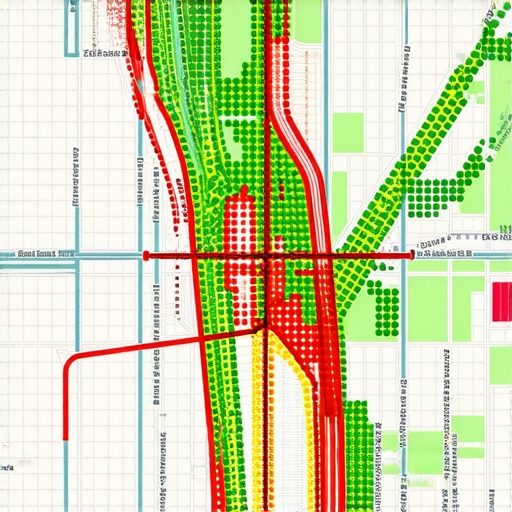
How do I maintain my local dominance over time?
The biggest threat to your ranking isn’t just your competitor; it’s the algorithm itself. I’ve seen businesses fall off the face of the earth overnight because they didn’t understand why your map ranking dropped after the recent update. Maintenance is about an ‘always-on’ mindset. You need to audit your citations at least once a quarter. But don’t waste time on every random directory. Focus on the 4 citation sources that actually drive map visibility: your main data aggregators, industry-specific hubs, and local chambers of commerce. In the coming year, I predict we will see AI-driven search results prioritize profiles that have the most ‘human’ interactions—think Q&As, direct messages, and authentic photos. To stay ahead, you must enhance maps visibility with proven seo techniques that focus on these interactive signals. My challenge to you: find one neighborhood where you are currently in the #4 or #5 spot and learn how to use hyperlocal targeting without changing addresses to bridge that gap today. Don’t wait for the phone to stop ringing to start caring about your map grid.
The Moment I Realized That Map Pins Are Emotional Not Technical
For years, I treated my map visibility like a spreadsheet. I thought if I just ticked the boxes, the phone would ring. The hardest lesson I learned is that Google might rank your pin, but neighbors choose your face. I spent a fortune on fancy backlinks while my profile didn’t even have a photo of my front door. Once I focused on why your google listing needs specific trust signals to rank higher, the ROI shifted almost instantly. It’s not about beating the algorithm; it’s about making the searcher feel safe enough to click ‘Call’. I also discovered that the specific data points that prove your map ranking is profitable aren’t always found in the Google dashboard—they’re found in your CRM.
#IMAGE_PLACE_HOLDER_E#
The Handful of Tools That Actually Move My Map Pin
I don’t believe in using fifty different softwares to manage one local business. I keep it lean. I rely heavily on WhiteSpark for citation cleanup because they understand the nuance of local data better than anyone else. For visual tracking, I use geogrid tools to find where I’m losing ground block-by-block. If you are on a budget, you can still find affordable local seo services to dominate the 3 pack that won’t break the bank while giving you professional-grade insights. Finally, I always keep the Google Business Profile mobile app handy—responding to a message in three minutes is the best ‘tool’ I have for conversion.
Take Back Your Neighborhood Today
You don’t need a massive agency or a five-figure budget to win this game. You just need to be more present and more authentic than the national chains trying to invade your zip code. Local search is the last great equalizer for small business owners. When you lean into google maps optimization with a focus on real human connection, you stop being a dot on a map and start being a pillar of your community. Start with that five-minute change we talked about, and watch how quickly the momentum builds. You’ve got the skills; now make sure the world sees them. Have you ever seen your ranking drop suddenly even when you haven’t changed anything? Let me know in the comments below!