I remember sitting at my kitchen table at 2 AM, squinting at a spreadsheet of two hundred “essential” business directories. I’d spent three days copy-pasting my NAP—Name, Address, Phone number—into sites I hadn’t heard of since 2005. I thought I was doing everything right. But three weeks later? My phone was silent, and I was still buried on page four of the local results. It was a slap in the face. I realized then that I wasn’t building a presence; I was just shouting into a digital void. Today, I want to show you how to stop wasting your life on those dusty directories and actually rank higher in the Google Maps 3-pack today by focusing on what Google actually cares about.
Standard Directories Are the Graveyard of Local SEO
Most “gurus” will tell you that more citations mean more trust. That’s a lie. Years ago, I fell for the trap of thinking generic directory listings were enough to move the needle. I spent money on automated tools that blasted my info to the corners of the web. It did nothing. Why? Because Google has gotten smart. According to research by BrightLocal, nearly 98% of consumers read online reviews for local businesses, and they aren’t looking for them on obscure directory sites. They are looking at the Map Pack. If you want to win, you have to stop wasting time on low-quality local directories and start signaling real-world relevance through google maps optimization.
Does ignoring directories actually put my ranking at risk?
I get it. It feels scary to ignore the “standard” advice. You’re worried that if you aren’t on every list, Google will think you aren’t legitimate. But let me tell you from experience: a single mention from a local neighborhood blog is worth more than a thousand listings on a generic directory site. When I shifted my focus to mastering map pack SEO strategies that emphasized local community signals over bulk submissions, my visibility didn’t just crawl—it leaped. Have you ever felt like you’re doing exactly what the experts say, yet your phone stops ringing even when you think you’re optimized? If so, you’re likely stuck in the citation trap, and it’s time to build a strategy that actually works in the real world.
Find Your Hidden Clicks with Secondary Categories
Think of your primary business category as your home address. It tells Google where you live. But your secondary categories? Those are the doors and windows that let customers find you from different angles. One of the biggest mistakes I see—and one I made early on—is picking a single category and calling it a day. If you are a plumber who also does HVAC, but you only list ‘Plumber,’ you are invisible to half your market. You need to optimize your business category for the local 3-pack by being specific. I once helped a local landscaper who was struggling to get calls for patio installs. We didn’t just wait for reviews; we looked at how to use secondary categories to appear in more searches and added ‘Paving Contractor’ and ‘Landscape Designer.’ Within two weeks, his impressions for those specific terms tripled. This isn’t about gaming the system; it’s about giving the algorithm the map it needs to find you.
Why Your Neighborhood Connections Drive More Map Clicks
Google is obsessed with proximity and real-world relevance. A generic link from a high-traffic blog in another country does nothing for your local standing. I learned this the hard way when I spent a month trying to get a mention on a national tech site for a local client. The rank didn’t budge. Frustrated, we reached out to a local community center we’d supported. They gave us a simple shout-out on their ‘Local Partners’ page. That one link—from a site with almost no global authority—pushed the needle more than the national site ever could. It proved that local community links drive more map clicks than industry blogs because they signal to Google that you are actually part of the physical neighborhood you claim to serve. If you want to rank higher in the Google Maps 3-pack today, stop hunting for massive ‘DR’ scores and start looking for the simple local link strategy that moves your map pin fast. 
Show Google You Are Alive with Fresh Content
A static profile is a dying profile. Think of your Google Business Profile as a shop window. If the same dusty mannequin has been standing there since 2019, people—and Google—assume the store is closed. You need to prove you are active. I recommend people how to audit your business profile in under ten minutes every week just to check for stale info. One of the most overlooked signals is ‘Review Velocity.’ Most business owners obsess over the total number of reviews, but Google looks at how often you get them. This is why review velocity is more important than total count; it shows you are still in business and customers are still happy. Pair that with fresh visuals by following the checklist for optimizing profile photos for more clicks. When you consistently update your profile, you provide the specific trust signals to rank higher that the algorithm craves. It’s not about doing a thousand things once; it’s about doing five things consistently.
Let’s dig deeper into why your map pin might be stuck in place despite your best efforts. Most people assume that if they aren’t physically located in the center of the city, they are doomed to fail. This is the biggest myth in local search. While proximity matters, it is not the untouchable king it once was. In fact, proximity is not the only factor in local ranking, and obsessing over it is usually why your map strategy is losing you money.
Stop Obsessing Over Your Office Address
I’ve seen businesses with tiny offices on the edge of town outrank massive headquarters right in the city center. Why? Because they built a stronger ‘entity’ in Google’s eyes. Google looks for prominence and relevance, not just how many miles you are from the user. When you invest in affordable local seo services to dominate the 3-pack, you aren’t just buying links; you’re building a digital footprint that screams authority. A study by Sterling Sky recently highlighted how businesses can actually expand their ranking radius by focusing on topical relevance on their website rather than just proximity. If your site doesn’t match the intent of the map search, you’ll never win. This is why your website content matters more for map rankings than you think.
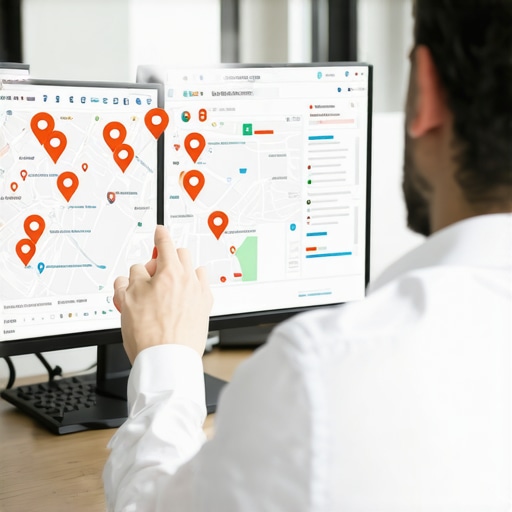
Why does a competitor with zero reviews still beat my five-star rating?
This is the question that keeps business owners up at night. You’ve worked hard for fifty 5-star reviews, yet a guy with a blank profile is sitting in the number one spot. It feels like a glitch, but it’s usually because of ‘relevance signals.’ That competitor might have a website that is perfectly optimized for specific neighborhood keywords or they might have high-quality local backlinks that you lack. It’s a bitter pill to swallow, but why competitors with zero reviews sometimes rank higher often comes down to the strength of their underlying SEO foundation. They are winning the ‘relevance’ game even if they are losing the ‘reputation’ game. Have you ever fallen into this trap where a ‘worse’ business is outranking you? Let me know in the comments.
Don’t Fall for the Keyword-Stuffed Business Name Trap
Here is the ‘Oops’ factor you must avoid. You might see a competitor ranking by naming their business ‘Best Plumbing Repair Denver.’ It looks like a shortcut, and it might work for a month. But this is the hidden penalty for keyword stuffing your business name: eventually, Google—or a jealous competitor—will flag your listing. When that happens, your profile gets suspended, and you lose years of progress in a single afternoon. I have seen businesses disappear from the map entirely because they tried to game the system this way. Instead, you should enhance maps visibility with proven seo techniques that focus on legitimate attributes and categories. If you want to rank higher in the google maps 3-pack today, you need to play the long game. Building a profile that lasts is far better than a temporary boost that ends in a ban. If you’re struggling to see progress, it might be time to contact us to audit what’s actually holding you back.
You cannot simply ‘set and forget’ your local presence and expect to stay on top. The map is a living, breathing marketplace. I’ve watched business owners celebrate reaching the top spot, only to vanish three months later because they stopped doing the very things that got them there. If you want to stay relevant, you need to transition from the setup phase into a consistent growth phase. One of the most effective ways I do this is by looking at the data most people ignore. I use specialized grid tracking tools to see exactly where my visibility drops off, literally street by street. This allows me to see how we use software to spot visibility gaps on maps and adjust my strategy before the phone stops ringing. If you aren’t looking at your ranking from the perspective of different neighborhoods, you’re flying blind.
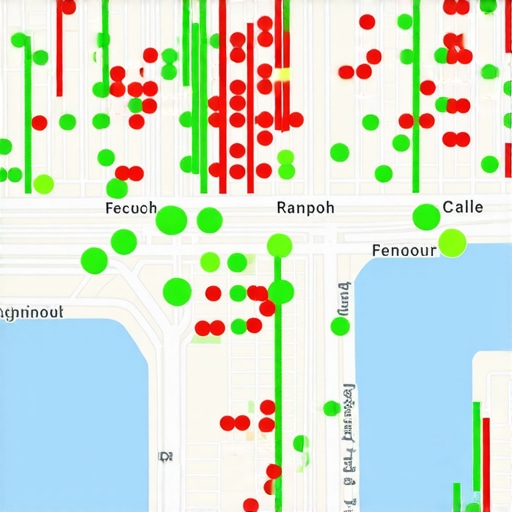
When I’m working on a client’s long-term strategy, I lean heavily on behavioral signals. According to the Whitespark Local Search Ranking Factors survey, things like ‘clicks to call’ and ‘request for directions’ are becoming increasingly critical for maintaining that top-tier status. Google wants to see that real humans are interacting with your profile. This is why I always suggest a dedicated weekly routine for dominating your neighborhood 3-pack. It doesn’t take hours; it takes fifteen minutes of intentionality—answering a question, posting a new photo, or responding to a fresh review. Without this, your profile becomes a ghost town, and the truth about why local rivals keep stealing your clicks usually boils down to them simply being more active than you.
How do I maintain my map rank without burning out?
The secret is automation for the boring stuff and human touch for the important stuff. You can automate your reporting and even some of your social posting, but you should never automate your review responses or your ‘Questions and Answers’ section. I personally use the Q&A section as a mini-blog. I’ll have a customer ask a common question, and I’ll provide a detailed, helpful answer that naturally includes local keywords. Learning how to use the qa section to convert map searchers is one of those ‘high-effort, high-reward’ tasks that keeps your profile fresh and authoritative. If you feel like you’re falling behind, don’t panic. Often, a small dip is just part of a broader algorithm shuffle. Check if your map ranking dropped after the recent update before you go changing everything. Usually, it’s just a sign that you need to double down on your local links and fresh content.
The Map Landscape of 2025 and Beyond
As we look forward, the way people search is changing. We are moving away from typing three words into a bar and moving toward conversational AI and voice-activated assistants. My prediction? Within the next two years, the ‘Map Pack’ will be more about how well you answer specific, complex questions rather than just having the right category. You need to start thinking about how to optimize for voice search on google maps now to be ahead of the curve. If your profile is just a Name, Address, and Phone number, you are going to get left behind by businesses that provide rich, conversational data. Stop playing catch-up and start building a profile that is ready for the next decade of local search. If you’re not sure if your current path is working, look at your numbers—honestly. Is your ROI where it should be, or is your current map strategy losing you money? Today, I want you to do one thing: go to your profile and answer one unaddressed question in your Q&A section with a detailed, helpful response. That one act of maintenance does more for your trust signals than any generic directory ever could.
The Hardest Lesson I Learned About Maps Visibility
After years of fine-tuning google maps optimization, the biggest ‘lightbulb moment’ wasn’t about a technical hack—it was about the realization that Google is trying to mimic a local resident’s recommendation. I used to think I could out-cite the competition, but I learned that local competitors keep stealing your leads not because they have more data, but because their data feels more ‘alive’. I’ve realized that asking every customer for a review might actually hurt you if it looks unnatural. The key is steady, organic growth that proves you are a staple of your community, not just a temporary resident of the search results.
#IMAGE_PLACEHOLDER_E#
My Essential Toolkit for Dominating the 3-Pack
You don’t need a thousand tools; you need the right ones. I personally swear by Whitespark’s Local Citation Finder to identify those rare, high-impact local links that directories miss. I also keep a close eye on the Sterling Sky Local Search Forum—it’s where the real testing happens before the ‘gurus’ even hear about it. If you are struggling to see the financial return, I recommend learning how to prove your map rankings are making money using Google’s built-in insights. Finally, if the technical side feels like too much, investing in affordable local seo services to dominate the 3-pack can save you months of trial and error.
Your Map Pin Deserves the Spotlight
Local SEO isn’t a race with a finish line; it’s a garden that needs tending. The strategies we’ve discussed—from choosing the right categories to building neighborhood authority—are your seeds. Now, it’s time to water them. Don’t let your business be the best-kept secret in town. You have everything you need to rank higher in the Google Maps 3-pack today and turn those local searches into lifelong customers. Have you ever noticed your map rank drop even when your reviews were perfect? Let me know in the comments below, and let’s figure out why!