
I’ll never forget the Tuesday I finally hit the top spot. I had been obsessing over google maps optimization for months, and there I was—sitting pretty at #1 for my most competitive keyword. I expected a deluge of calls, the kind that makes you hire a second receptionist immediately. Instead, there was just silence. My phone sat there like a paperweight, mocking me. It was a visceral realization that ranking high is a vanity metric if nobody actually clicks the ‘Call’ button or trusts what they see on the screen. I spent a week thinking Google’s reporting was broken before I realized the mistake was entirely mine. We often think that rank higher in 3 pack strategies are the finish line, but they are really just the entry fee to a much more competitive game of human psychology. Today, I’m going to show you why your visibility isn’t translating into revenue and how we can flip that switch back to ‘on’ by looking at what happens after the search.
The Hidden Gap Between Visibility and Actual Customers
In my early days as an enthusiast in this space, I made the classic blunder of assuming that humans act like cold, hard algorithms. I focused so much on map pack seo that I completely ignored the person on the other side of the glass. I once ignored my business description and photo gallery for six months while chasing technical ‘proximity’ rankings, only to find out a competitor with half my reviews was stealing my leads because their photos looked like they actually enjoyed their job and their business was alive. It was a hard pill to swallow, but a necessary one. According to a study by BrightLocal, the average business gets about 59 actions per month from their profile, but that number isn’t guaranteed just by showing up; it’s earned through engagement and trust. If your profile looks like a digital graveyard—outdated hours, grainy photos, or unanswered questions—it doesn’t matter if you’re the first thing people see. They will simply scroll past you to find someone who looks like they are actually open for business. We need to look deeply at why every map click isnt turning into a phone call and identify where the trust is leaking out of your funnel. I’ve even seen businesses lose thousands because they didn’t realize their ‘Call’ button was linked to an old landline they disconnected years ago. Have you ever felt that sinking feeling of winning the ranking game but losing the profit war?
Does being in the top 3 even matter if the phone stays quiet?
It’s a fair question, and honestly, one you should be asking yourself every time you check your analytics. You’ve put in the work, maybe even invested in an seo service local, and you’re finally seeing those beautiful green dots on your rank tracker. But if the ROI isn’t hitting your bank account, skepticism isn’t just okay—it’s necessary. The truth is, maps visibility is a multiplier, not a magic wand. If your ‘offer’ or your ‘brand trust’ is a zero, then zero times the number one rank is still zero. We have to address the 5 simple profile errors that are killing your phone calls before we worry about climbing another inch. It’s incredibly common to fail here because we’ve forgotten that Google Maps is a visual platform first and a search engine second. Let’s get into the nitty-gritty of why this happens and how to turn those views into voices on the other end of the line.
Fix the Foundation Before You Build Higher
I once worked with a plumber who was obsessed with his google maps optimization. He was ranking for every ‘drain cleaning’ keyword in a ten-mile radius, but the phone was dead. When we looked closer, he had set his primary category to ‘Construction Company’ because he thought it sounded bigger and more impressive. We spent twenty minutes switching it to ‘Plumber’ and suddenly, the leads didn’t just trickle in—they flooded. This was a massive lesson for me: Google is a matchmaker, not a magician. If you tell the matchmaker you’re a bodybuilder when you’re actually a chef, you’re going to have some very disappointed dates. You must optimize your business category for the local 3 pack with surgical precision. Don’t guess. Look at what the top three guys in your city are using as their primary category and follow the leader. Your high impact profile settings are the levers that actually move the needle, and categorization is the biggest lever of them all.
Stop Posting Grainy Photos and Start Building Trust
Think of your profile like a high-end restaurant menu; if the photos look greasy and the lighting is dim, nobody is ordering the steak, no matter how good it actually tastes. I see business owners upload one blurry photo of their truck from 2018 and wonder why their map pack seo isn’t working. You need to treat your gallery like a visual sales pitch. People want to see the face of the owner, the interior of the shop, and the ‘after’ results of your work. We found that profiles with more than 100 photos get significantly more clicks than those with the bare minimum. You need a consistent checklist for optimizing profile photos for more clicks to ensure every image works in your favor.  If you aren’t showing the human side of your business, you’re just another pin on a map. I’ve seen business photos failing to attract local leads simply because they didn’t include a picture of the team smiling. It sounds trivial, but in a world of bots and AI, ‘real’ is the most expensive currency you have.
Answer the Questions Before They Even Ask
The Q&A section is the most underutilized tool in the entire Google Business Profile arsenal. Most owners wait for a customer to ask a question, and then they ignore the notification for three weeks. That is a lead-killing mistake. You should be proactive. Write your own frequently asked questions and answer them yourself. It’s perfectly legal within Google’s guidelines and it helps you use the qa section to convert map searchers instantly. If you’re a dentist, answer ‘Do you take XYZ insurance?’ or ‘Is there free parking?’ right there on the profile. This removes friction. When you remove friction, you increase maps visibility because users stay on your profile longer and interact with your content. Every second they spend reading your Q&A is a second they aren’t looking at your competitor.
Why Speed Wins the Review Game
Everyone knows you need reviews to rank higher in 3 pack results, but most people focus on the total count. That’s an old-school way of thinking. Google cares about ‘freshness’ and ‘velocity.’ If you have 500 reviews from 2021 but zero from last month, you look closed. I once saw a locksmith lose his #1 spot to a guy with 40 reviews simply because the new guy was getting three reviews a week while the veteran was stagnant. This is why review velocity is more important than total count in the current algorithm. You need a system—whether it’s a QR code on your counter or an automated text after a service—that ensures a steady drip of feedback. If you’re struggling with this, looking into an seo service local that specializes in reputation management can be the shortcut you need to keep that momentum going.
Let’s dig deeper into the actual mechanics that the gurus usually gloss over. Everyone tells you that proximity is the ‘big boss’ of the algorithm, but they’re only half right. I’ve seen businesses sit right next door to a customer and still lose the click to a competitor three miles away. This is the hidden proximity trap keeping your business out of the 3 pack. While Google definitely considers distance, it values ‘Prominence’ and ‘Relevance’ just as much. If your profile has stronger signals of being an authority in the neighborhood, Google will happily ignore the physical distance to provide the better result.

I’ve spent years analyzing why proximity is not the only factor in local ranking, and data from the Moz Local Search Ranking Factors study confirms that your off-page signals—like your local backlinks and website authority—often outweigh being the closest option. If you aren’t building a presence outside of the map itself, you’re building on sand.
Can you actually outrank a competitor who is physically closer?
The answer is a resounding yes, but it requires moving past basic google maps optimization and into the realm of ‘hyperlocal’ authority. Most business owners make the mistake of chasing high Domain Authority guest posts on generic blogs. It’s a waste of time. I’ve found that local community links drive more map clicks than a mention on a massive industry site ever will. A link from the local little league team or a neighborhood association tells Google’s algorithm exactly where you are and who you serve. This is how you master map pack seo—by being the most relevant choice, not just the closest one.
The dangerous game of keyword stuffing your business name
Now, let’s talk about the ‘Oops’ factor that gets people banned. It is incredibly tempting to change your business name from ‘Dave’s Plumbing’ to ‘Dave’s Plumbing – Best Plumber in Chicago 24/7.’ In the short term, you’ll see a spike in maps visibility. In the long term, you’re flirting with a hard suspension. I’ve seen entire accounts wiped out because of the hidden penalty for keyword stuffing your business name. Once Google flags you, you’re stuck in a nightmare of appeals. We once fixed a frozen profile without calling support, but it took months of cleanup that could have been avoided by just staying clean from the start.
Why your website is the secret weapon for your map pin
Another nuance most seo service local providers miss is the connection between your on-site content and your map ranking. Google reads your website to understand the depth of your services. If your site doesn’t talk about the specific neighborhoods you serve, your map pin won’t show up there. I realized why your website content matters more for map rankings after seeing a client’s position jump five spots just by adding city-specific service pages. You need to rank higher in 3 pack results by connecting the dots between your digital footprint and your physical location. Have you ever fallen into this trap? Let me know in the comments.
I used to think that once I hit the top of the map pack, I could just sit back and watch the leads roll in forever. I was wrong. Local SEO isn’t a trophy you keep; it’s a lease you have to renew every single week. If you stop the momentum, your competitors—who are likely using an seo service local to hunt you down—will gladly take your spot. To stay on top, I rely heavily on specific software to visualize what’s happening beneath the surface. I’m a huge fan of using heat-mapping tools like Local Falcon or BrightLocal because they show you a grid of your rankings across the city, not just at your front door. This is exactly how we use software to spot visibility gaps on maps that a standard search simply won’t reveal. If I see a ‘red’ spot three blocks away, I know I need to adjust my local content strategy for that specific neighborhood.
The tools that separate the pros from the amateurs
Beyond heat maps, you need to be looking at the raw data that Google hides from the standard dashboard. Most people just look at ‘Views,’ but I look at ‘Branded vs. Discovery’ searches. I’ve found that the data your map reporting tool is likely ignoring is often the most important for scaling. For instance, I use the ‘GMB Everywhere’ Chrome extension to audit my competitors’ categories in seconds. It allows me to see their secondary categories, which are often the secret sauce to their maps visibility. If a competitor is outranking you, they probably have a secondary category like ‘Heating Contractor’ while you only have ‘Plumber.’ This level of granular detail is the only way to master map pack seo in a crowded market.
How do I keep my map ranking from falling over time?
Maintenance is where most business owners fail. They do a big push for a month and then go silent. I’ve developed a strict weekly routine for dominating your neighborhood 3 pack that centers on fresh activity. This includes answering one new Q&A, uploading three fresh photos from the week’s jobs, and responding to every single review within 24 hours. Research from Sterling Sky suggests that while ‘posting’ itself might not be a direct ranking factor in the way backlinks are, the engagement it drives—and the signals of an ‘active’ business—absolutely influence the algorithm’s trust. This is why your map listing needs fresh content every single week. If Google sees your profile is a hub of recent activity, it’s much more likely to show you to a searcher than a dormant profile. Don’t forget that why replying to reviews faster improves your visibility is tied directly to user experience metrics that Google tracks obsessively.
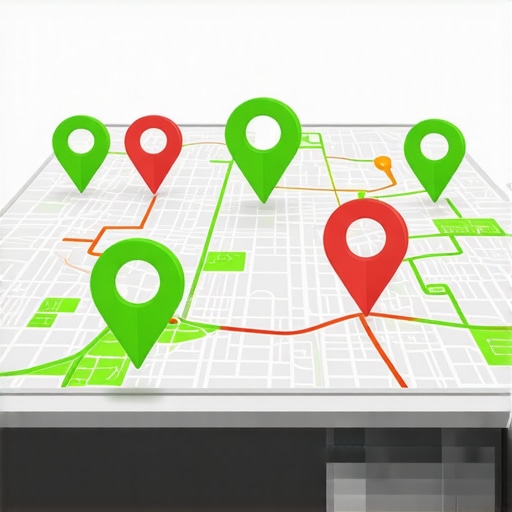
Looking ahead, I predict that google maps optimization is going to shift heavily toward AI-driven ‘zero-click’ interactions. With the rise of Search Generative Experience (SGE), Google will start answering more questions directly from your profile data without the user ever clicking your website. This means your attributes and Q&A section will become your primary sales floor. To stay ahead, you should start implementing these 7 google business profile tips for 2026 right now. My best advice? Go into your profile right now and add ten highly specific attributes—like ‘Identifies as veteran-owned’ or ‘Wheelchair accessible seating’—that your competitors are too lazy to check. It’s a five-minute task that can instantly help you rank higher in 3 pack results for niche searches.
The Painful Lessons I Learned While Chasing the Map Pack Dragon
Looking back, the biggest mistake I made wasn’t technical; it was emotional. I treated my map listing like a set-and-forget billboard rather than a living, breathing digital storefront. I realized that maps visibility is incredibly fragile—one week of ignoring your customers or letting your photos get stale is enough to let a hungrier competitor slide right past you. Another hard truth is that rankings don’t pay the bills; conversions do. You have to learn how to prove your map rankings are making money so you don’t waste time on ‘vanity’ keywords that never result in a phone call. I also learned that why your google listing needs specific trust signals to rank higher is often more about the small, human details—like a personalized reply to a negative review—than it is about the number of times you mention your city name.
My Daily Arsenal for Staying in the Top 3
I don’t believe in magic, but I do believe in having the right tools to sustain a google maps optimization effort. #IMAGE_PLACEHOLDER_E# First, I never start a week without checking a local heatmap; if you aren’t seeing where your ‘dead zones’ are, you’re flying blind. Second, I’m obsessed with the truth about how often you need to post to your profile—hint: it is more about consistency than volume. Finally, I always focus on the only three attributes that actually change your rank rather than getting bogged down in every tiny setting Google offers. These tools and focus areas turn a chaotic map pack seo strategy into a predictable growth machine.
Your Journey to Dominating the Neighborhood Starts Now
You now have the blueprint to not just show up, but to actually win. Local search is the most level playing field in marketing today; a small mom-and-pop shop can absolutely outshine a national franchise if they care more about their local reputation and data accuracy. If you are feeling overwhelmed, remember that you do not need to do everything at once. Start with your photos, move to your reviews, and consider an seo service local if you want to scale faster. Your efforts to rank higher in 3 pack results are well within reach if you stay consistent. Go out there and claim your spot on the map. Have you ever felt like you are doing everything right but still not seeing the phone calls you expected? Let me know your experience in the comments below!