
Look, I have been exactly where you are. Three years ago, I sat at my desk, staring at a competitor who had somehow managed to wedge five different keywords into their business name and was sitting pretty at the top of the local results. I felt like a sucker for playing by the rules. So, I decided to get ‘clever.’ I logged into my dashboard and changed my humble consulting name to include every buzzword under the sun. I thought I was a genius who had finally cracked the code of google maps optimization. Within forty-eight hours, my phone stopped ringing. My profile wasn’t just lower in the rankings; it was gone. It had vanished into the ether. That moment of panic taught me more about the reality of the 3-pack than any expensive course ever could. Today, I want to show you how to rank higher in 3 pack results without risking a total blackout.
The Moment I Realized My Clever Hack Was a Disaster
I remember the pit in my stomach when I searched for my own business and saw a big fat zero. My ‘optimization’ had triggered a manual review, and Google was not impressed. I spent the next three weeks in a desperate scramble, trying to figure out how we fixed a listing that was stuck in the search results graveyard after a similar blunder. It turns out that Google’s algorithm is incredibly sensitive to what it perceives as ‘deceptive naming.’ While it might work for a week or even a month, the hidden penalty is always looming. It is one of the most 4 costly errors keeping your shop out of the map pack today. When you stuff your name with keywords, you aren’t just flirting with a suspension; you are actively eroding the trust Google has in your data. Honestly, have you ever felt that temptation to just add ‘Best Plumber’ or ‘Top Rated’ to your profile name just to see what happens?
Can a few extra keywords really get you banned?
Between you and me, the short answer is a resounding yes. You might see others doing it and getting away with it, but that is a survivorship bias that will eventually catch up to them. According to a study by Joy Hawkins at Sterling Sky, a leading authority in the local search space, keyword stuffing in the business name is the primary reason for most user-reported spam removals and manual suspensions. Google wants to see the name that is on your physical signage, not a laundry list of services. If you want to rank higher in the Google Maps 3 pack today, you have to build a foundation that won’t crumble the next time the algorithm sneezes. I learned the hard way that why your google listing needs specific trust signals to rank higher is far more important than a temporary boost from a fake name.
Why Honest Branding Beats Shady Tactics Every Single Time
Once I stripped away the fluff and went back to my real business name, I had to work twice as hard to regain the ground I lost. But here is the thing: the traffic I got afterward was higher quality. People trust a real brand name more than a generic string of keywords. If you are struggling with maps visibility, the solution isn’t to lie to the search engine; it’s to provide better signals. I started focusing on things like affordable local SEO services to dominate the 3 pack that rely on real-world reputation and solid data. We’re going to dive into the exact steps you should take to clean up your profile and protect your livelihood from these hidden penalties, ensuring your map pack seo strategy is built to last.
Pick One Primary Category to Rule Them All
When I first started helping a local contractor, he was listed under ‘General Contractor.’ It sounds correct, right? But he was losing every high-value job to a guy down the street. We dug into the data and realized his real money-maker was bathroom remodeling. By simply shifting his primary category and following the steps for how to optimize your business category for the local 3 pack, his visibility for specialized searches skyrocketed. Google treats your primary category like the title of a book; if the title is too broad, the right readers never find it. You must be specific. If you provide a seo service local, don’t just call yourself a consultant; tell Google exactly what you specialize in to avoid being buried under generalities.
Turn Your Profile into a Visual Magnet
Think of your business profile as a digital storefront window. If the glass is dusty and the mannequins are from 1994, nobody is coming in. I once saw a law firm that only had one photo—a blurry shot of their lobby. They wondered why their maps visibility was non-existent. We implemented the checklist for optimizing profile photos for more clicks, and the engagement rate tripled in a month. It isn’t just about the ‘look’; it is about the data behind the image. Most people don’t realize that the specific photo metadata that actually helps your local map rank is a massive signal to Google that your business is active and physically present in that specific neighborhood.
Stop Obsessing Over Your Distance from City Hall
There is a persistent myth that if you aren’t located in the dead center of town, you can’t rank higher in 3 pack results. That is total nonsense. I’ve seen businesses three miles further out beat the ‘downtown’ guys because their relevance signals were stronger. Understanding why distance from the center is not your ranking problem allows you to focus on what actually matters: authority. Before you consider moving offices or getting a virtual address (which is a fast track to a ban), you should how to audit your business profile in under ten minutes to see where the real leaks are. Often, it is just a matter of toggling the high-impact profile settings most owners forget, like appointment links or specific service attributes.
Why Your Neighbors Matter More Than Forbes
In the world of map pack seo, a link from a local little league team or a neighborhood blog is worth ten times more than a generic directory listing. Google’s google maps optimization algorithm looks for ‘localness.’ When I helped a local bakery, we stopped chasing big industry mentions and started sponsoring local community events. The result? Their map pin moved faster than any technical tweak could achieve. This is exactly why small local links drive better rank than guest posts; they prove to the algorithm that you are a pillar of your specific geographic area. It is about building a digital footprint that matches your physical one.
The Big Review Lie No One Tells You
Most gurus will tell you that the person with the most reviews wins. It sounds logical, right? But if that were true, the oldest business in town would always be at the top of the pile. In my experience, and backed by the annual Local Search Ranking Factors study by Whitespark, Google cares far more about relevance and velocity than the sheer number of stars. If you got fifty reviews three years ago and nothing since, your profile is essentially a ghost town. This is why review velocity is more important than total count in the modern algorithm. I have seen tiny shops with twenty recent, keyword-rich reviews completely leapfrog established players who haven’t updated their profile in months. Google wants to see that you are active now, not that you were popular in 2021.
Why do competitors with zero reviews sometimes rank higher?
It feels like a glitch in the matrix, doesn’t it? You see a guy with no profile picture and zero stars sitting in the 3-pack while you are buried on page two. Usually, this happens because their website has massive local intent authority. This is a huge nuance that many overlook: your website SEO is a physical tether to your map pin. If your site is optimized for the specific neighborhood but your profile is just okay, you can still win. I often explain to clients why your website content matters more for map rankings than you think because Google uses your site to verify what your business actually does and where you do it. If your landing pages are weak, your map pin will be too.
Don’t Fall into the Proximity Trap
Here is the ‘oops’ moment I see almost every week: business owners think that by setting a massive service area—say, a fifty-mile radius—they will show up for more people. The opposite is actually true. When you tell Google you serve a massive area without the local signals to back it up, you dilute your authority at the core. This is the hidden proximity trap keeping your business out of the map pack. You are much better off dominating a tight three-mile radius and expanding slowly than trying to be everywhere and ending up nowhere. Setting your service area too wide makes you look like a generic national chain rather than a local expert, which is exactly the opposite of what google maps optimization is supposed to achieve.
Look Beyond the Usual Directories
To really rank higher in 3 pack results, you need to look beyond the basic directories like Yelp or YellowPages. Everyone is on those; they are the bare minimum. Real map pack seo success comes from what we call unstructured citations. Think local news mentions, blog features, or even a link from a neighborhood association. These are the unstructured citations your business is missing that prove to Google you are a local fixture, not just a digital ghost. If you have been focusing on the same old directories, you are missing the real power of a sophisticated seo service local strategy. By focusing on these high-quality, neighborhood-level links, you can google maps optimization unlock your business potential and leave the competition wondering how you did it. You must avoid the 4 costly errors keeping your shop out of the map pack, starting with the belief that a 5-star rating is a magic wand. Have you ever fallen into this trap of chasing quantity over quality? Let me know in the comments.
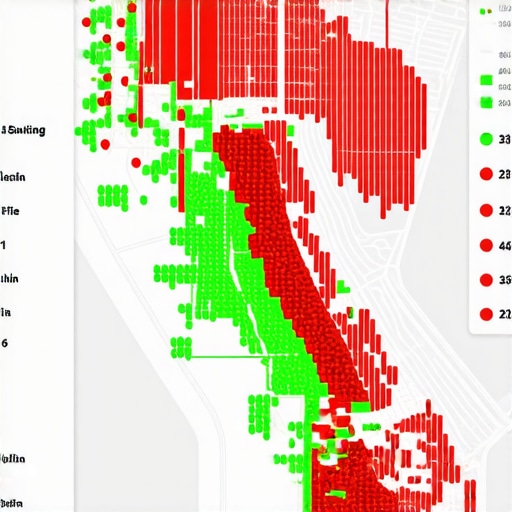
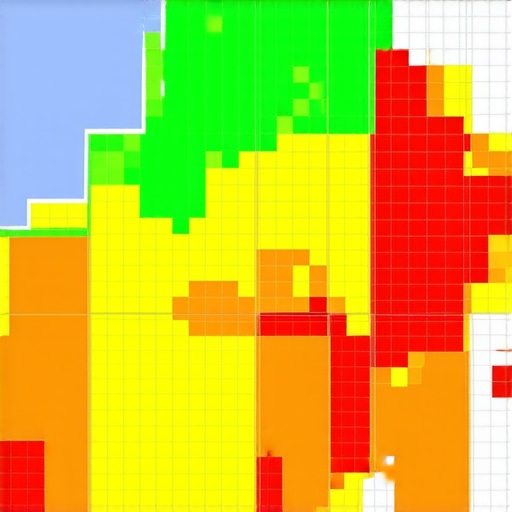
I used to check my rankings by standing in my driveway and typing my business name into my phone. If I saw myself at the top, I celebrated. It was a total amateur move. The reality is that your maps visibility changes block by block. If you are sitting in your office, of course you look like number one—you are literally on top of your own pin. To truly scale, you have to stop flying blind. I started using Local Falcon for grid tracking because it gives me a ‘heat map’ of my actual performance across the entire city. It showed me that while I was winning in my neighborhood, I was invisible just two miles north. This is exactly why your local keyword tracking is probably lying to you and why you need a more granular approach to map pack seo.
Stop Flying Blind with Local Grid Tracking
When I’m looking to rank higher in 3 pack results for a client, I don’t just look at a list of keywords. I look at the ‘red zones’ on a map. By using tools like Local Falcon or BrightLocal, you can see exactly where your authority drops off. We use this data to determine where we need to deploy more hyperlocal content. This is how we use software to spot visibility gaps on maps before the competition even realizes there is a fight. If you aren’t seeing your business move, it’s likely because you’re optimizing for the city as a whole instead of the specific neighborhoods where you’re currently losing ground. Google maps optimization is a game of inches, and these tools are your measuring tape.
How do I keep my map position from slipping after a win?
Winning the top spot is one thing; keeping it is a whole different beast. I’ve seen businesses hit the number one spot and then immediately stop posting updates, thinking the job was done. Within a month, they were back on page two. You have to treat your profile like a living organism. I follow the weekly routine for dominating your neighborhood 3 pack which includes responding to every single review within 24 hours and uploading at least three new photos. According to BrightLocal’s 2024 Local Consumer Review Survey, 81% of consumers use Google to evaluate local businesses, and they are looking for recency. If your last post was from 2022, you look like you’ve gone out of business. Maintenance is the secret sauce of a high-performing seo service local strategy.
The Conversational Future of Local Search
Looking ahead, the ‘near me’ era is shifting into the ‘AI-search’ era. People aren’t just typing ‘plumber’ anymore; they are asking their phones, ‘Where can I find an affordable plumber who can fix a leak today?’ This means your profile needs to be conversational. I predict that Google will rely even more heavily on your Q&A section and review text to provide these answers. You should start to how to optimize for voice search on google maps by seeding your Q&A with real questions your customers ask. This helps you enhance maps visibility with proven seo techniques that focus on intent rather than just keywords. If you want to stay ahead, you need to stop thinking about your profile as a static yellow pages ad and start thinking of it as a customer service portal.
You have the blueprint now, so it’s time to move beyond the basics. If you are serious about your growth, I want you to try this right now: go into your profile and answer three of your own most-asked questions in the Q&A section using natural language. It’s a small move that provides massive signals to the algorithm. For those who want a professional edge to ensure they never fall out of the rankings, exploring affordable local SEO services to dominate the 3 pack can provide the consistent oversight needed to protect your territory. Don’t let your hard work go to waste by letting your profile go stale.
The Most Expensive Lessons I Learned the Hard Way
After years of obsessing over google maps optimization, the biggest ‘lightbulb moment’ wasn’t a technical fix—it was realizing that Google mimics a human customer’s logic. If you look inconsistent, outdated, or unresponsive, the algorithm treats you like a business risk. I finally understood that map pack seo is less about tricking a computer and more about proving you are a reliable, active local pillar. Another hard truth? Most business owners fail because they follow ‘one size fits all’ strategies that ignore their specific city. I’ve seen firsthand why generic seo advice is ruining your local map rankings and why a hyperlocal focus is the only way to survive long-term.
The Personal Stack I Use to Stay on Top
To keep my clients winning, I don’t guess; I use tools that reveal the truth. I personally trust Local Falcon for heat-mapping visibility and Whitespark for managing the deep citation data that most people ignore. I also find myself constantly referencing mastering map pack seo strategies to boost local visibility whenever the algorithm feels like it’s shifting. These resources are why I can confidently say that better maps visibility is a science, not a lottery. If you are struggling to make sense of your own data, you can always contact us to get a professional audit of your current standing.
It Is Time to Claim Your Territory
The 3-pack isn’t reserved for the biggest budgets; it’s reserved for the most relevant businesses. You now have the blueprint to rank higher in 3 pack results by focusing on real-world trust signals and consistent engagement. It is entirely possible to outmaneuver multi-million dollar corporations if you know how to win the 3 pack without spending a dime on ads. Your business deserves to be seen by the neighbors searching for you right now. Don’t let your profile sit stagnant for another day. Have you ever felt like you were doing everything right but your map pin just wouldn’t move? Let me know your story in the comments below!