
I’ll never forget the Tuesday I realized my business was practically a ghost. I had the 5-star reviews and the shiny office downtown, but the moment I drove ten minutes north into the residential hills—where all my best customers lived—my business vanished from the map. It was like I didn’t exist. I actually felt a knot in my stomach as I sat in my car, refreshing my phone, hoping I’d just lost signal. I even considered renting a tiny, windowless closet in a different zip code just to get a utility bill for a new address. I was desperate. I fell for the trap of creating those spammy city pages that Google eventually ignored anyway. I made the classic mistake of thinking I had to move my physical walls to move my map pin. But I was wrong, and today, I’m going to show you how to fix it without signing a new lease. [image]
How I stopped chasing new zip codes and started winning local searches
Look, I’ve been in your shoes, staring at a competitor who is ranking in towns where they don’t even have an office. It feels like they have some secret key you weren’t given. But then I had a lightbulb moment: Google doesn’t just look at where your desk is; it looks at where your influence is felt. I stopped obsessing over my physical coordinates and started focusing on how hyperlocal targeting actually works in the modern algorithm. By shifting my strategy toward neighborhood-specific signals instead of generic, broad SEO, I watched my visibility expand into areas I previously thought were off-limits.
Does this really work if I don’t have a physical office there?
I get the skepticism. You’ve probably heard that proximity is the only thing that matters for improving your maps visibility. And while Google loves a nearby business, it rewards a highly relevant business even more. According to data from BrightLocal, about 76% of consumers look for specific local information before they ever commit to a visit or a call. If you provide that depth of hyper-relevant information through your profile and site, the algorithm starts to trust your relevance far beyond your front door. Have you ever felt like you’re losing out to a competitor just because of a specific zip code? Send me a message or comment below; I want to hear your biggest local frustration before we dive into the fix.Think of your Google Business Profile like a radio station. Your physical office is the tower. It has a natural range, but if you want to reach the listeners in the next valley, you don’t necessarily need a taller tower—you need signal boosters. This is where mastering map pack SEO strategies comes into play. You are essentially placing digital repeaters throughout the neighborhoods you want to serve. I remember working with a local plumber who was frustrated that he couldn’t break into a wealthy neighborhood just four miles away. He had the best tools and the best team, but he was invisible. We realized his website and profile were talking about the “Greater Metro Area”—a term no one actually uses when they have a leak. We scrapped the generic talk and started documenting his actual jobs in that specific neighborhood. We didn’t just say he served the area; we proved it by mentioning the specific street names and the common drainage issues those 1950s-era homes faced. Within weeks, his maps visibility in that zip code spiked because Google finally had proof of relevance.
Turn your business into a neighborhood authority
The biggest myth in local search is that you are trapped by your four walls. While it’s true that distance matters, proximity is not the only factor. You need to feed the algorithm “unstructured citations.” Think of these as digital breadcrumbs. If the local high school’s sports booster club mentions your business, or a neighborhood blog links to your guide on local winterizing, Google sees those as votes of confidence for that specific geography. These are unstructured citations your business is missing that tell the algorithm you aren’t just an interloper; you’re a part of the community fabric.
Toggle the settings that competitors ignore
Most business owners set their categories and forget them. That’s a mistake that keeps you out of the 3-pack. You need to dive into your secondary categories and attributes. If you’re a contractor, don’t just pick “General Contractor.” Add “Kitchen Remodeler” or “Deck Builder” if those are the specific searches happening in your target hills. You can also use attributes to stand out, such as “Locally owned” or “Veteran-led,” which create a psychological connection with the searcher before they even click your website.
Why tiny links beat big names every time
You might think a backlink from a massive national news site is the ultimate win. In the world of map rankings, you’d be wrong. I’ve seen small local links drive better map rankings than high-authority industry guest posts every single time. A link from a local chamber of commerce or a neighborhood association carries a “geographical weight” that a national site simply can’t replicate. It’s the difference between a stranger recommending a restaurant and your neighbor doing it. Google trusts the neighbor more when it comes to local intent. Stop chasing the big fish and start networking with your digital neighbors.
Wait, before we go further, I have to address the elephant in the room: volume isn’t everything. Most gurus tell you to just ‘get more reviews’ like it’s a mindless numbers game. But in my experience, a sudden spike of fifty reviews followed by silence is a massive red flag to Google. It looks manufactured. In fact, why review velocity is more important than total count is the hill I will die on. If you aren’t getting a steady stream, you aren’t relevant. Have you ever fallen into this trap of chasing a ‘final number’ instead of a consistent flow? Let me know in the comments.
Stop chasing total reviews and start focusing on velocity
The industry standard advice is to ‘get to 100 reviews.’ That’s a trap. Google’s algorithm is much more interested in what happened yesterday than what happened three years ago. I’ve seen businesses with 500 reviews get outranked by a newcomer with 40 because the newcomer is getting three reviews a week while the giant has stalled. This is why why high ratings alone won’t move your map pin higher—the algorithm needs proof of life. If you aren’t constantly feeding the machine new data, you’re decaying. This isn’t just my opinion; the 2024 Whitespark Local Search Ranking Factors study highlights that review recency and velocity have become top-tier signals for the 3-pack.
The review gating trap that gets profiles banned
Here is a specific warning: stop review gating. This is the practice of only sending review invites to customers you know are happy. Not only is this a violation of Google’s terms, but it also creates an ‘unnatural’ review profile that is easy for AI to spot. You might think you’re being smart, but why asking every customer for a review is actually hurting your map rank often comes down to the quality and diversity of the language used. Google wants to see the full spectrum of the customer experience, and if your profile is too perfect, it gets filtered into the ‘suspicious’ pile.
Why does your rank tracker say you’re #1 when your phone isn’t ringing?
This is the most common frustration for advanced business owners. You pay for a tool, it shows green circles across the city, yet the leads aren’t coming in. Usually, this happens because why your local rank tracker is giving you a false sense of security is tied to how it handles mobile versus desktop data. In the real world, a user’s physical movement changes the 3-pack every few blocks. If your pin isn’t optimized for the exact moment a mobile user is ‘on the go,’ you’re invisible where it counts.  To fix this, you need to look at how to use the QA section to convert map searchers who are looking for immediate answers, not just a business name.
I’m often asked what’s in my war chest when it comes to local dominance. I don’t use twenty different apps; I use three that actually move the needle. First, I live in a grid-tracking tool. If you aren’t seeing your ranking from specific street corners, you’re flying blind. This is how we use local seo software to spot the visibility gaps your competitors miss before they even know they’re losing. I also rely heavily on tools that automate the collection of data, because if I can’t tie a map pin to a dollar, how to prove your map rankings are actually making money becomes an impossible conversation with your accountant. I’ve found that the biggest killer of local growth isn’t a bad algorithm update; it’s neglect. You need the one weekly profile update that keeps your local leads from dropping which you treat like a religious ritual. For me, that’s every Friday at 9 AM. I check for suggested edits from competitors who are often trying to change my phone number and I drop one new high-quality photo. According to Darren Shaw’s research in the Whitespark Local Search Ranking Factors, behavioral signals like clicking to call and photo views are massive weights in the algorithm that most people ignore.
How do I keep my map rankings alive without a full-time hire?
You don’t need a marketing department to stay relevant. You need a system. I tell my clients to focus on the weekly routine for dominating your neighborhood 3-pack. It’s about being consistently good rather than occasionally great. This means why replying to reviews faster improves your visibility—because Google sees a responsive owner as a reliable business. If you ignore a review for a month, you’re telling the algorithm you’ve gone fishing. 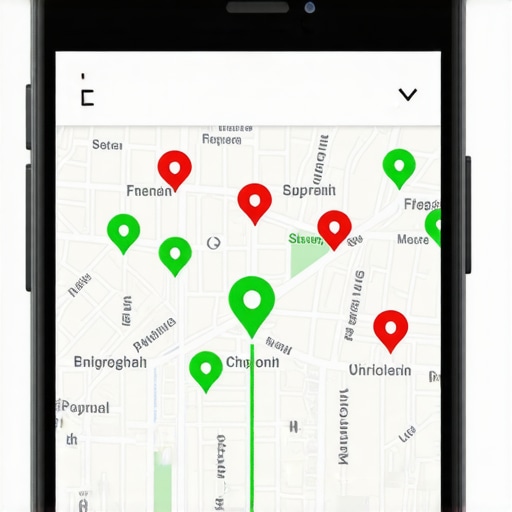 Looking ahead, I see a massive shift toward real-world validation. By 2026, 5 local seo trends for 2026 that are changing the 3-pack forever suggest that AI will be scanning your customer’s photos for specific inventory items or tools to verify you can actually do the job. If you aren’t encouraging customers to upload photos of the finished product, you’re going to fall behind how small shops outperform national chains in local results by making this a standard part of their checkout process. My challenge to you today is simple: Open your profile right now and add a Secondary Category that you’ve been ignoring. Whether it’s emergency plumber or bridal boutique, learning how to use secondary categories to appear in more searches is the fastest way to widen your net without spending a dime on ads.
The brutal truth about map pack seo that I wish someone told me sooner
I used to think that as long as I had my name, address, and phone number correct on every directory, I’d be golden. I was wrong. The reality is that perfect NAP data is no longer enough to move your map pin in a competitive market. Here is what I’ve learned from the front lines of local search:
- Google rewards active involvement over passive presence. If you treat your profile like a billboard, it will perform like one (ignored). If you treat it like a conversation, you’ll see your maps visibility skyrocket.
- Distance is a hurdle, not a wall. You can absolutely reach customers miles away if you prove to the algorithm that your business is the most relevant choice for that specific street.
- Reviews are fuel, but consistency is the engine. Never stop asking. Even a single week of silence can signal to Google that your business is slowing down.
#IMAGE_PLACEHOLDER_E#
My personal toolkit for staying on top of the 3 pack
You don’t need a massive budget, but you do need the right data to make informed decisions. Here are the three things I rely on every single week:
- Whitespark’s Local Search Ranking Factors: This is my north star for understanding why some profiles win and others lose. It’s the most comprehensive data set in our industry.
- A Dedicated Grid Tracker: I never trust a single-point ranking report. You need to see the “heat map” of your city to find the visibility gaps your competitors miss.
- Strategic Google Posts: I use these like micro-blogs to tell Google exactly what I’m doing and where. It’s one of the best ways to drive weekend foot traffic without spending a cent on ads.
Take your first step toward neighborhood dominance
Local search can feel like a game of cat and mouse, but once you stop chasing the algorithm and start serving your community with hyper-relevant content, the map pins start to fall into place. Whether you are a solo plumber or a boutique owner, you have the tools to rank higher in the 3 pack today by simply being more present than your rivals. Consistent google maps optimization isn’t about gaming the system—it’s about becoming the undeniable choice for your neighbors. If you’re looking for a reliable seo service local to your area, prioritize those who understand the neighborhood nuance over broad national trends. Your business deserves to be seen. Now, get out there and make it happen.
Which neighborhood is currently your ‘white whale’—the one you’re closest to but just can’t seem to rank in yet? Let’s troubleshoot it in the comments below.