
I spent three years obsessing over keywords and citation counts, only to realize I was being outranked by a guy down the street who barely knew how to use a computer. He had something I didn’t: customers who were obsessed with taking pictures of his sandwiches. My “perfect” text-heavy reviews looked like ghosts compared to his vibrant, messy, real-world photos. It hit me right then—Google isn’t just looking for words anymore; it’s looking for visual confirmation. Today, I’m going to break down exactly why those customer snapshots are the fuel for your google maps optimization and how you can stop losing leads to competitors who look more “real” than you do. [image_placeholder_1]
Proof is the New Currency in Local Search
I made a massive mistake early in my career by telling clients that “any review is a good review.” I was wrong. I watched a local plumber drop in rankings because his competitors were getting fresh, geo-tagged photos from happy homeowners while he just sat on a pile of “Great service!” text blurbs. If you want to rank higher in the Google Maps 3-pack today, you have to realize that text is a promise, but a photo is a receipt. According to research by BrightLocal, businesses with more than 100 images on their profile get 520% more calls than those with fewer. That’s not a typo. It’s a signal that your maps visibility depends on visual engagement.
Is a simple smartphone photo actually worth the hassle?
You might be thinking that your business isn’t “photogenic” enough or that asking customers for a photo is too much work. I get it. But here’s the truth: Google uses artificial intelligence to “read” these images, identifying objects and locations to verify you actually do what you say you do. If you are struggling with business photos failing to attract leads, it’s usually because you’re relying on stock images rather than the authentic, grainy photos your customers take. Have you ever felt like your listing is invisible despite having great feedback? I’ve been there, and the fix is simpler than you think. We are going to look at how to win more clicks with better map images and why this single change can revive a stagnant profile.
Train the Algorithm to Recognize Your Real-World Impact
Think of Google’s AI as a digital detective. It doesn’t just see a flat image; it uses advanced computer vision to identify what’s happening in the frame. When a customer uploads a photo of your technician repairing a furnace, Google notes the tools, the environment, and even the text on your uniform. This is why google maps optimization isn’t just about keyword stuffing—it’s about providing undeniable visual proof. I’ve seen many businesses fail because they unknowingly stripped the location data from their images. You have to ensure that the specific photo metadata that actually helps your local map rank is preserved, as it tells Google exactly where the service took place. This geographic ‘stamp’ is more valuable than any written testimonial because it’s verified by the user’s own device.

How a Simple ‘Before and After’ Can Break a Ranking Curse
I once worked with a small HVAC company in Phoenix that was buried under a dozen massive corporate chains. They had superior service, but their profile looked like a ghost town filled with stock photography. I convinced the owner to take thirty seconds at the end of every job to snap a photo of the completed installation next to his company van. No professional lighting, just a raw, honest shot from his smartphone. Within ninety days, they weren’t just competing; they were dominating. Google’s AI recognized the ‘HVAC repair’ context in those real-world images far better than the generic logos of his competitors. If you are currently seeing why your business photos are failing to attract local leads, it is almost certainly because they lack this gritty, on-site authenticity that customers (and algorithms) crave.
Pick the Niche Category That Others Are Ignoring
Most business owners make the mistake of choosing the broadest possible category, thinking it will net them more traffic. But the secret to map pack seo is often found in the specifics. If you’re a specialist, don’t just hide under a general label. You can stop using generic categories and use the niche picks that boost map rank to target the exact customers you want. For example, a local bakery I consulted for switched their primary category from ‘Bakery’ to ‘Wedding Bakery.’ Their search volume for high-end wedding cakes tripled almost overnight because they stopped fighting for space against grocery store bread aisles. This is a foundational step in how to optimize your business category for the local 3-pack that most people overlook.
Keep the Pulse Alive with Weekly Freshness
Google’s local algorithm treats a stagnant profile like a closed business. You don’t need a viral marketing campaign; you just need to show that your lights are on. Posting one fresh update every seven days—a quick photo of a new project or a brief update on a holiday promotion—can dramatically increase your maps visibility. When it comes to the truth about how often you need to post to your profile, consistency is the ultimate weapon. It signals to Google that your information is current and that you are an active, reliable part of the local community.
The Review Trap Most Business Owners Walk Into
Many local experts will tell you that the secret to google maps optimization is simply hoarding as many five-star reviews as possible. In my experience, that’s a dangerous half-truth. I’ve watched businesses with 500 reviews get bypassed by those with only 50. Why? Because Google prioritizes ‘Review Velocity’—the speed at which you acquire new feedback. If you got 100 reviews three years ago and nothing since, you look like a dying brand to the algorithm. Understanding why review velocity is more important than total count is the difference between a static listing and a lead-generating machine. Have you ever fallen into this trap of thinking volume is everything? Let me know in the comments.
Why does a competitor with zero backlinks still outrank you?
It feels like a slap in the face. You’ve spent thousands on an seo service local and high-quality guest posts, yet a guy with no website authority is sitting in the top spot of the 3-pack. This happens because maps visibility is heavily weighted toward ‘Proximity’ and ‘Local Relevance’ rather than traditional domain authority. Joy Hawkins from Sterling Sky has extensively documented how the ‘Vicinity’ update tightened the ranking radius, making it clear why your competitors with zero backlinks are outranking you on maps. It’s not always about who is the most popular on the whole internet; it’s about who is the most physically and contextually relevant in that specific neighborhood.
The Keyword Stuffing Penalty You Never Saw Coming
The biggest ‘oops’ factor I see today involves the business name itself. It’s incredibly tempting to change ‘Smith and Sons’ to ‘Smith and Sons Best Emergency Plumber Houston.’ While this might provide a temporary surge, Google’s automated checks and competitor ‘suggest an edit’ flags are more aggressive than ever. You need to understand the hidden penalty for keyword stuffing your business name. Once your listing is suspended for name spam, the recovery process is a nightmare that can take weeks of lost revenue to resolve. Instead of cheating the name, focus on map pack seo by optimizing your internal data. I recommend mastering map pack seo strategies to boost local visibility through legitimate means like service area refinements and attribute selection.
The Proximity Myth and Your Real Ranking Problem
Everyone says ‘closer is better,’ but that’s not always the case. I’ve managed profiles that outrank businesses located right next door to the searcher. This occurs because the algorithm balances distance with prominence. If your website is faster, your photos are fresher, and your engagement is higher, you can effectively ‘stretch’ your ranking radius. This is a core pillar of google maps optimization and unlocking your business potential. Don’t assume you are stuck in a tiny circle; by improving your overall digital footprint, you can overcome the proximity filter that keeps your competitors localized to a single block.
Stop Trusting Static Ranking Reports
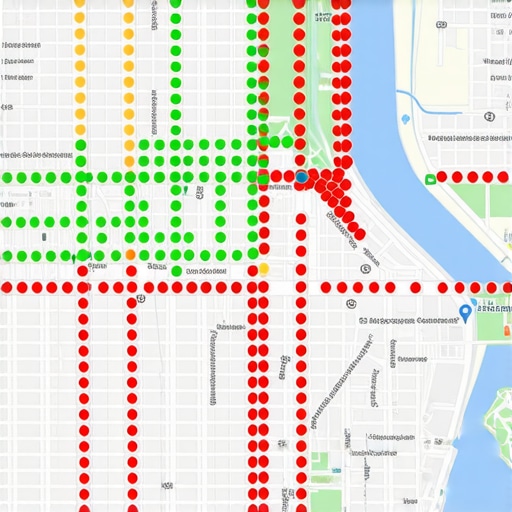
For years, I looked at a single number on a PDF and thought I was winning. “We’re #1 for Plumber!” the report would scream. But when I actually drove two blocks south of my office and searched again, I was nowhere to be found. This is why your local keyword tracking is probably lying to you. Traditional SEO tools check rankings from a single data center, but in google maps optimization, your rank changes every few hundred feet. I personally shifted to using grid-tracking software because it provides a bird’s-eye view of where your visibility actually drops off. By seeing these ‘blind spots,’ you can figure out how we use software to spot visibility gaps on maps and target those specific neighborhoods with localized content or fresh citations that prove your relevance to that specific street corner.
How do I maintain my ranking without working 40 hours a week on it?
Maintenance doesn’t mean obsession; it means a rhythm. I spend exactly twenty minutes every Monday morning on what I call the ‘Local Pulse.’ I check for new reviews, respond to Q&As, and upload one—just one—new photo. This routine is essential because why your map listing needs fresh content every single week isn’t just about pleasing users; it’s about signaling ‘liveness’ to the algorithm. Darren Shaw of Whitespark, a leading authority in the niche, often emphasizes in his ‘Local Search Ranking Factors’ survey that while business signals are huge, the sustained engagement you build through these small, consistent actions is what prevents the dreaded ‘ranking decay.’ If you feel overwhelmed, remember that you can always look into affordable local seo services to dominate the 3 pack to handle the technical heavy lifting while you focus on the daily operations of your business.
Build a Toolkit That Actually Drives Leads
I’ve tried every shiny new dashboard that hits the market, but I always come back to two types of tools: a local grid tracker and a citation auditor. You need the best way to track your map rank across a whole city so you aren’t surprised when a competitor moves in three miles away and starts eating your lunch. For effective map pack seo, I rely on tools that don’t just show me where I am, but also show me exactly what the guy in the #1 spot is doing differently. Is he getting more reviews? Does he have more ‘owner-verified’ photos? This competitive intelligence is the backbone of any serious seo service local. If you aren’t looking at the comparative data, you’re just throwing darts in the dark and hoping something sticks.
AI and the Future of Maps Visibility
I predict we are moving toward a ‘zero-click’ world where Google satisfies the searcher’s intent entirely within the Map interface without them ever visiting your website. We’re already seeing this with AI-generated review summaries and visual ‘Place Sites’ that pull in your social media data. In the next year, maps visibility won’t just be about being in the top three; it will be about having the most ‘shoppable’ or ‘interactable’ profile that stops the scroll. Google will likely use augmented reality and computer vision to help users ‘walk’ through your store or see your work trucks in real-time. To stay ahead, stop thinking of your profile as a static directory listing and start treating it like a live broadcast of your business. Pro tip: Go into your profile right now and answer one ‘unanswered’ question in your Q&A section—it’s the fastest way to show Google you’re paying attention and win a conversion before the customer even picks up the phone. Don’t wait for the next core update to bury your listing; take control of your local footprint today.
Hard Truths I Learned While Fighting the Algorithm
Over the years, I’ve realized that most small business owners are working way too hard on the wrong things. I used to think that having the most reviews was the ultimate shield, but I’ve since learned that google maps optimization is more about your current pulse than your past glory. One of the biggest shifts in my thinking happened when I realized that asking every single customer for a review might actually hurt you if it triggers spam filters or looks unnatural. It’s better to have five authentic, photo-heavy reviews a month than fifty text-only blurbs in a single weekend. I also discovered that your profile needs to feel ‘lived in.’ Google rewards the businesses that look like they are actually helping people today, not the ones that optimized their profile years ago and walked away. If you feel like your growth has stalled, it’s often because you’ve stopped providing those subtle signals of activity that the 3-pack craves.
The Only Tools You’ll Actually Need
You don’t need a massive budget to win this game, but you do need to see what the algorithm sees. I personally swear by a simple grid-tracking tool because it’s the best way to track your map rank across a whole city without guessing. Beyond that, you should run a manual audit of your presence every quarter. Don’t just look at the big directories; focus on identifying which local citations actually move the needle for your specific niche. I’ve found that a mention from a local neighborhood blog or a community event page often carries more weight for maps visibility than a generic listing on a massive global directory that no one actually uses. Stick to the tools that provide geographic context, not just high-level SEO metrics. #IMAGE_PLACEHOLDER_E#
Stop Waiting and Start Dominating Your Block
The digital landscape is shifting, but the core principle of google maps optimization remains the same: be the most helpful, most visible, and most authentic option in your neighborhood. You don’t need to be a technical genius to outrank the corporate giants; you just need to be more ‘local’ than they are. Use these tips for better local engagement on Google Maps to start building that momentum today. Remember, every photo you upload and every question you answer is a brick in your local authority. The future belongs to those who show up consistently and treat their map listing as a real-world extension of their storefront. I’ve seen businesses transform their entire revenue stream just by getting this one thing right. Now, it’s your turn to take that first step. Have you noticed a shift in your local rankings after updating your photos recently? Let me know in the comments below!