I spent three years wondering why my phone only rang for jobs five minutes from my driveway. I had the “Best in the City” title on my website, but on Google Maps, I was invisible to the people who actually lived in the city center. I made the classic rookie mistake: I thought checking a few boxes in the “Service Area” tab would make me a local hero downtown. It didn’t. In fact, the hidden proximity trap was strangling my growth while I was busy tweaking meta descriptions that didn’t matter for the map pack.
Stop Chasing the City Center if Your Address is in the Suburbs
It’s frustrating to see a competitor with half your reviews sitting at the top of the 3-pack just because their office is next to a coffee shop downtown. When I started, I tried to “brute force” my way in. I stuffed my business name with keywords—a move that nearly got me suspended—and I ignored the fact that the real reason your service area business is invisible has more to do with your digital footprint than your physical van location. According to data shared by Search Engine Journal regarding the “Possum” update, Google’s filter heavily weights the searcher’s physical location, often hiding service area businesses that are physically distant from the city core. I realized that Google Maps optimization isn’t about lying about where you are; it’s about proving your relevance despite where you’re parked.
Can You Really Outrank Local Shops Without an Office?
You’re probably thinking this is a losing battle. If proximity is king, why even try? I felt that same defeat. But then I discovered the truth about proximity: you can actually expand your “radius of influence” if you stop acting like a generic national brand and start acting like a hyper-local authority. Have you ever felt like you’re shouting into a void when trying to get leads from the other side of town? I’ve been there, and today, we’re going to fix it by showing you how to rank higher in the 3 pack using signals that outweigh a simple zip code. We are going to look at the exact settings that are holding you back and how to flip the script. [image placeholder]
Pick the Right Lane Before You Start the Engine
The biggest mistake I see small business owners make is choosing their primary category based on what they think they do, rather than how people search. If you are a general contractor but 80% of your money comes from kitchen remodels, your category choice is the most vital dial you can turn. I have seen businesses jump five spots overnight simply because your local business category choice is the most important map signal Google looks for. Think of your category like a radio frequency; if you are tuned to 101.5, people on 105.7 will never hear your song, no matter how loud you play it.
Your Website Must Talk to Your Map Pin
Most people treat their website and their Google Business Profile like two separate islands. This is a fatal error in google maps optimization. Google scans your website to confirm what your profile claims. If your profile says you offer emergency roof repair but your website only mentions construction, you are creating a trust gap. I learned this the hard way when a client’s ranking collapsed after they redesigned their homepage and deleted all the city-specific keywords. I realized then that your website content matters more for map rankings than you think because it acts as the proof for your digital claims.
Build a Fence Around Your Territory with Local Links
You do not need a thousand backlinks from national blogs to improve maps visibility. You need ten links from the hardware store down the street, the local Little League team, or the neighborhood association. I once spent three months trying to get a guest post on a major tech site for a local client, and it did nothing. Then, we sponsored a local Touch-a-Truck event for kids, got a link from the community center’s event page, and the map pin jumped into the top 3 within a week. That is because the simple local link strategy proves to Google that you are not just a digital ghost; you are a physical, breathing part of the community.
Force Google to See Your Service Area
If you do not have a physical office in the city center, you have to work twice as hard to prove you belong there. This is where most map pack seo strategies fail—they focus on generic citations instead of geographic relevance. You need to create local landing pages that are so specific to a neighborhood that Google has no choice but to show you. When I was struggling to rank higher in 3 pack results for a suburb 20 miles away, I stopped writing about general plumbing and started writing about fixing leaky pipes in historic Victorian homes specific to that zip code. This hyper-local approach is the core of an effective seo service local plan that actually generates calls.Let’s dig deeper into what actually moves the needle because most “experts” are still teaching 2015 strategies. Everyone says you need to be in every directory under the sun, but in my experience, stopping your focus on low-quality directories and switching to niche-specific authority sites is the only way to scale. You see, Google has moved toward “Entity Association.” According to the latest Local Search Ranking Factors survey by Whitespark, behavioral signals and the quality of local relevance are now far more influential than the sheer number of citations you have. If your business is linked to a local plumbing association, that carries more weight than 100 generic “Yellow Pages” clones.
Stop Using Virtual Offices Before You Get Suspended
Here is the “oops” factor that kills businesses every week: the virtual office trap. I’ve seen dozens of contractors try to rank higher in the 3 pack by renting a coworking desk in the city center. Don’t do it. Google’s AI is now sophisticated enough to cross-reference your address against known coworking spaces and shipping centers. Falling for the mistake of using a P.O. Box is a one-way ticket to a permanent suspension. If you aren’t physically there, don’t claim you are; instead, focus on specific trust signals that prove your legitimacy through your real service area.
Why is your website speed dragging your map pin down?
Most people think site speed is just for organic SEO, but it’s a critical component of google maps optimization. If your mobile site takes five seconds to load, Google isn’t going to risk showing you to a guy standing on a street corner looking for a quick solution. I’ve noticed that your website speed actually affects your google map ranking because it directly impacts “Dwell Time” and “Bounce Rate” from the map listing itself. Have you ever fallen into this trap where you thought your profile was perfect but your site was the anchor? Let me know in the comments. We also need to talk about “Unspoken Keywords.” Have you ever wondered why your competitors are ranking for keywords they don’t mention? It’s because Google is reading the text inside their customer reviews. It’s not just about the five stars; it’s about the semantic data hidden in what people say about you.
It is easy to get excited when you first see your business pop into that coveted top spot, but the real challenge is staying there while your competitors are breathing down your neck. I have learned that maps visibility is not a ‘set it and forget it’ situation. If you stop engaging, Google assumes you have gone out of business or simply stopped caring. This is exactly why your map listing needs fresh content every single week to signal to the algorithm that you are still the most relevant local option. I personally spend twenty minutes every Monday morning uploading one high-res photo from a recent job site and posting a brief update. It sounds tedious, but it is the difference between a steady stream of leads and a sudden ranking collapse.
How do I keep my map rankings from dropping over time?
Consistency is your best friend here, but so is knowing when to audit. I recommend doing a deep dive into your own data at least once a month. You can how to audit your business profile for consistency errors in 10 minutes using a simple checklist, ensuring your NAP (Name, Address, Phone) data hasn’t been ‘suggested’ into a mess by a well-meaning user or a malicious competitor. Joy Hawkins, a renowned expert at Sterling Sky, often highlights that Google’s local algorithm is increasingly sensitive to ‘real-world’ signals, meaning your offline reputation is starting to mirror your online rank more than ever before. If you are not actively managing how to fix the suggested edits that are ruining your map listing, you are essentially leaving the keys to your front door under the mat.
The Tools That Stop the Guesswork
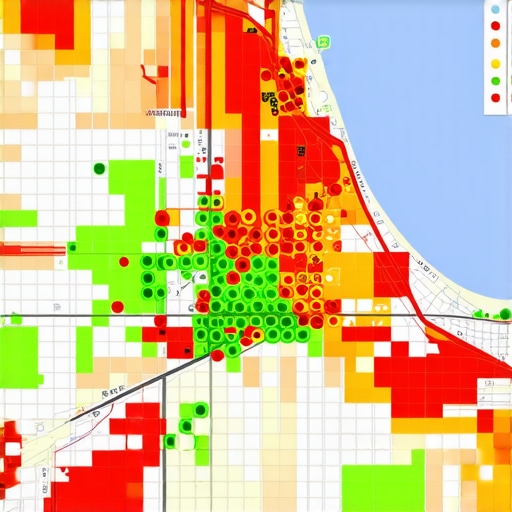
I stopped guessing where I ranked years ago. Now, I use local search grid tools that show me exactly where my ‘pin’ drops off as I move away from my office. It is eye-opening to see you are #1 on your own block but #14 just three blocks away. This data is the backbone of any serious google maps optimization strategy because it tells you exactly where you need to build more geographic relevance. When I see a weak spot in a specific neighborhood, I do not just pray for better luck; I look into how to use localized blog content to push your map pin higher in that specific zip code. I also lean heavily on the simple way to track map leads so I know which calls are coming from my map listing versus my organic website links. Without this distinction, you are just throwing money at an seo service local provider and hoping something sticks.
The Future of Local Search is AI-Driven
We are moving toward a world where Google’s Search Generative Experience (SGE) will summarize your reviews and business attributes before a user even clicks your profile. This means your ‘Entity’ strength is going to matter more than your keywords. To rank higher in 3 pack results in 2025 and beyond, you need to be mentioned in local news, sponsored events, and community discussions. It is about map pack seo moving from technical tweaks to genuine community integration. If you want to scale, you have to learn how to rank in the map pack for multiple cities by building real authority in those areas, not just by creating ‘ghost’ landing pages. My best advice? Try this today: Go into your profile and perform the 5-minute profile edit that fixed our local conversion rate by updating your ‘Services’ menu with the exact terminology your last three customers used on the phone. It is a small move that yields massive trust signals.
The Expensive Lessons I Learned While Chasing a Top 3 Spot
The biggest shift in my mindset happened when I realized that more reviews did not automatically mean more money. I once saw a competitor outrank me with 50 reviews while I had 200, simply because their reviews were coming in consistently every week while mine had stalled for months. This taught me that velocity and recency are the real drivers of maps visibility. I also learned that the hidden penalty for keyword stuffing your business name is real and can strike months after you think you have gotten away with it. Don’t risk your reputation for a temporary boost.
Another lightbulb moment was realizing how much the impact of user behavior signals on your 3-pack position actually matters. If people find your listing but never click Call or Directions, Google assumes you are not a good match. High-quality interaction is the currency of the map pack. Finally, remember that your service area is a living thing; it needs boundaries and constant verification to stay healthy. [image placeholder]
The Minimalist Toolbelt I Use to Win Local Search
You do not need a thousand-dollar software suite to succeed. I rely on a few specific resources to maintain my edge. First, I use a grid tracking tool because it is the best way to track your map rank across a whole city without manually checking from different street corners. This visual data is worth its weight in gold when you are deciding where to focus your marketing efforts.
Second, I use a simple camera and a tripod for mobile photos. Why? Because high resolution store photos increase your map click through rate significantly. People buy with their eyes before they ever read your business description. I also recommend mastering map pack seo strategies by following tested industry data rather than generic rumors. Consistent, small updates to your profile are more effective than one massive overhaul every year.
Start Claiming the Clicks You Deserve Today
Winning at google maps optimization is a marathon, not a sprint. It is about building a digital entity that the community trusts and Google recognizes as an authority. If you start by fixing one small signal today—like your primary category or your mobile site speed—you are already ahead of 90% of your local competition. You have the map, now it is time to drive. What is the biggest hurdle stopping you from being able to rank higher in 3 pack results right now? Let me know in the comments below.