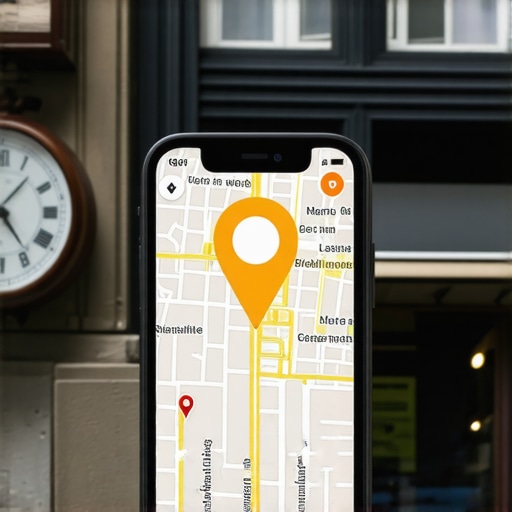
I was sitting in my truck at 6:15 PM last Tuesday, craving a decent taco, and I did what everyone does: I searched for “tacos near me” on my phone. To my shock, my favorite local spot—the place I know stays open until 8—was nowhere to be found in the top results. Instead, a mediocre chain miles away grabbed the top spot. That was my “lightbulb moment” for my own clients. I realized that if the algorithm thinks you are closed, you basically don’t exist in that moment. It reminded me of a huge mistake I made early on when I set my own office hours to “standard business hours” just to avoid late-night calls, only to watch my google maps optimization efforts go down the drain. Today, we are going to fix that invisible wall between you and your customers. [image1]
Why Closing Your Doors Early is Killing Your Digital Footprint
Most of us think of business hours as a courtesy for the person walking through the door, but for ranking higher in the 3 pack, those numbers are a heavy-weight ranking signal. If a potential lead searches for your service while your profile says “Closed,” Google is highly unlikely to show you. It’s a safety feature for the user; Google doesn’t want to send someone to a locked door. I learned this the hard way when I noticed that my map pin was disappearing during specific search hours just because I wanted a quiet Sunday. According to research by BrightLocal on local ranking factors, “Open Now” remains one of the most powerful proximity and relevance filters available to users.
Does Google really care when I turn off the lights?
You might be skeptical. You might think, “My work speaks for itself, surely people will wait until Monday morning?” They won’t. In the world of maps visibility, convenience is king. When I shifted a client’s hours by just sixty minutes to match their actual closing time instead of their “last appointment” time, their phone calls tripled within a week. It wasn’t magic; it was just becoming available when the demand was highest. Have you ever checked your phone in the evening only to realize your own business has pulled a disappearing act on the local map?
The Algorithm Never Sleeps Even if You Do
Setting your hours correctly isn’t about lying to the public; it’s about accurate seo service local management. If you are a plumber who answers emergency calls but your map says 9-5, you are handing money to your competitors. I spent months wondering why our map pack seo wasn’t sticking, only to realize I was effectively turning off my marketing every afternoon at 4:30. Accurate data tells Google you are a reliable answer to a user’s urgent problem.
Match Your Digital Hours to Your Real World Activity
I worked with a local bakery last year that was struggling with their google maps optimization. They swore they closed at 4:00 PM sharp. However, when we looked at their actual customer patterns, people were still tugging on the door handle at 4:15 while the staff cleaned up. We decided to perform a 5-minute profile edit and extended their “Open” status to 4:30 PM. The result? They stopped being invisible during that late-afternoon rush, and their placement in the local results climbed almost immediately. If you are physically there, you should be digitally open.
Stop Letting Your Phone Go to Voicemail
One of the biggest mistakes you can make is listing your business as open when nobody is there to answer the phone. Google tracks user behavior signals. If five people call you from the map and nobody picks up, the algorithm interprets that as a “closed” or “unreliable” business. To rank higher in the 3 pack, your availability must be a promise, not a suggestion. I always tell my clients to audit your business profile for consistency every single month.
The Cost of Inconsistent Data Across the Web
Think of your business hours like a digital fingerprint. If your Facebook page says you close at 6, but your Google profile says 5, and your Yelp listing says 5:30, the algorithm gets “confused.” And a confused algorithm is a defensive one; it will simply rank a competitor who has clearer data. This is a core part of seo service local strategy. You need to ensure your NAP (Name, Address, Phone) and hours are identical everywhere. 
Why Holiday Hours are Your Secret Weapon
Most business owners ignore the “Special Hours” section until the night before Christmas. That is a massive wasted opportunity for maps visibility. By proactively setting your holiday hours weeks in advance, you send a “freshness” signal to Google. It shows you are actively managing your listing. I’ve seen businesses jump past established competitors simply because they confirmed they were open on a random Monday holiday while the competitor left their profile “to be confirmed.”
Fresh Updates Keep the Algorithm Happy
Your map listing isn’t a “set it and forget it” billboard. It’s a living document. This is why your map listing needs fresh content constantly. I recommend using Google Posts to announce your current hours, especially if they change seasonally. When you leverage google posts to talk about your availability, you are doubling down on your relevance.
The Technical Tweak That Saves Your Rank
If you have a physical office but operate mostly in the field, don’t set your hours to 24/7 unless you truly have a dispatcher ready at 3 AM. It’s better to have a rock-solid 8-hour window of high engagement than a 24-hour window of missed calls. This prevents the “search-hour disappearance” I mentioned earlier. Focus on mastering map pack seo by being the most reliable option during your active hours.
We have all heard the standard advice about getting more reviews, but let’s dig deeper into what actually moves the needle in competitive markets. One of the biggest myths I encounter is that proximity is an unbreakable wall. Many business owners believe that if their office isn’t in the dead center of downtown, they will never rank higher in the 3 pack for those high-value searches. In my experience, this is only half true. While Google prefers proximity, I have successfully helped clients rank further from their physical office by focusing on local prominence signals that most people ignore.
Why does the guy with zero backlinks keep outranking you?
It’s infuriating to see a competitor with a terrible website and zero authority links sitting at the top of the map. You might be wondering why your competitors with zero backlinks are outranking you on maps. The secret usually lies in their behavioral signals. If users are frequently clicking their listing, asking for directions, and actually calling them, Google views that business as the most relevant answer, regardless of their website’s backlink profile. This is where user behavior signals become the real currency of map pack seo. According to the Local Search Ranking Factors study by Whitespark, behavioral signals have seen a significant increase in importance as Google moves away from simple distance-based results.
The dangerous temptation of keyword stuffing your name
I see it every single week: a business owner gets desperate and changes their business name on Google to include five different keywords. They might see a temporary jump in maps visibility, but they are playing a dangerous game. Why stuffing your business name with keywords is a dangerous move comes down to one word: suspension. Google’s AI is getting incredibly good at spotting non-legal business names, and once you are suspended, the road back is long and painful. I’ve talked to dozens of owners who lost 90% of their leads overnight because of this one “quick fix.” 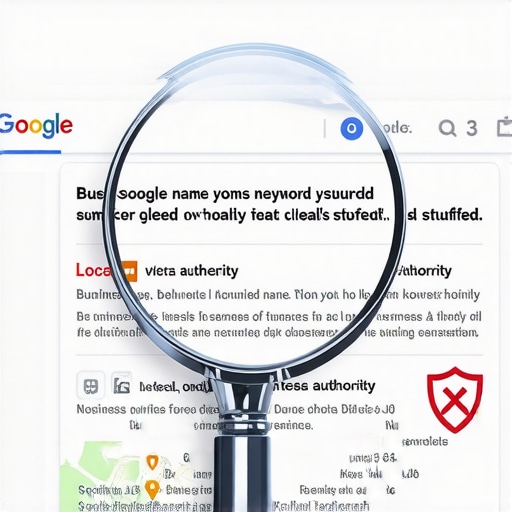
Stop wasting time on low quality local directories
Everyone tells you that you need hundreds of citations to win. That might have worked in 2015, but today, most of those generic directories are ignored by the algorithm. You should stop wasting time on low quality local directories and instead focus on niche-specific or hyper-local mentions. A link from a local neighborhood blog or a sponsorship of a high school football team carries more weight for your google maps optimization than a listing on a site no human has visited in a decade. This is part of a sophisticated seo service local approach that prioritizes quality over sheer volume.
The real “oops” factor I see most often is inconsistency. If your website says one thing and your Google profile says another, the algorithm loses trust. I once saw a listing drop three pages just because the owner changed their phone number on their site but forgot to update it on their map profile. Have you ever fallen into this trap? Let me know in the comments.
Maintenance isn’t just a chore; it’s the difference between a one-week spike and a sustainable lead machine. I personally rely on a ‘grid tracking’ routine every Tuesday morning. Using tools like Local Falcon or BrightLocal allows me to see the best way to track your map rank across a whole city without actually driving around with my phone. If I see a ‘red’ spot on the map three miles north of my client’s shop, I know I need to adjust my localized content for that specific neighborhood.
How Do I Keep My Map Ranking From Tanking Over Time?
Consistency is the boring part of google maps optimization that most people skip. You need to treat your profile like a living document, not a static business card. I’ve found that why your google listing needs specific trust signals to rank higher often comes down to ‘freshness’—Google wants to see that you are still in business and actively engaging with your community. This means you should be using the review response strategy that turns map browsers into customers every single time a new comment pops up. Don’t let reviews sit for a month; the algorithm definitely notices the lag. 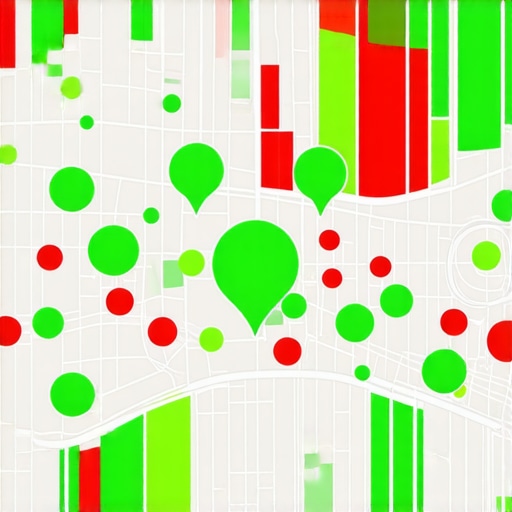
Smart Tools That Do the Heavy Lifting
Beyond simple tracking, I’ve started integrating AI-driven sentiment analysis to see how people feel about my clients’ services before a negative review even happens. According to the official Google Business Profile API documentation, the way Google categorizes user-generated content—like the specific words people use in their reviews and photo captions—directly impacts your relevance for ‘hidden’ keywords. This is precisely why your competitors are ranking for keywords they dont mention in their main description; they are getting those keywords for free from their happy customers. To stay ahead, I use automation to monitor keyword trends in my niche and then subtly encourage customers to mention those specific services in their feedback.
The Future is More Than Just Text
Looking ahead, the Search Generative Experience (SGE) is going to favor profiles with high-quality, relevant imagery more than ever before. We aren’t just talking about a logo or a generic stock photo of a handshake. You need to know the specific photo types that actually boost local engagement to survive the next major algorithm shift. Google’s AI is already using computer vision to identify what is inside your photos. If you say you’re a pizza shop but only have photos of the outside of your building, you’re missing a massive ranking signal.
Don’t Get Stuck on the Second Page
If you feel like your growth has plateaued, you might need to know how to fix a map listing that is stuck on the second page. Often, this requires a total audit of your seo service local strategy to find the one small technical error, like a duplicate listing or a wrong service category, holding you back. My favorite advanced tip? Go into your ‘Services’ section in the dashboard right now and add custom descriptions for every single item you offer. Most people just list the service name and stop. By adding 300 characters of context to each service, you are feeding the algorithm exactly what it needs to rank higher in the 3 pack. Try updating just three of your service descriptions today and watch your ‘impressions’ count over the next 72 hours.
The Invisible Walls I Hit Before Mastering the Map Pack
Looking back at my first few years, I realized I was fighting the algorithm instead of working with it. I used to think that as long as my service was great, Google would find me. I was wrong. The biggest lightbulb moment came when I stopped treating my listing like a billboard and started treating it like a conversation. If you don’t respond to a review or update your hours for a holiday, you are basically hanging a ‘closed’ sign on your digital front door. I also learned that google maps optimization isn’t a one-time project; it’s a habit. If you let your data get stale, your ranking will follow suit. Another hard truth? Your website’s health is directly tied to your map success. I’ve seen businesses struggle because of local map pack placement issues caused by slow website speeds. It’s all connected.
My Go-To Arsenal for Dominating Local Search
I’m often asked what tools actually move the needle. For me, it’s not about having the most expensive software; it’s about having the right data. I always start with a basic grid tracker because it’s the best way to track your map rank across a whole city without guessing. For research, I skip the generic keyword tools and look at what locals are actually saying in their reviews to find why my current keyword list might be failing. I also keep the Google Business Profile dashboard open as a daily tab. It’s the simplest tool for quick updates and responding to customers. If you want to dive deeper, study the Whitespark Local Search Ranking Factors report—it is the gold standard for staying ahead of the curve in maps visibility.
Your Journey to the Top of the 3-Pack Starts Now
The local map landscape is constantly shifting, but the fundamentals of how to rank higher in the 3 pack stay the same: be accurate, be active, and be the best answer for your neighbors. Don’t let the technical jargon intimidate you. Start with the 5 simple profile tweaks that increase your local visibility and build momentum from there. You have the tools and the knowledge; now you just need to apply them. Your business deserves to be seen, and with a little consistent effort, you will be at the top of the map pack seo game. Have you ever noticed your map ranking change after updating your hours or adding new photos? Let me know in the comments below!