I remember sitting at my desk three years ago, staring at a lukewarm cup of coffee and a Google Search result that felt like a punch in the gut. I had the five-star reviews. I had high-resolution photos. Yet, a competitor three blocks further from the city center was hogging the top spot in the local 3-pack, while I was buried on page two. It felt personal. I thought I was doing everything right by focusing on keywords, but I was invisible to the very algorithm I was trying to impress. That was my lightbulb moment: Google doesn’t see your website the way a human does; it needs a translator.
Why Google Needs a Secret Map to Read Your Website
For a long time, I made the amateur mistake of thinking that if I just wrote ‘best local service’ enough times, the map rankings would follow. I even fell into the trap of thinking a P.O. Box would suffice for my location—it didn’t. The truth is, Google’s bots are essentially scanners, and if you don’t give them structured data (Schema markup), you are asking them to guess what you do. When I finally implemented LocalBusiness Schema, it was like turning on a lighthouse in a storm. This code tells Google exactly where your front door is, what hours you’re open, and even which specific neighborhoods you serve. Today, I’m going to show you how this technical ‘behind-the-scenes’ work is the fastest way to rank higher in the Google Maps 3-pack today without having to constantly beg for more reviews.
Is all this technical code actually worth the headache?
It’s a fair question. You’re a business owner, not a software engineer. You might worry that messing with your site’s code will break everything or that it’s just another SEO fad. I felt the same way until I saw the data. According to a study by Milestone Research, businesses using structured data can see a 20-30% increase in click-through rates because their listings look more authoritative and detailed. When you align your landing page data with your business profile, the search engine stops second-guessing your legitimacy. Have you ever felt like you are doing everything right with your profile, but your map pin still isn’t moving an inch in the rankings? If so, you’re likely missing this digital handshake. By investing time into Google Maps optimization through structured data, you aren’t just ‘doing SEO’—you are providing the verified proof Google craves to confidently put you in front of local customers. We aren’t just looking for visibility; we’re looking for dominance in your specific corner of the world.
Stop Guessing and Start Syncing Your Business Data
The first real move to rank higher in the Google Maps 3-pack today is ensuring absolute consistency between what your website says and what your Google Business Profile (GBP) displays. I once worked with a local plumber who was pulling his hair out because his map pin was stuck on page three despite great reviews. We found that his website listed ‘Suite 200’ while his GBP profile just said ‘2nd Floor.’ It sounds pedantic, but Google’s algorithm is essentially a digital accountant that hates discrepancies. We discovered how we tripled phone calls for a local plumber using map seo simply by aligning those tiny address details across the web; as soon as we did, his visibility spiked within days.
Make Your Website and Profile Speak the Same Language
Your local landing page is the structural foundation of your google maps optimization efforts. If the phone number on your site differs even slightly from your profile, you’re creating a trust gap that the algorithm will punish by lowering your rank. It is vital to understand why your local landing pages must match your business profile data so clearly: it confirms your physical presence to a machine that cannot physically visit you. When these two sources are in perfect harmony, your business becomes a ‘safe bet’ for Google to recommend to users.
Feed the Map Bot with High-Quality Local Data
Most business owners just upload a random smartphone photo and hope for the best. I started taking photos with the GPS location turned on and then checking the specific photo metadata that actually helps your local map rank. By embedding the actual coordinates of a job site into the image file itself, you are providing raw, unforgeable geographical proof of your service to the search engine. This is a massive leap forward for anyone mastering map pack seo strategies. 
Ditch the Junk Directories for Neighborhood Links
You’ve probably been told to get listed in every directory possible, from YellowPages to random ‘top business’ lists. That’s outdated advice that can actually dilute your local authority. Instead, you need to learn how to build a local seo strategy that ignores standard directories in favor of hyper-local relevance. Think of standard directories as generic phone books and local links as personal recommendations from neighbors.
Why a Local Little League Link Beats a High-DR Blog
I learned this the hard way when a tiny coffee shop I consulted for outranked a massive regional chain. They didn’t have high-authority backlinks from major national news sites; they had links from the neighborhood community center and a local dog park association. It turns out that how local community links drive more map clicks than industry blogs is because they provide geographical relevance that a global blog simply cannot match. It’s about proximity and participation, not just a high domain rating.
Dominate the Search by Focusing on Service Areas
If you are a service-area business, don’t make the mistake of hiding your location just because you don’t have a storefront. You need to carefully calibrate the specific service area settings that determine who sees your listing. I once saw a landscaping company double their weekly leads simply by properly defining their service radius instead of just listing 50 random cities they couldn’t possibly cover. This is how affordable local seo services can actually help you beat the national chains with massive budgets by playing the local game with more precision.
While consistency and community links are the foundation, I often see business owners hit a wall because they believe the biggest myth in local SEO: that the person with the most reviews wins. In my experience, that’s just not true. You can have 500 reviews and still get crushed by a competitor with 50. Why? Because you’re likely ignoring the impact of user behavior signals on your 3-pack position. Google isn’t just counting stars; it’s watching how people interact with your listing. If users click your ‘Call’ button but hang up in three seconds, or if they click through to your site and immediately bounce, Google realizes you weren’t actually what they were looking for. This is where why your website speed actually affects your google map ranking comes into play; a slow site kills user signals before you even have a chance to convert them.
Stop Chasing Review Counts and Start Tracking Clicks
Most people think why ignoring local reviews is costing you the 3-pack spot is just about the rating, but it’s actually about the ‘review velocity’ and the keywords within the text. If your reviews don’t mention your services or location, they carry less weight. But even more critical is the ‘Oops’ factor I see daily: the dangerous temptation to ‘hack’ the system by adding keywords like ‘Best Plumber’ or ‘Top Rated’ to your official business name. This is a massive mistake. I’ve written extensively about why stuffing your business name with keywords is a dangerous move. You might see a temporary boost, but the subsequent hard suspension from Google is a nightmare to recover from. Instead, focus on the real ‘secret sauce’—behavioral engagement. A study by Whitespark on Local Search Ranking Factors confirms that ‘click-through rate’ and ‘driving direction requests’ are now among the most dominant influencers in the map pack. 
Why do competitors with fewer reviews still beat you?
It usually comes down to ‘The Filter.’ Sometimes, Google decides two businesses are too similar or too close together, and it hides one of them to provide variety to the user. You need to learn how to identify if your map listing is being filtered by google. If you find yourself in this situation, the fix isn’t more reviews; it’s increasing your ‘prominence’ through localized content and high-quality mentions. Have you ever fallen into this trap where you felt invisible despite doing the work? Let me know in the comments. We can often solve this by mastering map pack seo strategies that focus on the user’s journey, not just the algorithm’s checklist. By focusing on proven seo techniques to enhance maps visibility, you move from guessing to winning. This advanced layer of google maps optimization is what separates the top 1% from the rest of the pack. If you want to stop guessing, it might be time to look into affordable local seo services that prioritize long-term growth over risky shortcuts.Once you’ve cleared the technical hurdles of setup and filtered out the noise, the real work begins: staying at the top. I’ve seen too many businesses climb into the 3-pack only to vanish a month later because they thought SEO was a one-time project. For me, the most indispensable tool in my arsenal is a geo-grid tracker. I personally use Local Falcon because it allows me to see my ranking at specific street corners, not just a generic city-wide average. This is the best way to track your map rank across a whole city because it reveals exactly where your ‘visibility bubble’ starts to pop. If I see my rank dropping from #2 to #8 just three miles away, I know I need to double down on hyper-local content for that specific neighborhood.
How do I maintain my map rank over time?
Consistency is the heartbeat of local search. I make it a non-negotiable rule to post an update to my Google Business Profile at least twice a week. You need to understand why your map listing needs fresh content every single week—it’s not just for the customers; it signals to the algorithm that your business is active and reliable. I’ve found that leveraging google posts to stay at the top of the 3 pack works best when you use real-world photos of your team in action, rather than generic stock images. Joy Hawkins, a renowned expert at Sterling Sky, has often noted in her research that while posts aren’t a direct ranking factor in the traditional sense, the engagement they drive (clicks and calls) acts as a powerful behavioral signal that cements your position. 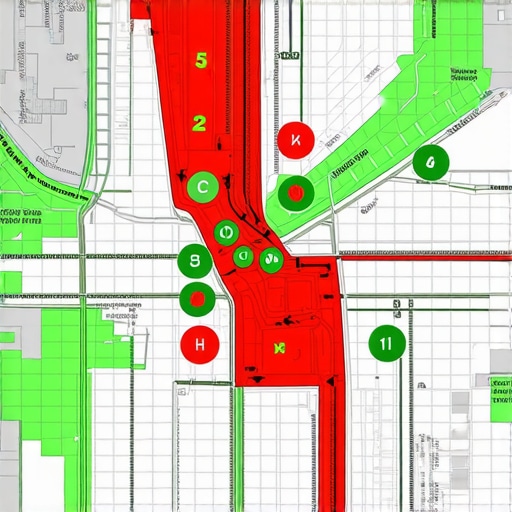
Prepare for the Shift Toward Visual Search
Looking ahead, I’m betting everything on visual AI. Google is getting incredibly good at ‘reading’ what is inside your photos without you telling it. In the near future, if a customer searches for a specific brand of faucet, Google will likely pull up the map listing of a plumber who has a photo of that exact faucet on their profile. This is why I always tell my clients how to use customer photos to jump into the local 3-pack. Encouraging your clients to upload their own pictures of the finished job provides a level of authenticity that a business owner’s professional photoshoot just can’t match. It’s about building a digital footprint that is too big for Google to ignore.
Take Control of Your Public Q&A Section
One of the most overlooked parts of proven seo techniques to enhance maps visibility is the Q&A section. Most business owners wait for a customer to ask a question, but I prefer to be proactive. I recommend seeding your own Q&A with the top five questions your front-desk staff gets asked every day. By knowing how to use the qa section to outshine other local listings, you’re not just providing a service; you’re feeding the algorithm high-intent keywords in a natural, helpful format. If you’re feeling overwhelmed by these moving parts, exploring affordable local seo services can help you automate the maintenance while you focus on running your business. My challenge to you today is simple: go into your profile right now and post one photo of a recent project and answer one frequently asked question in your Q&A section. You’ll be surprised at how much that small ‘heartbeat’ matters to your rank.
Where I Went Wrong With My First Map Listing
For a long time, I operated under the assumption that proximity was the only factor that mattered. I thought if I wasn’t physically located in the town square, I was doomed. But here is the lightbulb moment: relevance and authority can actually stretch your visibility radius. I learned the truth about proximity and how to rank further from your physical office by realizing that Google prioritizes the best answer, not just the closest one. Another hard lesson? Keywords are secondary to user intent. You can learn the secret to ranking for near me searches without the keyword simply by being the most helpful resource in your neighborhood. Finally, I realized that chasing volume over quality is a recipe for burnout. You have to stop wasting time on low quality local directories and start building real, human connections through local community engagement.
The Software I Keep in My Back Pocket
I don’t believe in buying every shiny new tool, but three things are non-negotiable for my daily map pack seo workflow. First, a solid geo-grid rank tracker is essential to see the real-world map of your progress across various coordinates. Second, I constantly read the case studies from Sterling Sky; their real-world testing on things like ‘open hours’ and ‘category impacts’ is worth its weight in gold for anyone trying to master map pack seo strategies. Lastly, I rely on detailed audit checklists to ensure I never miss a minor detail that could lead to a suspension. If you find the technical side too daunting, looking into affordable local seo services can bridge the gap between your expertise and the algorithm’s requirements, allowing you to focus on your customers while the tech stays optimized.
Take the Leap into the 3-Pack
The local landscape is constantly shifting, but the fundamentals of honesty, consistency, and localized proof will never go out of style. You don’t need a massive marketing department to rank higher in the Google Maps 3-pack today; you just need the discipline to update your profile and engage with your customers every single week. It’s about being a safe bet for Google and a great choice for your community. This level of google maps optimization isn’t a race; it’s a marathon of consistent, high-value signals. If you have questions about a specific situation or a tricky listing error, feel free to visit our contact us page for more direct advice. Have you ever noticed your map ranking change drastically when you drive just a few blocks away from your office? Let me know your experience in the comments below!