
I remember sitting at my kitchen table last October, refreshing my phone for the tenth time, only to see that my business was listed as “Permanently Closed” for the third time that week. It felt like a punch in the gut. I knew my doors were open, my staff was ready, but Google told the world I didn’t exist anymore. It wasn’t a glitch; it was a competitor trying to hijack my hard-earned visibility. If you’ve ever felt that helpless anger of seeing your hours changed or your phone number swapped by a nameless “suggested edit,” you are not alone. It’s a dirty game, but today, we’re going to learn how to win it. [image placeholder]
Stop Letting Scammers Control Your Digital Storefront
The reality is that anyone with a Gmail account can suggest a change to your listing. It sounds democratic, but it’s often weaponized. When I first started focusing on google maps optimization, I assumed the system was fair. I was wrong. Early on, I ignored a few “suggested edits” because I thought Google would know they were fake. Big mistake. Those edits went live, and my call volume dropped by 40% overnight. According to a study by BrightLocal, roughly 68% of consumers say they would stop using a local business if they found incorrect information online. That is a massive amount of revenue to lose just because someone decided to play dirty with your maps visibility.
Is it even possible to stop these anonymous attacks?
You might be thinking that fighting Google’s automated systems is a losing battle. It’s a fair fear. It feels like screaming into a void. However, after years of trial and error—and a few more “Permanently Closed” scares—I discovered that you can actually build a defense. You don’t have to just sit there and take it. Whether you’re trying to fix the suggested edits that are ruining your map listing or you’re dealing with a surge of fake reviews that are tanking your map visibility, there are concrete steps to reclaim your territory.
Identifying the Culprits Behind the Chaos
Before you can fix the problem, you need to know what you’re up against. Is it a lone disgruntled customer or a rival business using a bot network? I’ve seen both. In my case, it was a competitor two blocks away who thought sabotaging my local presence was easier than actually providing better service. Once I learned how to identify which competitors are using map spam against you, the power dynamic shifted. Have you ever noticed your business hours changing at the exact same time every week? Tell me if you have, because that’s a classic sign of a scheduled attack. We aren’t just going to play defense anymore; we’re going to master the strategies that make your map pack SEO untouchable.
Claim Every Inch of Your Digital Real Estate
Think of your Google Business Profile like a high-end storefront in a busy downtown district. If you don’t keep the windows clean and the locks tight, someone is inevitably going to try and spray-paint over your brand. To truly rank higher in the 3 pack, you have to treat your business data as sacred. Most business owners fill out their basic info once and never look at it again. That is like leaving your cash register wide open on the sidewalk. You need to audit your business profile for consistency errors in 10 minutes every single month. I learned this the hard way when a slight variation in my address—using ‘St.’ instead of ‘Street’ on my website—gave a competitor just enough room to suggest an ‘address change’ that took me weeks of google maps optimization work to revert.
Why Your Category Choice Dictates Your Rank
If you pick a category that is too broad, you are trying to shout in a crowded stadium where no one can hear you. If you are too niche, no one is in the stadium to begin with. Understanding why your local business category choice is the most important map signal is the difference between being invisible and being the first choice for a customer in need. Use specific sub-categories. If you are a plumber, do not just settle for ‘Contractor.’ Add ‘Drainage Service’ or ‘Emergency Plumber’ to signal hyper-relevance to the algorithm. 
Avoid the Suspension Trap While Making Changes
Here is where the process gets tricky. You want to fix your info, but Google’s automated triggers are incredibly sensitive. One wrong move and your account is hit with a ‘Suspended for Quality Issues’ label. I once tried to update my phone number and office hours in the same five-minute window, and Google’s bots flagged me immediately as a security risk. It took fourteen days of agonizing back-and-forth emails to get back online. Now, I always follow a strict protocol on how to handle map listing updates without getting suspended. Change one major data point at a time and wait at least twenty-four hours for the system to breathe. It feels slow, but it is the only way to protect your maps visibility.
Beat the Spammers at Their Own Game
When the malicious suggested edits started rolling in like clockwork every Tuesday afternoon for a client of mine—a local auto garage—we did not just hit ‘Reject’ and hope for the best. We built a physical proof file. We took high-resolution photos of the shop with the current day’s newspaper in the shot to prove the business was open and active. This is a core part of a modern map pack SEO strategy that relies on real-world evidence. When you have geo-tagged photos uploaded regularly, Google’s AI begins to trust your ‘Official’ data over a random user’s ‘Suggested’ edit. If you are currently struggling with anonymous attacks, start by fixing these 3 profile errors instead of just playing whack-a-mole with symptoms. Consistency is the best shield you have in the local SEO war.
Many self-proclaimed gurus will tell you that more citations automatically mean better rankings. This is a classic trap that leads to wasted hours on generic directories that no human actually visits. In fact, current industry data from experts like Whitespark shows that citation volume is significantly losing its weight as a ranking factor compared to user engagement and local relevance. To stop the bleed, you should stop wasting time on low quality local directories and do this instead. Quality always beats quantity in the world of google maps optimization. I once worked with a boutique law firm that had 400 citations but couldn’t crack the top 10 until we pruned their list and focused on three high-authority, niche-specific legal journals.
Throw Away Your Generic Citation Spreadsheet
The mistake of thinking ‘more is better’ often extends to keywords as well. You might see a competitor ranking by stuffing ‘Best Plumber Near Me’ into their business name. It is tempting to follow suit, but this is a short-term gamble with a 100% failure rate. Google’s latest spam updates have become incredibly efficient at identifying these patterns. Before you risk a permanent ban, you must understand the hidden penalty for keyword stuffing your business name. It is far better to build a clean profile that focuses on maps visibility through legitimate signals. Have you ever fallen into this trap? Let me know in the comments.
Why Keyword Stuffing Is a One-Way Ticket to Suspension
Another nuance most beginners miss is the ‘Proximity Filter.’ If your business is located right next to another similar business, Google might simply ‘hide’ one of you to provide variety to the user. This has nothing to do with your SEO quality and everything to do with algorithm diversity. If you aren’t showing up, you need to learn how to identify if your map listing is being filtered by google. This isn’t a penalty you can fix with more backlinks; it requires a specific map pack SEO strategy to differentiate your brand’s digital footprint from the guy next door.
Can you actually rank for customers ten miles away?
Many owners believe their reach is strictly limited by their physical office location. This is one of the biggest myths in local search. While proximity is a primary signal, you can expand your reach by creating hyper-localized content on your website that signals authority over specific neighborhoods. By understanding the truth about proximity and how to rank further from your physical office, you can begin to capture leads from adjacent zip codes that your competitors are ignoring. Success in the 3-pack is about proving to Google that you are the most relevant answer for the user’s intent, regardless of the exact city block you occupy.
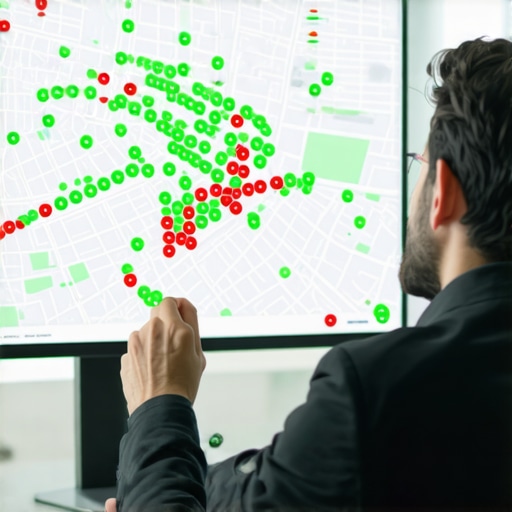
I’ve spent thousands on fancy dashboards, but the only thing that actually moves the needle is a local rank grid. If you are still checking your position by searching on your own phone while standing in your shop, you are living in a fantasy world. To truly rank higher in 3 pack, you need to see how you perform three miles north versus three miles south. I use Local Falcon because it visualizes the ‘proximity bleed.’ This is the best way to track your map rank across a whole city without guessing. If you see a cluster of red dots in a specific neighborhood, that is your signal to stop generic posting and start looking for how local community links drive more map clicks than industry blogs. It is about surgical precision, not a shotgun approach.
#IMAGE_PLACE_HOLDER_D#
How do I maintain my map rank without burning out?
The ‘set it and forget it’ crowd always fails. Local SEO is a marathon run on a treadmill that keeps speeding up. I dedicate exactly thirty minutes every Monday morning to what I call the ‘Vitals Check.’ I respond to every new review, check for suggested edits, and push out one piece of fresh content. You have to realize why your map listing needs fresh content every single week; it tells the algorithm that the lights are on and someone is home. According to Google’s official ‘How to improve your local ranking’ documentation, prominence is heavily weighted by the information Google has about a business from across the web. This is why I always look for affordable local seo services to dominate the 3-pack that focus on building real-world signals rather than just bot-driven traffic.
The Visual Revolution Is Coming for Your Profile
If you think text is king, you’re about to get left behind. We are moving toward a ‘Visual Search’ era where Google’s AI analyzes the actual objects in your uploaded photos to verify your service categories. I predict that within the next two years, your google maps optimization will depend more on the ‘visual metadata’ of your shop’s interior than on your business description. Start preparing now by learning why high resolution store photos increase your map click-through rate. It’s no longer about just having a photo; it’s about having a photo that Google’s ‘Cloud Vision API’ can read and categorize accurately.
Don’t Wait for the Next Update to Break Your Business
The biggest mistake I see is reactive SEO. People only call me when their traffic hits zero. You need to be proactive. If you aren’t seeing the results you want, it might be the missing step in your map pack strategy that costs you leads. My challenge to you today: Open your profile right now and find one ‘customer photo’ that is blurry or irrelevant and flag it for removal, then replace it with a crisp, geo-tagged shot of your team in action. This tiny act of maps visibility maintenance is what separates the top 3 from the ‘also-rans.’ If you’re feeling overwhelmed, look into how to build a local map presence from scratch in a new city to see how simple the fundamentals really are when you strip away the noise.
The Hardest Lesson I Learned While Fighting for My Rankings
Looking back at the chaos of last year, the biggest realization wasn’t about a specific algorithm tweak, but about the power of persistence. I found that Google’s AI eventually rewards the ‘honest actor’ if you provide enough data points to drown out the noise. One lightbulb moment was realizing that why local reviews with photos move the needle more than text alone is because they are harder for competitors to fake. Another lesson? Don’t panic. When you see a malicious edit, handle it with facts, not emotion. If the worst happens, you need to know how to fix a permanently closed label that you didn’t authorize quickly before the ranking bleed becomes permanent. Finally, I learned that map pack seo is less about ‘tricking’ a computer and more about proving your physical existence to a digital gatekeeper.
My Personal Stack for Staying Visible
I don’t believe in using fifty different tools. I keep it lean so I can focus on actual google maps optimization. First, I always have a high-quality camera (or just a modern iPhone) ready to capture every new project; visual proof is the ultimate trust signal. Second, I rely on grid-tracking software to see the truth of my maps visibility across the whole city, not just in my front office. Third, for the heavy lifting, I recommend looking into affordable local seo services to dominate the 3-pack to handle the technical backend while you run your business. These tools and partnerships are what keep my profile resilient when the next update hits.
#IMAGE_PLACEHOLDER_E#
Take the Wheel and Drive Your Local Growth
You now have the blueprint to stop the spammers and start growing your footprint. The digital landscape is messy, but it is also full of opportunity for the business owner who cares enough to stay consistent. By applying these map pack seo principles, you are doing more than just ranking; you are building a wall around your livelihood. It is time to stop being a victim of ‘suggested edits’ and start being the authority in your neighborhood. If you follow the steps to how to rank higher in the google maps 3 pack today, the phone calls will follow. Have you ever caught a competitor trying to change your business hours or address? Let me know your story in the comments below!