I’ll never forget the sinking feeling I had three years ago. I’d just signed a lease for a tiny, shared desk in a prestigious downtown building, convinced that my maps visibility would skyrocket. I was wrong. My phone stopped ringing. My rankings fell off a cliff. I’d fallen into the same trap so many of my neighbors do: I thought a zip code was a shortcut to the top. It turns out, Google’s algorithm is a lot smarter—and more cynical—than I gave it credit for. If you’re wondering why your competitors are outranking you despite your better reviews, the answer might be buried in your street address.
Stop Thinking Your Zip Code is Your Destiny
We often treat our business address like a static piece of data, something we just set and forget. But in the world of map pack seo, your physical location is a living, breathing signal. When I first started out, I made the classic mistake of thinking a P.O. Box would suffice for a service-area business. I quickly learned that the mistake of using a P.O. Box is one of the fastest ways to get your listing suspended or pushed to page five. Today, I’m going to show you how to audit your own location data so you can finally rank higher in the Google Maps 3-pack today.
Is a fancy downtown virtual office actually worth the risk?
I get this question all the time from business owners who want to game the system. They see a competitor across town and want to plant a flag right next to them. Trust me, I’ve been there. But before you sign that virtual lease, you need to know the truth about using virtual offices. Google is aggressive about filtering out these ghost locations. In fact, according to research from Sterling Sky, Google’s Possum filter can automatically hide listings that share the same address or are located in non-staffed offices. Have you ever tried moving your business address only to watch your leads vanish? It’s a nightmare I wouldn’t wish on anyone.
The Hidden Proximity Trap You Might Be Falling For
Proximity is king, but it’s also a bit of a bully. Google wants to show the most relevant result to the user, which usually means the closest one. However, if your address is located in a dead zone—an area overcrowded with similar businesses—you might be getting filtered out even if you’re technically the best choice. This is where google maps optimization becomes your best friend. It’s not just about where you are; it’s about how you prove to Google that you’re the authority for that specific spot. I once spent months trying to figure out why a client’s plumbing shop wouldn’t rank, only to realize their neighbor was a massive corporate chain that Google was prioritizing. We had to change our entire approach to mastering map pack seo strategies to overcome that physical disadvantage. If you’ve recently moved or are planning a change, don’t panic. You can learn how to handle business address changes without losing your hard-earned rank. It’s all about consistency and sending the right trust signals to the algorithm. Now, let’s dive into the technical details of how to audit your current address for these hidden ranking killers.
Audit Your Proximity Before You Lose More Customers
It’s not enough to just ‘have’ an address. You need to see how Google views that address in relation to every other competitor in a five-mile radius. I learned this the hard way with a locksmith client in Chicago. We were doing everything right—reviews, photos, posts—but he was stuck at the bottom of page two. When we ran a grid search, we saw he was being filtered out because three other locksmiths were in the same office complex. He wasn’t invisible because of poor SEO; he was invisible because of physical redundancy. To fix this, you have to start with the most basic, yet most botched, setting in your profile.
Choose the Category That Actually Brings Leads
Most people pick a broad category and hope for the best. Big mistake. I’ve found that why your local business category choice is the most important map signal often comes down to the sub-categories you ignore. If you’re a personal injury lawyer, don’t just settle for ‘Lawyer.’ You need to be specific. When you how to optimize your business category for the local 3-pack, you’re telling Google exactly which ‘buckets’ you belong in. I once saw a landscaping company double their calls simply by switching their primary category to ‘Tree Service’ during the peak pruning season.
Match Your Website Data to Your Map Pin
Google doesn’t just trust what you type into your Business Profile; it cross-references that data with your website. If your website footer says ‘Suite 100’ but your Google listing says ‘Unit A,’ you’re creating friction. This is why why your local landing pages must match your business profile data so perfectly. It’s about building a ‘trust loop.’ Your website needs to scream your location’s relevance. I tell my clients that why your website content matters more for map rankings than you think is because Google uses your site’s text to understand the ‘where’ of your business. If you mention local landmarks and neighborhoods, you’re anchoring that map pin in the real world. 
Track Your Rank the Right Way
Stop checking your rank by standing in your office and searching on your phone. That’s like looking in a mirror and thinking you’re the only person in the room. You need to know the best way to track your map rank across a whole city, which involves using a grid-based tracker. These tools show you a map of your city with little pins—green where you’re in the top 3, red where you’re not. It’s the only way to see if your google maps optimization is actually expanding your reach or if you’re just a ‘one-block wonder.’ Once you see that grid, the gaps in your mastering map pack seo strategies become painfully obvious.
Clean Up the Data Mess
Finally, you have to look for consistency errors. Spend a few minutes on how to audit your business profile for consistency errors in 10 minutes. Old phone numbers, misspelled street names, and conflicting hours are like static on a radio—they make it hard for Google to hear your signal. I remember a bakery that couldn’t figure out why their ‘near me’ traffic died. It turned out they had a duplicate listing from five years ago with a different suite number that was confusing the algorithm. We merged the listings, and they were back in the 3-pack within a week.We’ve all been told that more reviews equal better rankings, but that’s a dangerous oversimplification. I’ve seen businesses with 500 reviews get buried by a competitor with 50. Why? Because the latter has better review velocity and more diverse trust signals. In my experience, why high ratings alone will not move your map pin often surprises people. Google’s algorithm is looking for authenticity, not a perfect scorecard. If your profile is too ‘clean,’ it looks manufactured. A few four-star reviews with detailed descriptions of your service actually provide more specific trust signals than twenty generic ‘Great job!’ five-star blurbs.
The Five-Star Trap That Makes You Look Like a Bot
If you’re obsessing over a perfect 5.0, you’re missing the forest for the trees. According to the latest Local Search Ranking Factors study by Whitespark, the diversity of your review sources and the keywords your customers use in their feedback are massive drivers for google maps optimization. Have you ever noticed a competitor with lower ratings sitting comfortably at the top? It’s because they’ve mastered the nuances of localized authority. They aren’t trying to trick the system; they’re feeding it real-world data.
How do you beat a competitor who has been in the neighborhood for decades?
This is the ultimate hurdle for many growing brands. You’re the new shop on the block, and the guy down the street has been there since the nineties. You can’t out-age them, so you have to out-signal them. This is where understanding why local backlinks are the only way to beat big chain competitors comes into play. While they rely on their legacy, you can build relevance through local sponsorships and neighborhood news mentions. Most people think all links are created equal, but a link from the local Little League team’s website carries more weight in the 3-pack than a generic industry blog ever will.
Stop Stuffing Keywords Into Your Business Name
It’s the oldest trick in the book, and it’s the fastest way to get a manual penalty. I’ve seen dozens of listings vanish overnight because the owner thought adding ‘Best SEO Service Local’ to their legal business name was a genius move. This is the hidden penalty for keyword stuffing your business name. Google’s AI is incredibly good at cross-referencing your legal filings and signage. If they catch you, you won’t just drop a few spots; you’ll be ‘ghosted’ from the results entirely. Instead, focus on proven seo techniques like updating your profile with fresh, high-resolution photos that prove you are an active part of the community. 
The Real Secret to Ranking Further From Your Office
Everyone thinks proximity is a hard wall you can’t break. While it’s true that closer is usually better, you can actually expand your ‘circle of influence’ by proving your relevance to surrounding neighborhoods. This is the core of the truth about proximity. It requires a strategic shift in your map pack seo—specifically, using hyperlocal content on your website that anchors you to those outer areas. Have you ever fallen into this trap of trying to game the proximity filter? Let me know in the comments. I’m curious to see which of these common hurdles has been your biggest headache lately.It’s one thing to get into the 3-pack; it’s another thing entirely to stay there while your competitors are nipping at your heels. I’ve seen businesses hit the top spot, celebrate for a week, and then watch their leads dry up because they stopped feeding the machine. Maintaining maps visibility requires a shift from ‘project mode’ to ‘maintenance mode.’ I personally use a combination of automated alerts and manual audits to ensure nothing slips through the cracks. One specific method I swear by is checking for ‘suggested edits’ from competitors every Tuesday morning. If you aren’t active, Google might accept a malicious ‘permanently closed’ suggestion from a rival, and suddenly your phone stops ringing.
How do I keep my map rankings from falling off a cliff?
Consistency is the short answer, but the technical answer is fresh data. You need to understand why your map listing needs fresh content every single week. This isn’t just about SEO; it’s about showing Google your business is alive. I use scheduled Google Posts to share real-time updates, and I always encourage clients to learn how to use the qa section to outshine other local listings. It’s a goldmine for long-tail keywords.
The Tools I Pay for Every Single Month
I don’t believe in buying every shiny new software, but I wouldn’t run a campaign without a solid grid tracker. I rely on Local Falcon for its pinpoint accuracy. It tells me the best way to track your map rank across a whole city by showing exactly where my ‘authority bubble’ ends. If I see red pins in a high-value neighborhood, I know I need to enhance maps visibility with proven seo techniques like hyperlocal backlinking. For those just starting who are worried about costs, looking for affordable local seo services to dominate the 3-pack is a smarter move than trying to DIY everything with broken tools. 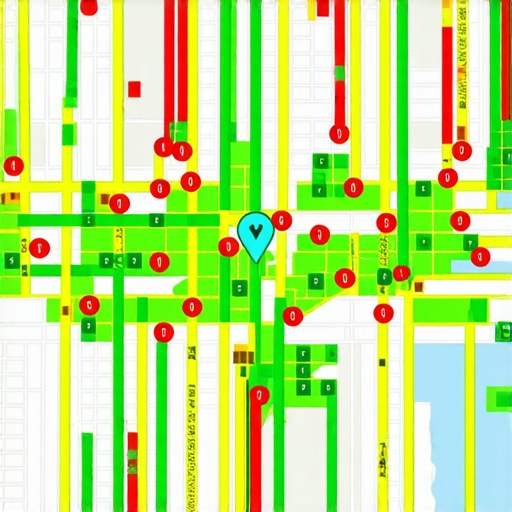
Where Local Search is Heading Next
If you look at the 2023 Local Search Ranking Factors study by Whitespark, you’ll see a massive increase in the weight of ‘on-page’ signals. I predict that within the next two years, Google’s Search Generative Experience (SGE) will make standard map listings even more interactive. We are moving toward a ‘zero-click’ world where the user gets every answer they need without ever leaving the search results. This means your profile needs to be a mini-website in itself. To survive this shift, you must move beyond basic google maps optimization and start thinking about ‘Conversion Engine Optimization.’ My big tip for you this week: go into your Q&A section right now and post the three most common questions your customers ask on the phone. Answer them yourself from your owner account. It’s a simple, advanced move that builds immediate trust with the algorithm and the customer.
Why My Best Results Happened When I Stopped Trying to Hack the System
The biggest shift in my career occurred when I stopped looking for a magic button and started looking at my business through the eyes of the neighborhood. I realized that long-term maps visibility isn’t about outsmarting a machine; it’s about being the most helpful option for a human. Here is what I wish I had known years ago:
- Proximity is flexible, but trust is not. You can’t change where your office is located today, but you can change how much Google trusts you by consistently uploading real-world photos and responding to every query.
- Hyperlocal beats global every time. A link from a local neighborhood blog is worth ten times more than a high-authority global tech site when it comes to google maps optimization.
- The set it and forget it mindset is a ranking killer. If you’re not active, you’re invisible. This is why your map listing needs fresh content every single week.
The Toolset That Keeps My Client Pins Green
I don’t believe in overcomplicating things, but there are a few resources I simply cannot live without. If you are currently researching how to fix a map listing that is stuck on the second page, these three things will change your perspective. First, use a grid-based tracker like Local Falcon to see your real authority radius—it’s the only way to measure actual map pack seo success. Second, study the Whitespark Local Search Ranking Factors annually; it is the gold standard for understanding what actually moves the needle. Lastly, don’t be afraid to invest in professional help if the technical side is draining your time; there are plenty of affordable local seo services to dominate the 3-pack that can handle the heavy lifting for you.
#IMAGE_PLACE_HOLDER_E#
Take the First Step Toward Your Local 3-Pack Legacy
The map pack is more than just a list of names; it is the front door to your business in the digital age. It is easy to look at a competitor and feel like you will never catch up, but remember that the algorithm is designed to give users the best experience. By focusing on authenticity and consistency, you can build a level of maps visibility that no competitor can simply buy. Don’t wait for the perfect moment to start—the best time to optimize was yesterday, and the second best time is right now. Go out there and claim the space your business deserves. What is the single biggest challenge you have faced while trying to rank in your local neighborhood? Let me know in the comments below!