I remember the cold sweat I felt when I signed the lease on our new, bigger office across town. I should have been popping champagne, but instead, I was staring at my phone, terrified. We had finally clawed our way into the top spot for local searches, and I just knew that changing that one little address field would send us straight to the digital graveyard. It felt like walking a tightrope over a pit of lost leads. If you have ever felt that pit-in-the-stomach dread about moving your shop, you are not alone. We are going to fix that today. I am going to show you exactly how to pivot your location without watching your map pack seo sink like a stone. [image_placeholder]
Moving Your Shop Without Wrecking Your Google Ranking
The truth is, Google is a bit of a skeptic. It likes consistency. When you change your physical address, you are basically telling the algorithm that everything it knew about your reliability is now up for debate. Early in my career, I made a massive mistake: I thought I could just update my website and leave the rest to “figure itself out.” Big mistake. My phone stopped ringing for three weeks. I learned the hard way that handling location changes requires a surgical touch, not a sledgehammer. We are going to talk about protecting your maps visibility so your regulars—and more importantly, your new neighbors—can actually find you on moving day. This isn’t just about changing a line of text; it is about keeping your reputation intact while you pack the boxes.
Can You Really Change Locations Without Going Invisible?
It sounds too good to be true, doesn’t it? You have probably heard horror stories of businesses that moved three blocks away and disappeared from the Google Maps 3-pack for months. It happens. But it usually happens because of a messy digital trail. According to the experts at Moz, NAP (Name, Address, Phone number) consistency remains one of the most critical pieces of the local ranking puzzle. If your old address is still lingering on some dusty directory while your new one is on your profile, Google gets confused. And a confused Google never ranks you high. Have you ever tried to update your info and ended up with a “suspended” badge instead? Drop a comment and let me know—I have been in those trenches too, and it is a nightmare. The secret isn’t just changing the pin; it is about google maps optimization that signals trust to the bots. We need to make sure you aren’t making the mistake of using a P.O. Box or a virtual office just to “keep a presence” in the old neighborhood. That is a fast track to a penalty. Instead, I will walk you through the exact workflow I use to keep my clients’ rank higher in 3 pack results even when the physical ground under their feet shifts. It is about being proactive, not reactive.Once you have accepted that a move is happening, you need to treat your digital footprint like a crime scene. You have to scrub every single trace of that old address before Google decides you are a ghost business or, worse, a scammer. I like to think of your business address like a signal fire; if you have two fires burning in different spots, the rescue plane (Google) doesn’t know where to land.
Scrub the Web Before You Flip the Switch
Before you even touch your Google Business Profile dashboard, you need to hunt down every mention of your old shop. This means the footer of your website, your Facebook page, and those obscure local directories you signed up for five years ago and forgot. I once worked with a local dentist who moved just two blocks away. We updated his main site, but we missed an old Yelp listing and a local high school sponsorship page. For three weeks, his map pin bounced around like a pinball because Google kept finding conflicting data. To avoid this, you must how to fix inaccurate map pins that confuse your clients by ensuring your NAP (Name, Address, Phone) is identical across every platform.
The Secret to Updating Your Dashboard Without Getting Suspended
When you finally go into your profile to change the address, do not change everything at once. If you change your phone number, your business name, and your address in one sitting, you are basically begging for a manual suspension. Treat it like a surgical procedure. Change the address first, save it, and wait for the verification prompt. During this phase, focus on the only three attributes that actually change your rank to ensure Google understands your core services haven’t changed, just your coordinates. 
How to Skip the Postcard Wait with Video Proof
We all know the pain of waiting fourteen days for a postcard that never arrives. If Google offers you the option, take the video verification route. I recently helped a boutique owner in a busy downtown area do this. We walked outside, filmed the street signs, the shop’s front door, and then walked inside to show the POS system and the inventory. It was verified in three hours instead of two weeks. If you are struggling with the process, look into how to verify your business without waiting for a postcard to get your new location live faster.
Signal Your New Territory to the Algorithm
Once the address is live, Google needs to see that you are actually active in the new neighborhood. This isn’t just about the pin; it is about relevance. Start by uploading fresh, high-resolution photos of your new storefront. This is a massive part of google maps optimization that people overlook. Use the checklist for optimizing profile photos for more clicks to make sure your first impression is solid. You should also consider how to use local events to signal relevance to google maps. If you host a ‘Grand Re-opening’ or a neighborhood mixer, post about it in your profile’s ‘Updates’ section. This tells the algorithm that you aren’t just a digital ghost—you are a physical part of the community. Finally, check your tech stack; remember that the impact of website speed on your local map pack placement still applies regardless of where you are located. A slow site at a new address is still a losing strategy.Now that we’ve covered the tactical ‘how-to’ of the move, let’s look at the nuances that separate the winners from the also-rans. Most people think the proximity filter is an unbeatable wall. They believe if they move a mile further from the city center, their rankings will evaporate. But here is the contrarian truth: relevance and prominence can actually bully proximity into submission. I have seen businesses move to ‘worse’ locations geographically and actually rank higher in 3 pack results because they doubled down on their local authority signals.
The Proximity Myth Holding You Back
The biggest mistake I see owners make is panic-buying a tiny office in the expensive ‘downtown’ area just to be near the centroid. Whitespark’s Local Search Ranking Factors study consistently shows that while proximity is a heavy hitter, your on-site local signals and link profile carry immense weight. If you move, don’t just focus on the new coordinates; focus on why proximity is not the only factor in local ranking. It is about proving you are the most relevant answer to the user’s problem, regardless of the extra five-minute drive. 
Why Does the Guy Down the Street Outrank You With Half the Reviews?
This is the advanced question that keeps my inbox full. It’s frustrating to see a competitor sitting at the top of the google maps optimization game with only twenty reviews while you have a hundred. Have you ever fallen into this trap? Let me know in the comments. The secret usually lies in what we call ‘review velocity.’ Google isn’t just looking at the total number; it is looking at how often you get them and what is inside the text. We have found that why review velocity is more important than total count often comes down to the algorithm seeing you as a ‘trending’ and active business.
The Review Velocity Trap to Avoid
Here is the ‘oops’ factor: do not launch a massive review campaign the week you move. If you suddenly go from two reviews a month to fifty in a week, you’ll trigger a spam filter. Instead, use affordable local seo services to dominate the 3 pack to build a steady, natural rhythm. Also, stop obsessing over citations that do not drive leads. Modern map pack seo is about quality over quantity. If your move feels like it is stalling, look at why your competitors with zero backlinks are outranking you on maps—often it is because their local ‘entity’ is more defined in Google’s brain than yours. Another hidden trap is the temptation to add your new city name to your business title during the move. That is the hidden penalty for keyword stuffing your business name waiting to happen. It is better to use how to use hyperlocal content to win the neighborhood map war on your website than to cheat on your profile name. You need to be a landmark, not just a listing.Once you’ve settled into the new space, the biggest threat to your visibility isn’t a competitor—it’s complacency. I see it all the time: a business owner hits the top of the local 3-pack after a move, exhales a sigh of relief, and then stops doing the very things that got them there. They stop posting, they stop asking for reviews, and then they wonder why the phone goes silent three months later. To stay ahead, you need to look at the specific data points that prove your map ranking is profitable. If you aren’t tracking actual clicks-to-call or direction requests, you’re just chasing vanity metrics. I personally rely on specialized heat-map or grid-tracking tools because checking your rank from your own desk is the fastest way to get a false sense of security. We use this software to spot visibility gaps on maps that you simply can’t see with a standard Google search. It shows you exactly which intersection is the ‘border’ where your visibility drops off, allowing you to target your local outreach to those specific neighborhoods.
How do I maintain my visibility without making it a full-time job?
The secret is what I call a ‘rhythm of relevance.’ You don’t need to spend four hours a day tweaking your dashboard; you just need to understand why your map listing needs fresh content every single week. I recommend a simple 15-minute ‘Map Audit’ every Friday morning. Upload one high-res photo of a happy customer (with permission) or a new piece of equipment. Joy Hawkins, a renowned expert in local search from Sterling Sky, has frequently highlighted that Google’s algorithm is increasingly prioritizing ‘real-world’ signals over static data. This means the algorithm wants to see that your business is physically active and ‘breathing.’ Looking at the horizon, I predict that Google will soon integrate more AI-driven visual recognition into the map pack. It won’t just be about the keywords you type in your description; Google’s AI will scan your photos to verify you actually have the inventory you claim to have. 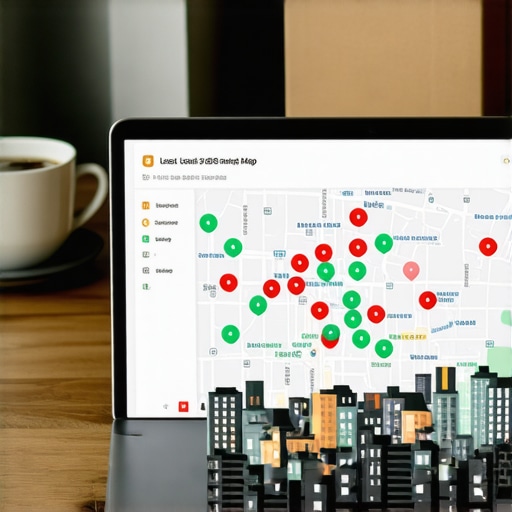 This is why google maps optimization is a marathon, not a sprint. If you find the technical side of this overwhelming, you might want to explore affordable local seo services to dominate the 3 pack to keep that momentum going while you focus on running your business. My ‘pro-level’ tip for you today: Go into your Google Business Profile photo gallery right now and remove any photos that show your old address or old signage. It seems small, but it prevents the algorithm from getting mixed signals about your current location. Don’t let a stray photo from five years ago sabotage your growth today.
The Hardest Lessons from My Map Pack Survival Guide
One thing I never anticipated was how the digital ghost of a previous tenant could haunt a new location. If the business that occupied your new storefront before you had a suspended or spammy profile, you might inherit their baggage. I have learned that checking the history of your new address is just as important as signing the lease. Another lightbulb moment was realizing that relevance beats distance every single time; if you provide a better experience, Google will stretch that map pin further than you think. Finally, remember that your website’s health is the foundation of your success. If you are struggling, it is worth investigating why your website speed affects your google maps placement because a move often highlights existing technical cracks you ignored at the old shop.
Tools That Keep My Business on the Map
I do not navigate these waters alone, and you shouldn’t either. I personally rely on Whitespark for citation audits—it is the gold standard for finding those hidden mentions of your old address that confuse the algorithm. For day-to-day tracking, I use specialized grid-tracking software because standard searches are biased by your own location; you need to see the best way to track your map rank across a whole city to get the real picture of your visibility. I also suggest keeping a physical log of every customer interaction in the first month of your move; these are your best sources for the high-quality, descriptive reviews that signal google maps optimization success to the algorithm. These tools ensure that your map pack seo stays robust even when the physical ground shifts.
Take the Leap Into Your New Neighborhood
Moving your shop is a sign of growth, not a sentence for digital invisibility. It is a chance to refresh your brand and engage with a whole new set of local customers who are eager to find what you offer. Don’t let the technicalities of moving keep you up at night. If you follow the steps we discussed—scrubbing the old data, verifying with video, and maintaining a steady flow of fresh content—you won’t just survive the move; you will thrive. You have the tools and the strategy to rank higher in 3 pack results than you ever did at the old place. [image_placeholder] Have you ever dealt with a stubborn map pin that just would not update to your new address? Let me know in the comments below!