I’ll never forget the morning I refreshed my browser and saw those dreaded red letters: ‘This listing has been suspended.’ Just a month earlier, I’d bragged to my friends about how I’d outsmarted the algorithm. I’d rented a virtual office in a high-rise downtown, thinking I’d finally rank higher in the 3-pack without paying for actual floor space. I was wrong. My business vanished. It was a wake-up call that changed how I approach google maps optimization forever. Today, I want to pull back the curtain on why these digital addresses are a gamble you probably shouldn’t take. We are going to look at the specific ways Google identifies these locations and what you should do instead to build real maps visibility. [image_placeholder_1]
Why Your Prestigious Virtual Address Is Hurting Your Rankings
The allure is simple. You want a fancy zip code to improve your map pack seo without the overhead of a real lease. However, Google’s primary goal is to provide users with accurate, local information. When you use a virtual office, you are essentially telling a lie about where your business lives. I made the mistake of using a P.O. box style address early on, and it cost me months of traffic. According to Google’s official Business Profile guidelines, an office must be staffed during your stated business hours to be considered a valid physical location. If a customer—or a Google street view car—rolls by and sees a generic lobby with no signs of your actual operation, you’re a target for a manual review. I’ve helped business owners use an seo service local strategies that actually stick, and it always starts with being honest about your location.
Can You Still Use Co-working Spaces Without Getting Banned?
This is the question I get every single week from entrepreneurs working out of their spare bedrooms. There is a huge difference between a ‘virtual office’ that just forwards mail and a dedicated desk in a co-working space where you actually spend your time. If you have permanent signage and can prove you are there, you might have a fighting chance. But for most, the risk of a permanent suspension is just too high to ignore. Have you ever tried to use a virtual address only to find your pin disappearing from search results? It’s a frustrating cycle that often leads to a total ranking collapse. To win the neighborhood map war, you need to focus on signals that Google actually trusts, rather than trying to trick the map into thinking you’re in a city center you never visit.
Start the Rescue Mission by Auditing Your Current Data
Transitioning away from a virtual address isn’t as simple as clicking ‘edit’ on your profile. You have to think of your business’s digital presence like a spiderweb; if you pull one thread, the whole thing vibrates. Before you make any changes to your Google Business Profile, you must audit your business profile for consistency errors across the entire web. If Google sees a high-rise office on your profile but a residential street on Yelp, it smells a rat. I remember working with a plumber in Chicago who had used three different ‘executive suites’ to try and dominate the suburbs. We spent an entire weekend manually purging 45 different directory mentions of those fake offices. It was messy, exhausting, and tedious, but it was the only way to clear the path for a legitimate seo service local strategy. Once the slate was clean, his phone finally started ringing again because Google stopped flagging his data as suspicious.
Hunt Down Every Mention of the Old Address
You need to be ruthless here. Use a search operator like ‘Business Name’ + ‘Old Virtual Address’ to find every forgotten citation. These old ‘ghost’ addresses act like anchors, dragging down your rank higher in the 3-pack goals.
Switch to the Service Area Strategy
If you don’t have a physical storefront where customers walk in, stop trying to pretend you do. Google has a specific setting for this called a Service Area Business (SAB). This is the ‘honest’ way to get google maps optimization right without owning a skyscraper. When you toggle this setting, you tell Google, ‘I don’t have a lobby, but I serve these specific zip codes.’ Many owners fear this makes them invisible, but the service area business invisible myth is usually just a result of poor configuration. You need to dive into the specific service area settings that determine your reach. I’ve seen businesses expand their radius too far, which dilutes their local power. Think of your service area like a flashlight: the wider you spread the beam, the dimmer the light becomes. Keep it tight and relevant to where you actually drive. 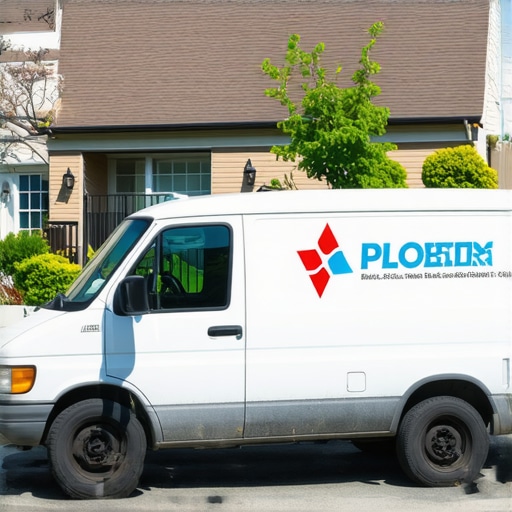
Gather Evidence That You Are the Real Deal
Since you aren’t using a prestigious downtown address to prove your worth, you have to use ‘real-world’ signals to show Google you exist in the neighborhood. This is where map pack seo turns into a game of visual proof. Instead of generic stock photos of people in suits, upload photos of your branded truck parked near local landmarks or your equipment laid out on a job site. Google’s AI is smart enough to recognize the environment in your photos. When you combine these with local reviews with photos from your actual customers, you create an airtight case for your maps visibility. I once had a client who took a photo of their van in front of the local high school during a community event; that single photo did more for their ‘neighborhood trust score’ than a year of keyword-stuffed descriptions ever could.Let’s dig deeper into what actually moves the needle when you want to rank higher in the 3-pack. Everyone tells you that you have to be right next to the user to show up. While proximity is a major factor, it is often a hidden proximity trap that lazy marketers use as an excuse for poor results. In my experience, relevance and authority frequently override physical distance. Whitespark’s annual Local Search Ranking Factors study consistently shows that on-page signals and link equity are massive drivers of map pack seo success. If your website is a powerhouse of local info, Google will often stretch your reach further than a competitor who is closer but has a weak digital footprint. Have you ever fallen into this trap of thinking you are just too far away to compete? Let me know in the comments. 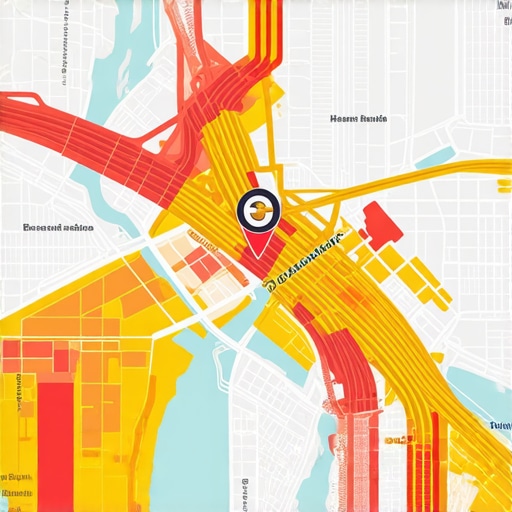
Can your site content actually pull your map pin to new neighborhoods?
Yes, it absolutely can. This is where why your website content matters more for map rankings than you think becomes clear. Most people treat their website and their Google profile as two separate islands, but that is a massive mistake. Google reads your site to understand the depth of your expertise. If you want better maps visibility in a specific suburb, you need localized content that proves your connection to that area. I’ve seen businesses with zero proximity advantage dominate because they were the only ones answering specific local questions on their blog.
Don’t Kill Your Listing With a Fake Business Name
Here is the ‘oops’ factor I see weekly: business owners trying to cheat by changing their official name to include every city or service they offer. Why stuffing your business name with keywords is a dangerous move isn’t just about ethics; it’s about stability. It might work for a few days, but the moment a competitor clicks ‘suggest an edit,’ you risk a hard suspension that is incredibly difficult to reverse. Instead of risky name games, you should focus on the impact of user behavior signals on your 3-pack position. When real people click your listing, call you, and ask for directions, Google gains more trust in your location than any keyword-stuffed title could ever provide. Real google maps optimization is about building a brand that people actually search for by name. If you are struggling to move the needle, you might need a more specialized seo service local approach that focuses on these high-level signals rather than basic profile tweaks. Stop chasing the algorithm with hacks and start feeding it the data points it actually wants to see.
Stop Guessing Where Your Pin Shows Up
To truly rank higher in the 3-pack, you need to stop relying on your own phone’s search results. Your results are biased by your location and search history. I personally use Local Falcon for every single client because it provides a scan-grid view of the city. It shows you exactly where your authority drops off, street by street. Without a grid tracker, you’re flying blind. I remember a locksmith who thought he was winning until we ran a scan and saw he disappeared two blocks away from his shop. By visualizing the data, we identified the specific neighborhoods where we needed to deploy localized blog content to reclaim that lost territory. This isn’t just about vanity metrics; it’s about knowing exactly where to spend your marketing budget for maximum maps visibility. 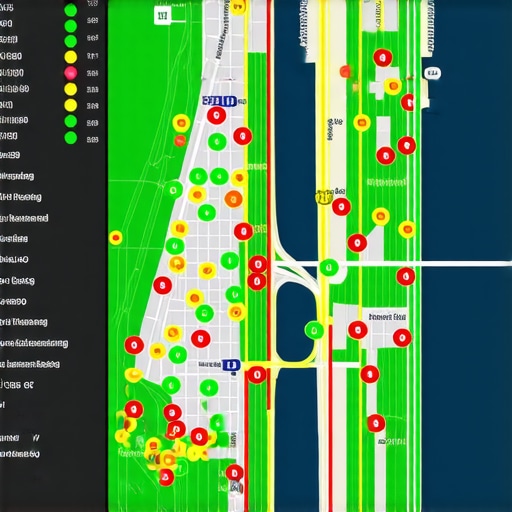
How do I keep my map rankings alive for the long haul?
Maintenance is the most ignored part of map pack seo. Most people ‘set it and forget it,’ which is why their traffic eventually plateaus. You have to treat your profile like a living social media feed. I make it a rule to upload at least three new photos a week—not just of the office, but of the work being done. Google rewards active listings because activity signals that the business is still operational and relevant. As Joy Hawkins from Sterling Sky has noted in her research on local ranking factors, even small signals like ‘years in business’ or updated ‘open hours’ can influence how Google weighs your profile against competitors. If you want to avoid a sudden drop in map traffic, you must commit to a schedule. This is why fresh content every single week is a non-negotiable part of any professional google maps optimization plan.
The Future of Maps Is Visually Driven
Looking ahead, I predict that Google’s ‘Multisearch’ and AI-driven summaries will change how we approach local search. We are moving toward a world where Google won’t just look at your keywords; it will analyze the objects within your photos to verify your services. If you’re a roofer, Google’s AI will scan your uploaded photos for shingles and ladders. To stay ahead, you need to start tagging your photos with descriptive text and ensuring your customer photos are high-resolution. This shift means that generic seo service local packages will soon be obsolete if they don’t include a heavy focus on visual data.
Take Control of Your Q&A Section Right Now
My one advanced tip for you today is to seed your own Q&A section. Don’t wait for a customer to ask a question. Use your most frequent customer inquiries and post them yourself, then answer them from your business account. This allows you to naturally include keywords that you might not be able to fit into your business description. It’s a powerful way to convert more local search traffic while providing immediate value. Try posting three questions today that address common ‘near me’ search intents and watch how it impacts your engagement metrics.
The Expensive Truth About Cutting Corners on Your Map Profile
Reflecting on my early days in this industry, the biggest lesson I ever learned was that Google has a much longer memory than we give it credit for. When you try to use a virtual office, you aren’t just taking a risk for today; you are potentially poisoning your business’s reputation with the algorithm for years to come. I’ve seen listings that were once flagged for address fraud struggle to regain their former glory even after moving to a legitimate space. It is much easier to build a foundation correctly the first time than to try and recover a map listing from a total ranking collapse later on.
Another realization that changed my perspective was discovering why high ratings alone will not move your map pin. For a long time, I thought getting five-star reviews was the only way to win. But without a physical, verified presence that matches real-world data, those reviews are just numbers on a screen. Google wants to see that you are a real person serving real neighbors. When I finally embraced the truth about proximity, I stopped worrying about being in the middle of a skyscraper and started focusing on becoming the most relevant authority in my actual neighborhood. That is where the real money is made.
The Tools I Use to Stay Ahead of the Pack
If you are serious about your digital footprint, you need more than just a basic profile. I personally rely on a few specific resources to ensure my clients stay visible. First, I always recommend using a grid-tracking tool like Local Falcon; it’s the only way to see the truth about your reach across different city blocks. Second, I keep a close eye on the privacy policy updates from Google to ensure our data handling stays compliant with their ever-changing local requirements. For those just starting out, checking a guide on building a presence from scratch can save you dozens of hours of trial and error.
[image_placeholder_2]
Your Business Deserves a Permanent Spot on the Map
It is tempting to look for the ‘fast’ way to the top, but local search is a marathon, not a sprint. By choosing a legitimate address—even if it is your home as a service area—you are protecting your business from the sudden disappearances that plague those using virtual offices. Real google maps optimization is about building trust with your community and the search engine simultaneously. When you provide honest data and high-quality visual proof of your work, you aren’t just ranking; you are building a brand that can survive any update. If you find the technical side of this too overwhelming, there are always affordable local seo services that can help you navigate the transition without losing your mind. Have you ever been tempted to use a virtual office to ‘beat’ the competition? Let me know your experience in the comments below.