I sat there staring at my screen for three hours, wondering why the phone wasn’t ringing. I had the reviews. I had the photos. I even had a fancy website. But when I searched for my services, I was nowhere to be found in the 3-pack. It felt like I was shouting into a void. Then, I realized my fatal flaw: I had picked ‘Consultant’ as my category. It was too broad, too safe, and absolutely useless for google maps optimization.
My $5,000 Mistake That Taught Me Everything
Years ago, I helped a local contractor who was struggling to rank higher in 3 pack results. We did everything by the book—or so I thought. We spent thousands on seo service local experts who focused on backlinks and blogs. But we ignored the primary category. We left it as ‘General Contractor’ when his real money came from kitchen remodeling. The day we changed it to ‘Kitchen Remodeler,’ his leads tripled overnight. It was a visceral lesson in how Google’s brain actually works. If you don’t tell the algorithm exactly what bucket you belong in, it will just throw you in the ‘miscellaneous’ pile.
Is one tiny dropdown menu really worth all this fuss?
You might think I’m overthinking it. It’s just a category, right? Wrong. According to industry research from BrightLocal, the primary category is consistently cited as one of the top three most influential ranking factors for the map pack. If you stop using generic categories and get specific, you aren’t just helping Google; you’re helping your customers find you when they have a specific problem.
The Brutal Truth About Map Visibility
The reality is that map pack seo isn’t about being the biggest business; it’s about being the most relevant one. When you learn how to optimize your business category correctly, you’re giving Google the permission it needs to show you to the right people. Have you ever felt like your business is invisible even though you’re better than the guy ranking at the top? Tell me, have you checked your primary category lately? It might be the only thing standing between you and a flooded inbox. Let’s dive into how to pick the winner.Think of the primary category as the ‘Home’ aisle in a massive department store. If you sell high-end blenders but list yourself under ‘Clothing,’ nobody is going to find you, even if your blenders are the best in the world. To rank higher in 3 pack results, you need to be surgical. Most business owners just click the first thing that looks ‘close enough’ in the dropdown menu and call it a day. That is a massive mistake. You need to look at what the competitors currently winning the map pack are doing. I use a little trick where I look at the source code of a competitor’s listing or use a specialized tool to see their ‘hidden’ categories. This isn’t cheating; it’s essential market research for google maps optimization. I once worked with a guy named Mike who ran a high-end locksmith business. He was listed under ‘Locksmith,’ which is fine, but it’s a bloody battlefield with razor-thin margins. We dug into the search data and realized most of his big-ticket calls were actually for safe repairs and specialty hardware. By adjusting his primary category to ‘Safe Wholesaler’ and keeping ‘Locksmith’ as a secondary, we bypassed the noise and hit the people ready to spend. This is the heart of mastering map pack seo: matching your identity to the user’s specific, high-value intent. 
Pick the one category that actually pays your mortgage
Your primary category is the strongest signal you can send to the Google algorithm. It’s the headline of your professional life. If you are a plumber, but 80% of your revenue comes from emergency pipe bursts, check if there’s a more specific ‘Emergency Service’ tag that fits. When you learn how to optimize your business category, you aren’t just checking a box; you’re defining your territory. I’ve seen businesses move from page five to the top spot just by changing ‘Restaurant’ to ‘Italian Restaurant.’ It’s that sensitive.
Use secondary tags to fill the gaps
You get up to nine additional categories. Use them, but do not abuse them. If you’re a personal injury lawyer, don’t add ‘Dog Groomer’ just because you have a pet in the office. That confuses the AI and dilutes your authority. Instead, learning how to use secondary categories to appear in more searches means picking things that are vertically integrated. If you are a ‘Dental Clinic,’ your secondary categories should be ‘Cosmetic Dentist,’ ‘Orthodontist,’ and ‘Pediatric Dentist.’ This creates a cluster of relevance that signals expertise.
Make your website back up your claims
Google isn’t just looking at your profile; it’s scanning your website to see if you’re telling the truth. If your profile says you are a ‘Roofing Contractor’ but your website only talks about general home repairs and painting, your relevance score will plummet. This is why your website content matters more for map rankings than you think. Every category you claim on your map profile should have a corresponding page or a significant section of content on your site. If there is a disconnect, Google defaults to the safe, generic terms that keep you buried.
Why being almost right is the same as being wrong
I remember a messy situation with a ‘Day Spa’ that insisted on being listed as a ‘Medical Clinic’ because they had one nurse on staff. They didn’t rank for either category. Why? Because their reviews talked about relaxing massages and facials, not medical procedures. To enhance maps visibility with proven seo techniques, you have to be honest about what the public thinks you are. Google trusts the crowd more than it trusts your dashboard settings. If your reviews don’t mention the services in your categories, you’re fighting an uphill battle.Everyone tells you to get more reviews, but I’m here to tell you that’s a superficial goal. I’ve seen businesses with 500 reviews get crushed by a newcomer with 40. Why? Because review velocity is more important than total count. If your feedback loop has gone cold, Google’s algorithm assumes you’re no longer relevant. This is where your current map strategy is losing you money—by focusing on quantity over recency. Whitespark’s annual Local Search Ranking Factors research consistently highlights that ‘freshness’ and ‘velocity’ are top-tier signals that move the needle more than a stagnant pile of five-star ratings from three years ago. 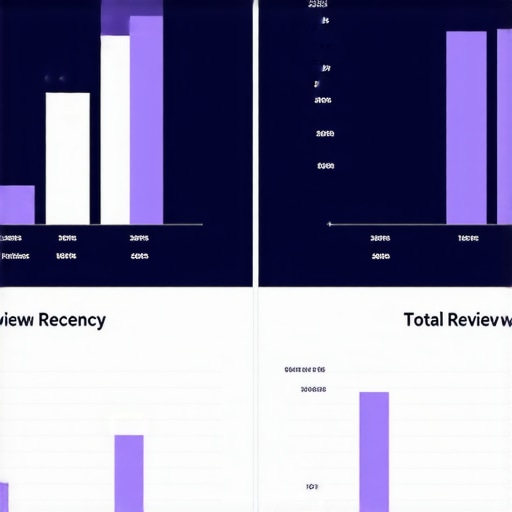
Stop trying to outsmart the algorithm with keyword stuffing
It’s tempting, I know. You want to change your business name to ‘Best Plumbing Repair City Name’ to force the rank. Don’t do it. There is a hidden penalty for keyword stuffing your business name that most gurus won’t mention until your profile gets suspended. Google is getting incredibly good at cross-referencing your legal name with state records and official directories. If you’re caught, you don’t just drop a few spots; you disappear entirely. Instead of tricks, focus on mastering map pack seo through legitimate authority and real-world brand signals.
Why does that tiny competitor still own the top spot?
It drives business owners crazy. You have the bigger office, more staff, and a better website, but a tiny shop down the street has the ‘local’ prominence win. Proximity is a heavy factor, but it isn’t a death sentence for your growth. Most people don’t realize that you can rank further from your physical office if your ‘prominence’ score is high enough. This comes from hyperlocal mentions, not just generic backlinks from unrelated blogs. If you find your business stuck on the second page, it’s usually because your digital footprint lacks local ‘juice.’ Also, avoid the shortcut of using virtual offices to expand your reach. It’s the fastest way to get a hard suspension in today’s strict environment. Google wants to see a real door with a real sign. Have you ever fallen into this trap or tried a ‘shortcut’ that backfired? Let me know in the comments.While you’re checking those comments, don’t make the mistake of thinking the job is done once you hit the top spot. I’ve seen businesses claw their way to number one, celebrate for a week, and then watch their leads evaporate because they stopped paying attention. Google maps optimization isn’t a trophy you win; it’s a garden you have to weed. If you aren’t active, your profile starts to look abandoned to the algorithm.
Stop your rankings from rotting away
The biggest threat to your position isn’t always a competitor outspending you—it’s often ‘suggested edits’ from the public that go unnoticed. I’ve seen rivals change a business’s hours to ‘Closed’ or move the map pin into a lake just to mess with their map pack seo. I make it a habit to log in every Friday morning to fix the suggested edits that are ruining your map listing before they can do real damage. If you leave a wrong edit live for a week, Google starts to think it’s the truth.
The heat map tool that finally showed me the truth
I spent years using standard rank trackers that told me I was #1 for my main keywords. The problem? Those trackers usually check from one specific latitude and longitude point. In the real world, a user standing two blocks away might see a completely different 3-pack. This is where the best way to track your map rank across a whole city comes in: grid tracking. I personally use Local Falcon to run heat maps. It shows me a grid of pins over my city, color-coded from green (1-3) to red (10+). If I see a ‘red zone’ in a high-value neighborhood, I know I need to focus my seo service local efforts on hyperlocal content for that specific area. It helps me identify exactly where the hidden proximity trap is stopping my growth. 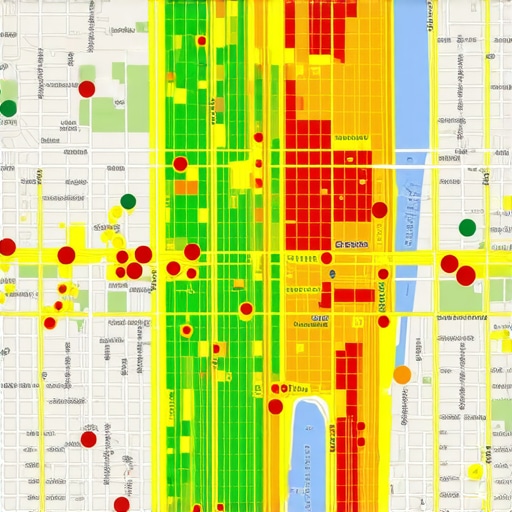
How do I maintain my map position over the long haul?
Consistency beats intensity every single time. You don’t need to spend ten hours a week on this. You need twenty minutes of focused work. This includes uploading one or two high-quality photos from your job site and posting a brief update. Google loves fresh data. Research from Joy Hawkins at Sterling Sky has shown that while ‘Google Posts’ might not be a direct ranking factor for everyone, they absolutely influence the ‘justifications’ (those little snippets of text under your listing) that drive clicks. This is why your map listing needs fresh content every single week to stay relevant.
Look into the crystal ball of local search
The future of how to rank higher in 3 pack results is moving toward visual AI. Google is getting incredibly good at identifying objects within your photos. If you are a plumber, and you upload a photo of a specific brand of water heater, Google might start showing you for searches related to that brand even if you never mentioned it in your text. This is why high resolution store photos increase your map click through rate—they are literally teaching the AI what you do. Start tagging your photos with specific service names before you upload them. It’s a tiny move that most of your competitors are too lazy to do. My challenge for you: Run a grid search for your primary keyword today and find your first ‘red’ pin. That is your new target.
Hard Truths I Learned After Thousands of Map Searches
I used to think that google maps optimization was just a checklist of tasks. The biggest ‘lightbulb moment’ for me was realizing that Google prioritizes user behavior over your own claims. If users find your profile but immediately click away to a competitor, your rank will tank regardless of your keywords.
This insight is exactly why generic seo advice is ruining your local map rankings; it treats the algorithm like a math equation rather than a reflection of human trust. You have to build that trust through engagement.
Another lesson? Your physical walls don’t have to be your ranking boundaries. You can expand your reach significantly if you learn how to use hyperlocal content to win the neighborhood map war. It is about proving your relevance to the specific community you serve.
Finally, consistency is the only signal that never loses its value. Google loves to see that a business is active and responsive. This is why your map listing needs fresh content every single week to stay at the top of the pile.
The Tiny Toolkit That Keeps My Business Visible
You don’t need a massive budget to dominate local search, but you do need accurate data. I rely on three specific resources to keep my edges sharp. For real-time visibility, I always use grid tracking tools like Local Falcon because they are the best way to track your map rank across a whole city without flying blind.
I also keep the annual Local Search Ranking Factors report from Whitespark on my desk; it’s the gold standard for understanding which signals are moving the needle. Lastly, the case studies from Sterling Sky provide the empirical evidence I need to ignore the noise and focus on mastering map pack seo for my clients.
Take the First Step Toward Local Authority
The local map pack is the most valuable digital real estate on the planet for a service business. When you rank in those top three spots, you stop being an option and start being the definitive answer to a neighbor’s problem. Don’t wait for a slow month to start caring about your visibility. Change one category, upload one high-resolution photo, or respond to one old review today. Momentum is the most powerful tool in your arsenal. Have you ever noticed your ranking drop immediately after updating your business hours or phone number? Let me know in the comments below!