
I remember sitting in front of my laptop at 2 AM, staring at a sudden, sharp drop in a client’s analytics. I had just changed their official name on their Google Business Profile to include every high-volume keyword I could find. It felt like a shortcut to the top. I thought I was being clever. Within ten days, their map pin vanished. We were in the search results graveyard, and the phone stopped ringing. It was a visceral, painful lesson in how the algorithm punishes those who try to game the system. Today, I want to help you avoid that same pitfall by showing you the right way to approach Google Maps optimization without getting banned.
Why My Greatest SEO Hack Almost Ruined a Business
I used to think that more keywords equaled more money. If I could just slide ‘Best Plumber Emergency Repair’ into the business name, surely we would rank higher in the Google Maps 3-pack instantly. For a few days, it actually worked. Then the manual review hit. Google’s official documentation is very clear that your name should reflect your real-world representation, and failing to follow this can lead to permanent suspension. According to Google Business Profile Guidelines, including unnecessary information in your business name is a violation of their terms of service. This isn’t just a minor slap on the wrist. This is a hidden penalty for keyword stuffing your business name that can take months of stressful appeals to fix.
Is keyword stuffing actually worth the risk of a suspension?
I know what you are thinking. You see your competitors doing it every single day and they seem to be winning. It feels unfair. But have you ever noticed how those listings suddenly disappear only to be replaced by new, equally spammy ones? That is not a strategy; that is a cycle of desperation. Real growth comes from map pack SEO strategies that build long-term authority rather than temporary tricks. Have you ever been tempted to add just one or two ‘power words’ to your business name to see if it helps your ranking? I want to hear about your experience with this because I have been in those shoes, and I know how tempting that ‘Save’ button can be. Staying clean is the only way to ensure your business remains visible for the long haul.
Stop Guessing Your Primary Category
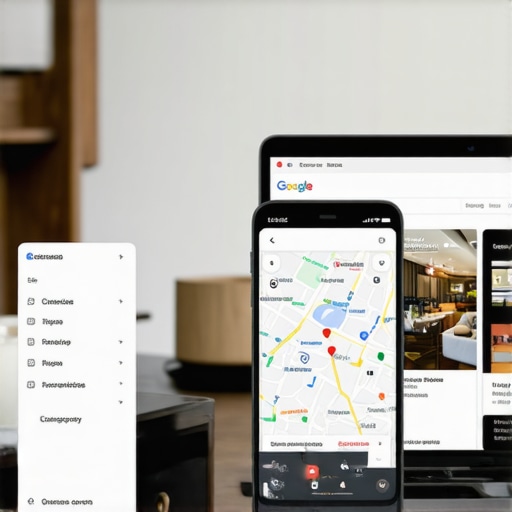
The first real lever you can pull is your category selection. It sounds basic, but most business owners treat it like a ‘close enough’ choice. If you are a specialized contractor, selecting a broad category like ‘Construction Company’ is a death sentence for your maps visibility. You need to be surgical. When I worked with a locksmith in Austin, they were languishing on the second page for months despite having over 300 five-star reviews. The problem? They had their primary category set to ‘Service Establishment.’ It was a generic bucket that told Google nothing about their actual utility. We switched it to ‘Locksmith’ and utilized secondary categories to cover their security system and key duplication services. Within 48 hours, they popped into the 3-pack for their most valuable keywords. This wasn’t magic; it was simply speaking Google’s language. To get this right, you must optimize your business category for the local 3-pack by matching your primary selection exactly to what your top-performing competitor is using.
Why Speed Beats Total Review Counts
Think of your reviews like a heartbeat. If you got 50 reviews three years ago and nothing since, Google assumes your business is effectively dead or, at the very least, not worth recommending to a local searcher right now. This is why review velocity is more important than total count. I have seen listings with 20 fresh, high-quality reviews outrank veterans with 500 stale ones. You need a consistent stream. When you ask for a review, don’t just ask for stars; ask the customer to mention the specific service they received. This creates a semantic link between your profile and the user’s search query. It is a core part of an effective seo service local strategy that moves the needle without requiring hundreds of new clients every month. If you can get just two or three reviews a week, you are telling the algorithm that you are active and reliable.
The Invisible Link Between Your Site and the Map
Many people treat their Google Business Profile and their website as two separate islands. This is a massive mistake. Google uses your website’s content to verify the ‘truth’ of what you claim on your profile. If you want to rank higher in the Google Maps 3-pack today, your landing page must be a mirror image of your map data. For example, if your profile says you offer ‘Water Heater Repair,’ but your website only talks about ‘General Plumbing,’ Google might lack the confidence to show you for that specific search. This is why your website content matters more for map rankings than you think. Every service mentioned on your profile should have a dedicated, localized page on your site with the same NAP (Name, Address, Phone) data clearly visible in the footer.
Clean Up Your Digital Footprint
Consistency is the boring part of google maps optimization, but it is the foundation everything else sits on. If your business is listed as ‘Main St. Plumbing’ on Yelp, ‘Main Street Plumbing LLC’ on Facebook, and ‘Main St Plumb’ on your own site, Google gets confused. In the world of local SEO, confusion equals lower rankings. You need to find the local citation secret that actually moves your map pin, which is identifying the high-authority directories in your specific city and ensuring every single one matches your Google profile exactly. I once spent three days manually updating 40 different listings for a client whose phone number had changed six months prior. Their map traffic had dropped by 40% because Google couldn’t verify which number was current. Once the data was uniform, the traffic returned. It is about building a wall of consistent data that proves to Google you are exactly who you say you are.
Why being the closest business won’t save your ranking
Let’s dig deeper into the biggest misconception in the industry: the idea that proximity is an unbeatable wall. Everyone tells you that if you aren’t located in the heart of downtown, you can’t compete. In my experience, this is a myth that keeps small businesses small. While Google certainly factors in the distance between the searcher and your office, the 2023 Whitespark Local Search Ranking Factors study confirms that relevance and prominence can frequently override a shorter physical distance. This is why distance from the center is not your ranking problem; it is your lack of localized authority. If your website and profile scream ‘Expert’ louder than the competitor next door, Google will expand your ranking radius. This is the truth about why local rivals keep stealing your clicks—they have built enough digital weight to pull traffic from outside their immediate neighborhood.
Does physical location actually matter as much as everyone says?
For an advanced seo service local strategy, the answer is a nuanced no. If you are stuck thinking that your address is your destiny, you are missing out on the power of entity-building. Google isn’t just looking at coordinates; it is looking at how much the local community interacts with you. I have seen businesses rank five miles away from their office because they were mentioned in local news and had consistent, location-specific backlinks. You can learn the truth about proximity and how to rank further from your physical office by focusing on signals that prove your relevance to the entire city, not just your street corner.
Stop chasing 5 stars and start building real authority
The biggest ‘oops’ factor I see with established businesses is the obsession with a perfect rating. They think a 5.0 score is the ultimate goal, but why high ratings alone will not move your map pin becomes clear when you look at how Google filters spam. A profile with 200 generic ‘Great service!’ reviews and a 5.0 rating often looks more suspicious to the algorithm than a 4.8-rated business with detailed, photo-rich reviews. Your profile needs specific trust signals to rank higher, such as customers mentioning specific landmarks or street names in their feedback. This creates a semantic map of your service area that no generic rating can replicate.
The virtual office trap that ends in a hard suspension
If you are tempted to rent a P.O. Box or a virtual suite to ‘appear’ closer to a high-value area, stop immediately. The risk of using virtual offices for local rankings is at an all-time high. Google’s AI can now cross-reference your address with commercial real estate databases in seconds. I once watched a law firm lose 70% of its lead volume overnight because they tried to use a co-working space as their primary address. It wasn’t just a ranking drop; it was a total removal from the index. Have you ever fallen into this trap or been tempted by a ‘shortcut’ like this? Let me know in the comments.
The tools I use to stop guessing about rankings
Winning the 3-pack is a rush, but staying there is a full-time commitment. I learned this the hard way years ago when a top-performing client’s lead volume fell off a cliff simply because we stopped feeding the algorithm fresh data for three weeks. If you aren’t providing consistent signals, Google naturally starts to favor the ‘hungrier’ competitor who is actually engaging with the platform. To stay at the top, you must enhance maps visibility with proven seo techniques that prioritize long-term asset building over one-off hacks.
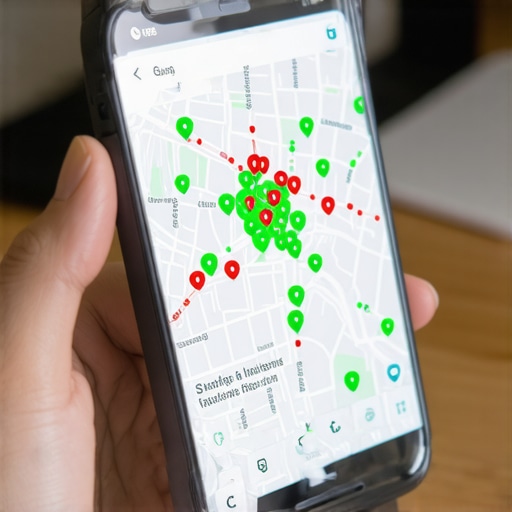
If you are still checking your rank by typing your keyword into a phone while standing in your office, you are getting a distorted reality. I personally use geogrid tracking tools because they show exactly where my ranking ‘bubble’ begins to fade across different neighborhoods. This is the best way to track your map rank across a whole city. When I see my visibility shrinking on the north side of town, I don’t panic; I pivot. I immediately start to use hyperlocal content to win the neighborhood map war by mentioning specific local landmarks or community events in that area through my posts and website content. This tells the algorithm that my relevance extends beyond my front door.
How do I maintain my local map rankings over time?
The secret is a weekly maintenance ritual that takes less time than a morning coffee break. Every Monday, I ensure my clients have at least one new photo and a fresh post scheduled. You need to understand why your map listing needs fresh content every single week; it is not just for the users, but to signal to the AI that your business is operational and highly active. According to technical documentation and research by Sterling Sky, even small updates to your business attributes can trigger a re-crawl of your profile. I always tell my readers to leverage google posts to stay at the top of the 3-pack because they serve as a direct, real-time feed of your business’s expertise to the search engine.
Preparing for the AI search revolution
Looking ahead, I see the local algorithm moving away from simple text-matching and toward advanced visual recognition. Google is already getting incredibly good at ‘reading’ what is inside your business photos to verify your services. This is why a generic stock photo of a tool won’t help a service business as much as a high-quality, original photo of their branded van in front of a recognizable local landmark. I predict that AI-driven search snapshots will soon prioritize businesses that have a high volume of original photos that prove they exist and operate in the real world. Furthermore, the data your map reporting tool is likely ignoring—like how long people spend looking at your photos—will become a primary ranking signal.
My challenge to you today is simple: stop overthinking the ‘perfect’ strategy and take one concrete action. Go into your profile right now, use the checklist for optimizing your business description for humans, and upload one authentic photo of your team actually doing the work. This single step is the foundation of a google maps optimization strategy that actually turns digital visibility into real-world phone calls.
What the 2 AM Panic Taught Me About Local Rankings
I’ve realized that local SEO isn’t a battle against Google; it’s a partnership with your neighbors. If you’re still feeling like your efforts are hitting a wall, I want to help you figure out why. Why your current map strategy is losing you money often comes down to ignoring the human element in favor of technical checkboxes. Another hard truth? If you aren’t seeing movement, you might be following the wrong roadmap. This is exactly how to fix a map listing that is stuck on the second page: stop trying to trick the AI and start proving you’re the most reliable choice in the neighborhood.
#IMAGE_PLACEHOLDER_E#
The Toolkit That Keeps My Maps Visible
I don’t just rely on intuition. I use a specific stack of resources that separate the noise from the results. First, I always keep the Sterling Sky blog bookmarked because why generic seo advice is ruining your local map rankings is a topic they tackle with real-world data, not guesses. Second, I live and die by geogrid visualization. It is the best way to track your map rank across a whole city and see exactly where your reach ends. Finally, I recommend sticking to official documentation from Google; it’s dry, but it’s the rulebook we all have to play by.
Take Command of Your Local Search Presence
The map isn’t just a list of names; it’s a living, breathing representation of your community’s trust. You have the tools now to build that trust systematically. Whether you choose to do it yourself or look for affordable local seo services to dominate the 3-pack, the goal remains the same: show up and be real. Consistent google maps optimization is the only bridge between a search query and a satisfied customer.
Which of these steps feels the most daunting to you right now—the technical website cleanup or getting those consistent reviews? Reach out via our contact us page and let me know.