I’ll never forget the Tuesday I sat in my home office, refreshing my phone screen like a gambler at a slot machine. My business was finally sitting pretty at the top of the local 3-pack. I’d done it! But as the afternoon sun started to dip, I realized something terrifying: the phone hadn’t rung once. Not once. I had the trophy, but my bank account was still empty. That was the day I realized that your current map strategy might be losing you money even if you’re ranking. It’s a gut-punch that no rank-tracking tool prepares you for. Today, I’m going to pull back the curtain on why your position on the map is only half the battle and show you how to identify the numbers that actually translate to cash in your pocket.
Stop Wasting Time on Rankings That Don’t Pay the Bills
I used to think that visibility was the end goal. I was wrong. You can have all the maps visibility in the world, but if those eyeballs aren’t turning into appointments, you’re just winning a popularity contest in an empty room. Early on, I made the classic mistake of focusing on green circles on a rank tracker instead of looking at my actual lead flow. It’s a trap many of us fall into. We get so caught up in the map pack seo strategies that we forget the O in SEO stands for Optimization—not just for search engines, but for our revenue. According to research from BrightLocal, while 76% of people who search on their smartphones for something nearby visit a business within a day, many owners find that every map click isn’t turning into a phone call. That gap between a click and a call is where your profit lives or dies.
Have you ever checked your dashboard, seen a #1 ranking, and then wondered why you’re still struggling to cover payroll that month?
[image-placeholder]
Does Being Number One Actually Guarantee More Sales?
It’s the question that keeps us up at 2 AM. We’ve been told for years that the 3-pack is the holy grail. But if you’re ranking for the wrong keywords or your profile doesn’t build immediate trust, you’re invisible to the customers who actually want to buy. I’ve seen cases where call volume dropped while rankings stayed the same, and it usually boils down to data points we’re ignoring. We’re going to dive into how to prove your map rankings are making money by looking at the raw interaction data that separates a vanity project from a profitable enterprise. We’re moving past the ego-stroking metrics and getting into the nitty-gritty of conversion actions and lead attribution.
Turn Your Map Pin Into a Lead Generating Machine
I remember working with a local plumber who was obsessed with ranking for the term “plumbing experts.” He was at the top, but his dispatchers were sitting on their hands. We dug into the data and realized that homeowners weren’t searching for “experts” when their basement was flooding; they were searching for “clogged drain repair” or “emergency pipe fix.” We shifted his entire map pack seo strategy to target high-intent, problem-solving keywords. Within three weeks, his ranking for the vanity term dropped slightly, but his actual job bookings doubled. This is why your current map strategy is losing you money if you only focus on the ego of the #1 spot.
Pick Keywords That Actually Ring the Phone
Stop chasing high-volume terms that don’t convert. You need to optimize your site for local search intent by identifying the specific services that keep your lights on. I often see businesses using affordable local seo services that focus on the wrong data. To win, you must look at your GMB insights and see which queries actually trigger a click to call. If you aren’t seeing “near me” or specific service-based queries, you’re invisible to the customers who are ready to buy right now.
Audit Your Profile for Conversion Leaks
Think of your Google Business Profile as a digital lobby. If the lights are flickering and the receptionist is missing, people leave. I’ve found that 5 simple profile errors, like having a grainy photo of your truck as the cover image or ignoring your Q&A section, are the biggest culprits behind a silent phone. You need to treat your profile like a high-converting landing page. This means uploading high resolution store photos that show your team in action, which builds immediate psychological trust before they even read a single review.
The Three Technical Levers You Need to Pull
Once your conversion assets are in place, you have to feed the algorithm the specific signals it craves. Most owners set their primary category and never look back, but that’s a massive mistake. You should use secondary categories to cast a wider net without diluting your relevance. I once saw a landscaping company jump into three new neighborhoods just by adding “snow removal” and “irrigation repair” as secondary categories during the off-season. They didn’t change their address; they just clarified their utility to Google.
Why Freshness Beats Total Review Count
I’ve seen smaller shops with 40 reviews outrank massive franchises with 400. Why? Because the small shop had ten new reviews in the last month, while the franchise hasn’t had one since 2022. Google prioritizes recency because it proves the business is still active and reliable. This is why review velocity is more important than total count. Consistency is your best friend here. Beyond reviews, your map listing needs fresh content every single week in the form of Google Posts. These act as mini-advertisements that tell both the user and the search engine that you are open for business and engaged with your community.
Use Attributes to Stand Out From the Crowd
Attributes are the small tags like “locally owned,” “veteran-led,” or “wheelchair accessible” that appear on your listing. While they seem minor, they are powerful filters. When a user searches for a specific type of experience, these attributes can be the deciding factor. If you use attributes to stand out in map searches, you aren’t just ranking; you’re qualifying the lead. You are telling the customer exactly why you are the better choice compared to the generic listing next to you. It’s about being the most relevant answer, not just the loudest one.
Let’s dig deeper into the actual mechanics that the ‘experts’ usually gloss over. Most people will tell you that the secret to a better map pack seo result is just getting more reviews or building more citations. But in my experience, that’s a surface-level strategy that stops working the moment a real competitor enters your zip code. The biggest myth in this industry is that your Google Business Profile is a standalone island. It’s not. If you want to rank higher in the google maps 3 pack today, you have to realize that Google is looking at your entire digital footprint to verify your relevance.
Local Content Moves the Pin More Than Any Directory Link
Everyone chases high-authority backlinks, but why your website content matters more for map rankings than you think is the real secret. I’ve seen listings jump five spots overnight simply by adding hyperlocal service pages to their main site. According to the annual Local Search Ranking Factors survey by Whitespark, on-page signals from your linked website are now one of the top three factors for appearing in the 3-pack. If your site doesn’t mention the specific neighborhoods you serve, Google won’t trust your map pin to show up there. This is where why generic seo advice is ruining your local map rankings—it treats local SEO like national SEO, and you end up buried under competitors who actually understand the city’s geography.
Why do competitors with zero reviews sometimes rank higher than you?
It feels like a slap in the face when you see a brand-new business with two reviews outrank your 5-star empire. You aren’t imagining things, and it isn’t a glitch. Often, why competitors with zero reviews sometimes rank higher comes down to proximity and category relevance. Google might decide that the ‘new guy’ is physically closer to the searcher’s current GPS coordinates, triggering the hidden proximity trap keeping your business out of the 3-pack. However, it’s also likely they’ve optimized their website for the specific intent better than you have. Don’t just look at their profile; look at the code of their website. You’ll likely find a masterclass in local relevance that you’re currently missing.
The Dangerous Allure of Keyword Stuffing Your Business Name
Here is the ‘oops’ factor that kills more businesses than any algorithm update. You see a rival called ‘Best Plumbing Emergency Repair Chicago’ and you’re tempted to change your name to match. Don’t. While it might give you a temporary boost, the hidden penalty for keyword stuffing your business name is real and it is brutal. Google’s AI is getting incredibly good at cross-referencing your legal business name with state registries and social profiles. When they catch the discrepancy, they don’t just move you down; they can suspend your listing entirely. I’ve helped dozens of owners who were stuck in the ‘search results graveyard’ because they listened to a cheap seo service local that promised a quick fix through naming tricks.
Have you ever fallen into this trap or noticed a competitor playing dirty with their business name? Let me know in the comments. We need to focus on enhancing maps visibility with proven seo techniques that actually last. If you are struggling with a listing that won’t move despite your best efforts, how we fixed a listing that was stuck in the search results graveyard might provide the roadmap you need to finally reclaim your spot at the top.
I used to think that reaching the top of the map was the end of the journey. I was dead wrong. The moment you hit that #1 spot, you have a giant target on your back. Your competitors are looking at your profile, and the algorithm is constantly testing whether you still deserve the crown. To stay there, I had to stop treating my profile like a digital billboard and start treating it like a living, breathing asset. I stopped flying blind and started using tools that showed me exactly where I was winning—and more importantly, where I was losing ground to someone with a newer, shinier listing. I learned that how we use software to spot visibility gaps on maps is the only way to stay ahead of a aggressive local rival who’s willing to outspend you on ads.
Stop flying blind with smarter local rank tracking
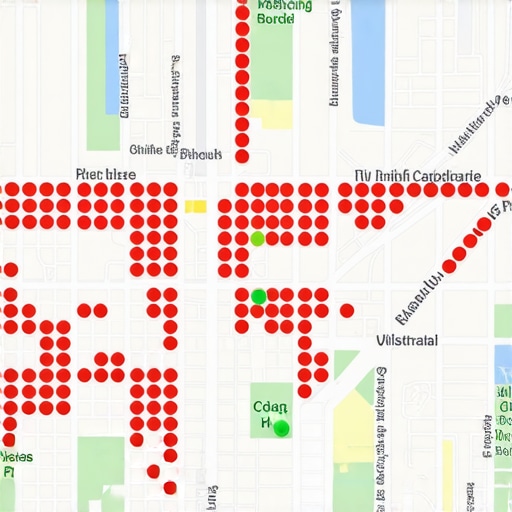
If you are still checking your rank by typing your service into Google from your office, you are getting a skewed reality. I use grid-tracking software because it shows me exactly where my visibility drops off. If I am ranking #1 at my shop but #8 three miles away, I know I have a proximity problem to solve. This is the heart of mastering map pack seo strategies that actually scale. You can’t fix what you can’t see. By mapping out a 15×15 grid of my city, I can see the exact street corners where my google maps optimization efforts are failing. It allows me to be surgical. Instead of a ‘spray and pray’ approach, I can build hyperlocal content specifically for those weak spots to enhance maps visibility with proven seo techniques that target real customers in real neighborhoods.
How can I keep my map listing at the top for the long haul?
Maintenance is where most business owners fail. They get busy, the phone starts ringing, and they stop posting. I’ve found that the truth about how often you need to post to your profile is less about quantity and more about consistency. You need to show Google a steady heartbeat. I recommend a minimum of one high-quality update per week. This isn’t just for the bots, either. When a lead sees a post from two days ago, it builds immediate trust that you are open and responsive. If you feel overwhelmed, remember that even affordable local seo services should prioritize this consistent activity over one-off directory submissions. According to local search expert Mike Blumenthal, Google is increasingly using ‘activity signals’—like how quickly you respond to messages or how often you update your hours—as a tie-breaker between two businesses with similar review scores.
Looking toward the future, I predict that AI-driven search generative experiences will start pulling answers directly from your profile’s Q&A and reviews. If you aren’t seeding those sections with keywords now, you’ll be invisible by next year. You need to rank higher in the google maps 3 pack today to build the authority required for tomorrow’s AI search. My advanced tip? Go into your Google Business Profile right now and record a 30-second video answering the most common question your customers ask. Upload it as a ‘Post’ and watch your engagement metrics climb. This level of detail is what separates the masters from the amateurs.
What I Learned the Hard Way About Local Trust
Reflecting on my journey, the biggest shift happened when I stopped treating my listing as a static ad. I spent months frustrated because my ranking was perfect, yet my leads were stagnant. I finally realized that local rivals keep stealing leads because they focus on conversion triggers like recent reviews and updated photos while I was stuck on keyword counts. Another breakthrough was acknowledging that generic SEO advice is ruining local map rankings for many because it misses the nuance of neighborhood-level relevance. You have to speak to your specific city, not just the search engine.
The Map Optimizer’s Survival Kit
I don’t navigate the algorithm alone. To stay ahead, I rely on a core group of tools and resources that provide clarity in a crowded market. [image-placeholder] First, you need a way to see past your own office walls; tracking your map rank across a whole city using grid tools is the only way to spot where you are actually invisible. I also highly recommend looking at the high-impact profile settings that most business owners overlook after their initial setup. Finally, I trust local search forums like the Local Search Forum or the Whitespark blog for real-time updates when Google decides to change the rules overnight.
Take Back Your Territory Today
The map is not a set-it-and-forget-it platform. It is a digital storefront that requires your presence and personality. By implementing these strategies, you are moving beyond simple visibility and into true dominance. Whether you choose to handle it yourself or seek affordable local SEO services to do the heavy lifting, the goal remains the same: being the most trusted answer to a neighbor’s problem. Use google maps optimization to build a fortress around your reputation and build map authority in a competitive city that no one can easily topple. Have you ever noticed your ranking drop when you stop posting updates for a few weeks? Let me know in the comments below!