I’ll never forget the Tuesday morning I realized I was invisible. My business was right there on the corner, physically present with a neon sign and everything, but digitally? I had vanished. I’d spent months obsessing over my address and categories, thinking that once I hit that coveted top spot, I could just coast. I was wrong. Dead wrong. I watched a competitor with half my reviews and a much smaller shop leapfrog right over me. My mistake was simple: I treated my listing like a static billboard instead of a living, breathing conversation. I had fallen into the ‘set it and forget it’ trap, and it cost me a week’s worth of high-value leads before I woke up.
Stop Treating Your Business Profile Like a Digital Business Card
If you think your work is done once you verify your location, you are leaving money on the table for your competitors to grab. Google isn’t just looking for who is closest or who has been around the longest; it’s looking for who is active right now. When you let your profile sit stagnant for a month, you are effectively whispering to the algorithm that you might not even be open anymore. I learned the hard way that the truth about how often you need to post to your profile is much more frequent than most ‘gurus’ suggest. You need to feed the beast. Today, I’m going to show you how to transform that ghost town of a listing into a lead-generating machine by using a simple, sustainable content rhythm. We aren’t just talking about google maps optimization as a one-time project, but as a weekly habit that keeps you relevant.
Does posting really move the needle or is it just busy work?
I know what you’re thinking because I thought it too: ‘I’m a plumber/lawyer/baker, not a social media influencer. Who actually looks at these posts?’ It turns out, Google looks. According to research by BrightLocal, businesses that regularly update their profiles with fresh photos and posts see significantly higher engagement rates, as Google uses these ‘freshness signals’ to determine which businesses are most likely to provide a great experience for searchers today. It’s not about being ‘viral’; it’s about being present. Early in my journey, I neglected this because I was too busy with ‘real’ work, only to find that my ‘real’ work dried up because I wasn’t visible. Have you ever felt like you’re doing everything right with your SEO but your phone still isn’t ringing like it used to? That’s usually the first sign that your content has gone stale. By adopting a weekly routine for dominating your neighborhood 3-pack, you can ensure that you never disappear from the map again. Let’s dig into the specific types of updates that actually trigger a ranking boost.
Stop Chasing Total Reviews and Start Scaling Velocity
Most business owners obsess over getting to that ‘magic number’ of 100 or 500 reviews, thinking the total count is a finish line. It isn’t. In fact, I’ve seen businesses with 2,000 reviews lose their spot to a shop with 40 because the latter was getting three new reviews every week while the giant hadn’t seen a new one in months. Google prioritizes freshness because it proves you are still relevant today. This is why why review velocity is more important than total count. I remember working with a local locksmith who was ‘stuck’ for six months. We stopped asking every single person for a review at once and instead spread the requests out to hit a steady rhythm of two per week. The needle moved faster in twenty days than it had in the previous two quarters. To do this right, you need the best way to ask for reviews in your physical store to ensure a natural, steady flow of feedback that keeps the algorithm happy. 
Pick Your Categories Like Your Rent Depends on It
If your primary category is wrong, you are essentially trying to win a race while running in the opposite direction. I once found a high-end bistro that had accidentally listed itself under ‘Fast Food.’ They were wondering why they were only getting calls for $5 burgers instead of $50 steaks. Your primary category carries the most weight, but your secondary categories are where you capture the long-tail traffic. Learning how to optimize your business category for the local 3-pack is the first technical fix you should audit. Don’t just guess; look at what the top three competitors in your city are using. If they all have ‘Personal Injury Lawyer’ and you just have ‘Law Firm,’ you’ve already lost. Use how to use secondary categories to appear in more searches to widen your net without diluting your core relevance.
Build Authority with Hyperlocal Digital Breadcrumbs
The biggest mistake I see is businesses trying to rank for a whole city when they haven’t even won their own block. Google’s proximity filter is tight, but you can stretch it by proving you are a local authority. This isn’t about generic blog posts; it’s about hyperlocal signals. When we helped a small cafe outrank a national chain, we didn’t use massive backlinks. Instead, we used how to use hyperlocal content to win the neighborhood map war by mentioning specific landmarks, local parks, and cross-streets in their business description and posts. These are ‘trust signals’ that tell Google you aren’t just a corporate entity—you are a staple of that specific neighborhood. You can even take it further by learning how to use local events to boost your map visibility. Linking your profile to the annual street fair or the local high school’s fundraiser creates a geographical association that national brands simply cannot fake. This is how you beat the ‘big guys’ on a small budget.Let’s dig deeper into the data that most ‘experts’ overlook because they are too busy chasing vanity metrics. You’ve likely been told that 5-star reviews are the holy grail of local SEO, but that is a dangerous oversimplification. I’ve audited hundreds of profiles where a business with a 4.2-star rating consistently outranks a 4.9-star competitor. Why? Because why high ratings alone will not move your map pin is a hard pill to swallow for many. Google’s algorithm is looking for contextual relevance within those reviews, not just the number of gold stars. If your reviews don’t mention specific services or neighborhood landmarks, they are just empty noise to the bot.
The invisible wall keeping your map pin stuck
One of the biggest traps I see involves service area businesses trying to ‘game’ the system by expanding their reach in the dashboard. You cannot simply check a box for a city thirty miles away and expect to appear in the 3-pack there. This leads to the hidden proximity trap keeping your business out of the 3-pack. Google knows where you are actually located based on your historical data and local citations. Trying to fake it usually results in a ‘soft suspension’ where your visibility just flatlines. Instead of fighting the map, you should be focused on how to use hyperlocal targeting without changing addresses to naturally grow your radius.
Why does your map ranking look perfect on your screen but terrible from across town?
This is the ‘Expert’s Dilemma.’ You check your phone at the office, see your shop at #1, and assume everything is fine. In reality, why your local keyword tracking is probably lying to you comes down to the hyper-local nature of mobile search. If a customer is two blocks further south, the entire map reshuffles. To get the real picture, you need to understand how we use software to spot visibility gaps on maps. According to the 2024 Local Search Ranking Factors survey by Whitespark, local search intent is becoming increasingly fragmented, meaning ‘near me’ results are more volatile than ever. 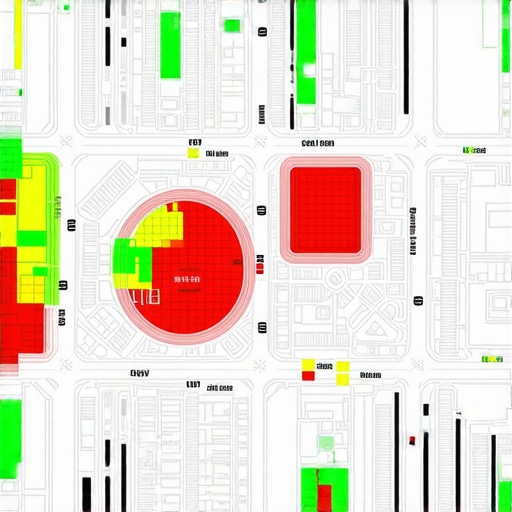
Your website is the secret weapon for your map listing
Many business owners think their website and their Google profile are two separate islands. This is a massive mistake. Google reads your website to ‘verify’ what your profile claims. If your site is slow or lacks local signals, your map rank will suffer. I’ve found that why your website speed affects your google maps placement is a direct ranking factor in competitive niches. Furthermore, why your website content matters more for map rankings than you think cannot be overstated; Google scans your landing pages to find ‘justification’ for showing you in the map pack for specific queries. If your site doesn’t mention your service area clearly, your map pin stays buried. Have you ever fallen into this trap of treating your website and map profile as separate projects? Let me know in the comments.The reality is that maps visibility is a game of inches, and you need a magnifying glass to see where you’re losing. I stopped relying on my own phone’s search results years ago because they are heavily biased by my search history and physical location. Instead, I started using heatmaps that plot your ranking on a literal grid over the city. This is exactly how we use software to spot visibility gaps on maps. If I see a sea of green dots around my shop but a wall of red just two miles north, I know I have a specific geographical relevance problem, not a global SEO problem. Using these tools allows you to stop shooting in the dark and start executing mastering map pack seo strategies to boost local visibility with surgical precision.
Stop guessing and start measuring with grid trackers
When I first saw a grid map of my business, it was a wake-up call. I was ranking #1 at my front door and #14 at the coffee shop three blocks away. That is when I realized that affordable local seo services to dominate the 3-pack aren’t about magic; they are about identifying those ‘ranking borders’ and pushing them outward. I recommend using a tool like Local Falcon or BrightLocal to get this visual data. It helps you understand why your map pin is in the wrong place for mobile users who are just slightly outside your immediate radius. 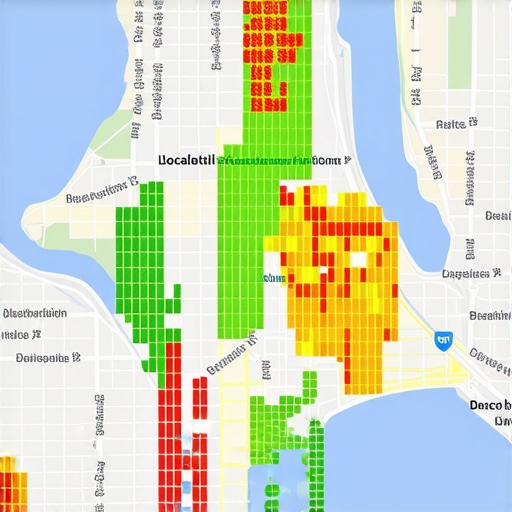
How do I keep my map pin from sinking over the next twelve months?
Maintenance is where most people fail because it’s not flashy. You have to treat your profile like a garden. This means pruning old, irrelevant Q&As and ensuring your data remains consistent across the web. I’ve seen rankings tank because a business changed their phone number on one obscure directory and didn’t realize it created a data conflict. This is why you need to know how to identify which local citations actually move the needle and ignore the rest. According to a study by Joy Hawkins at Sterling Sky, even small changes to your business description or the addition of specific ‘attributes’ can trigger a re-evaluation by the algorithm. I always tell my clients that how to rank higher in the google maps 3-pack today is a different question than how to stay there next year. You need a dedicated weekly routine for dominating your neighborhood 3-pack that includes checking for ‘user-suggested edits’ that competitors might be trying to sneak past you.
Prepare for the AI-driven shift in local search
Looking ahead, the trend is moving toward ‘Search Generative Experience’ (SGE). Google is getting better at reading the *sentiment* of your reviews and the *content* of your photos to answer highly specific queries like ‘quiet cafe with good wifi for working.’ In the near future, being ‘near’ won’t be enough if the AI doesn’t think you match the ‘vibe’ of the search. This is why 7 google business profile tips for 2026 to beat local rivals focus heavily on unstructured data. To stay ahead, I want you to try one advanced tip right now: go into your Q&A section and answer a common customer question yourself, using natural language and mentioning a specific service. You can learn how to use the qa section to convert map searchers to turn that technical task into a lead-gen tool. It’s these small, authoritative signals that tell the AI you are the most helpful option in the neighborhood.
How I finally broke through the static local ranking ceiling
Looking back at my early mistakes, I realized that I was trying to play the wrong game. I thought that if I just got more backlinks from big blogs, I’d win. I was wrong. I eventually learned that why small local links drive better rank than guest posts is because Google values local relevance over global authority. It isn’t about being famous on the internet; it’s about being the most trusted name on your street. I also discovered that why generic seo advice is ruining your local map rankings—most experts apply national SEO rules to a local problem, which is like using a highway map to navigate a parking lot. Your goal should be to create a digital footprint so local that the algorithm has no choice but to show you to your neighbors.
A peek inside my daily local SEO toolkit
I do not believe in having a hundred different software subscriptions. I keep my toolkit lean and focused on data that actually converts. First, I always look at heatmaps like those from Local Falcon to see the invisible walls where my visibility drops. This helps me identify the unstructured citations your business is missing, which are often mentions from local news or community boards that act as powerful trust signals. For tracking the actual work, I recommend a simple spreadsheet to monitor review velocity. If you are feeling overwhelmed, I suggest starting with a quick self-check. You can learn how to audit your business profile in under ten minutes to find the low-hanging fruit that your competitors are ignoring. #IMAGE_PLACEHOLDER_E# This simple habit keeps your profile healthy without eating up your entire workday.
Your neighborhood is waiting for you to claim it
You do not need a massive marketing budget to become the top-rated choice in your area. You just need consistency and the willingness to treat your digital presence like a real-world conversation. Every photo you upload and every review you reply to is a signal to your future customers that you care about their experience. If you are ready to stop being invisible, focusing on how to rank higher in the google maps 3-pack today is the single most impactful thing you can do for your growth. The map is always changing, but those who stay active and engaged are the ones who stay at the top. Have you ever noticed your ranking drop suddenly after a few weeks of inactivity? Let me know in the comments below!