
I remember sitting in a local coffee shop three years ago, staring at a client’s Google Business Profile. I’d just spent two hours crafting what I thought was a masterpiece of a business description. It was polished. It was professional. It used every industry buzzword I could find. And yet, when we looked at the data a month later, it was like we didn’t exist. People were looking at the listing, but they weren’t calling. I felt like I’d failed them. It was a wake-up call: leads don’t care about how “innovative” your solutions are; they care if you can fix their leaking pipe or find their dream home before dinner time.
Your Customers Are Scrolling Right Past the Corporate Jargon
The hard truth is that most local business descriptions read like they were written by a committee of bored lawyers. I made the classic mistake early on of thinking that google maps optimization was just about cramming in as many keywords as possible. I once wrote a description for a local plumber that mentioned “best plumbing services” five times in three sentences. It didn’t help him rank higher in the Google Maps 3-pack today; it just made him look desperate and spammy. When your description is a wall of generic text, you become invisible. You’re just another pin on the map, no different from the ten other guys offering the same thing.
Local leads are looking for a reason to choose you specifically. They are scanning for personality, proximity, and proof. If your description doesn’t immediately answer “Why should I trust this person with my money?”, they’re gone in a heartbeat. This is often why your business profile is losing clicks despite the 5-star rating you worked so hard to get. You have to bridge the gap between being a search result and being a neighbor. Have you ever felt like you’re doing everything right—getting the reviews, uploading the photos—but the phone still feels suspiciously quiet? You aren’t alone.
Is a Great Description Really Worth the Effort?
You might be thinking, “Does anyone actually read that little box at the bottom of the profile?” It’s a fair question. While it’s true that people gravitate toward reviews and photos first, the description is what seals the deal for the high-intent leads—the ones who are actually ready to spend money. According to research by WordStream, an optimized profile that tells a story can significantly improve engagement rates because it provides the context reviews sometimes lack. Using google maps optimization isn’t just about the algorithm; it’s about the human on the other side of the screen. I’ve seen businesses transform their results by simply shifting from “we offer services” to “we solve your specific neighborhood problems.” This is one of those 3 simple profile fixes that turn map clicks into real phone calls that most of your competitors are completely ignoring. We’re going to dive into how to fix this for your business right now.
Write a Description That Actually Pays Your Rent
You don’t need a PhD in computer science to win at map pack seo. You just need to realize that Google’s algorithm is trying to mimic a human recommendation. When I first started offering an seo service local, I thought more was better. I was wrong. I used to pack descriptions with every city name within a fifty-mile radius, thinking that was the key to maps visibility. It wasn’t. It just made the business look like a robotic directory listing. Think of your profile description as a digital handshake, not a legal deposition. It’s the difference between a neighbor saying, ‘I can be there in twenty minutes to fix that leak,’ and a corporation saying, ‘We provide comprehensive hydrologic maintenance solutions.’
Stop Stuffing Keywords and Start Solving Problems
I once worked with a local roofer in a high-competition suburb. He was struggling because his profile was a carbon copy of every other guy in town: ‘Reliable roofing since 1998.’ We decided to stop stuffing keywords in your profile and fix these 3 map visibility gaps instead by focusing on his actual specialty: storm damage. We changed his first sentence to: ‘Emergency roof repairs for families hit by summer storms—we handle the insurance adjusters so you don’t have to.’ Within three weeks, his lead quality skyrocketed. He wasn’t just getting more clicks; he was getting the right clicks. This shift is essential if you want to rank higher in the Google Maps 3-pack today because Google tracks how people interact with your listing. If they read your description and immediately hit the ‘Call’ button, the algorithm learns that you are the most relevant answer for that search.
Use Your Attributes Like a Secret Weapon
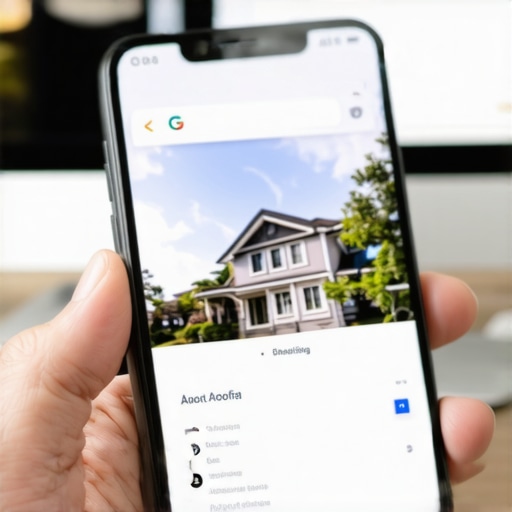
While the description is your narrative, your attributes are the data points that prove you’re the best fit. I’ve seen so many business owners leave these blank, missing out on massive maps visibility. Are you women-owned? Do you offer free estimates? Is there wheelchair-accessible parking? These aren’t just ‘nice to haves’; they are filters that users actually use. Learning how to use attributes to stand out in map searches can often give you an edge over a competitor who has more reviews than you but hasn’t updated their profile since 2021. It’s about creating a ‘complete’ profile that leaves no questions in the customer’s mind.
Fix the Settings Most People Ignore
Many businesses unknowingly sabotage their own reach. I once spent four hours diagnosing why a locksmith wasn’t appearing in his own neighborhood, only to realize his service area settings were overlapping in a way that confused the map pin. You have to be careful because why your service area settings are probably hiding you from the local 3-pack is a common technical hurdle. You should also take the time to how to audit your business profile in under ten minutes to ensure your NAP (Name, Address, Phone) data is perfectly synced. If your website says ‘Street’ and your Google Profile says ‘St.’, it sounds minor, but to a machine, that’s a discrepancy that chips away at your authority. By refining these small details, you build a foundation for mastering map pack seo strategies to boost local visibility that lasts longer than any temporary ranking hack.
Why more reviews won’t always save your ranking
I see it every single week: a business owner gets obsessed with hitting that ‘100 reviews’ milestone, thinking it’s the magic key to maps visibility. But here is the contrarian truth that most seo service local providers won’t tell you: the raw number of reviews is actually a secondary signal compared to what people are saying and how often they say it. I’ve watched a plumber with 45 detailed, recent reviews consistently outrank a competitor with 200 stale ones from two years ago. This is exactly why high ratings alone won’t move your map pin higher if you aren’t generating what the industry calls ‘review velocity.’
The ‘Oops’ factor here is usually the reliance on a sudden burst of reviews followed by months of silence. Google’s algorithm is smarter than we give it credit for; it looks for consistent, organic engagement. If you stop getting reviews, the algorithm assumes your business is no longer the ‘hot’ recommendation in town. Furthermore, there are the search signals that let competitors outrank you without better reviews, such as local entity mentions and click-through behavior. Have you ever fallen into this trap of thinking a high star rating was a ‘set it and forget it’ strategy? Let me know in the comments.
How do you reach customers three miles away from your front door?
This is the most common advanced question I get from service-based businesses. They want to know how to build enough profile authority to rank in the next town over without opening a second office. The hard truth is that Google’s ‘proximity’ filter is incredibly strong. However, you can widen your radius by building ‘unstructured citations’—mentions of your business on local news sites, neighborhood blogs, or sponsorship pages for local little league teams. According to a study by BrightLocal, proximity remains the top ranking factor, but local relevance through content can help stretch that boundary.
The rank tracker lie that makes you feel safer than you are
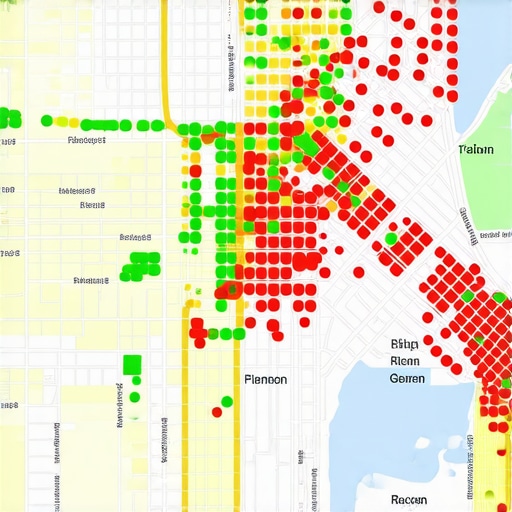
If you are looking at a single ranking report that says you are #1, you might be falling for a dangerous illusion. Most rank trackers check from one specific coordinate—usually your office. But your customer is searching from their kitchen, their car, or a park across town. This is why your local rank tracker is giving you a false sense of security. In reality, your visibility likely looks like a dartboard; you’re #1 in the center, but as you move two blocks away, you drop to #5 or #10. Real map pack seo success is about expanding that ‘green’ zone across the entire city, not just your own parking lot. If you really want to rank higher in the Google Maps 3-pack today across a wider area, you have to stop focusing on keywords and start focusing on hyperlocal signals that prove you are active in those specific neighborhoods.
By understanding these nuances, you move from basic google maps optimization to a sophisticated strategy that actually drives revenue. It’s about being the most relevant answer, not just the one with the most gold stars on the screen.
Stop guessing where you rank and start mapping it
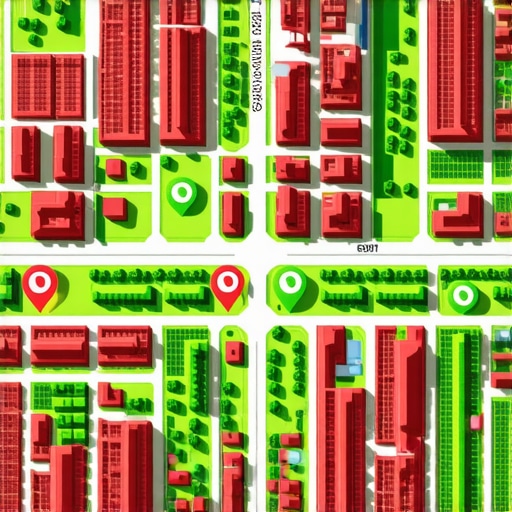
I’ve learned the hard way that checking your ranking by searching from your own phone is a recipe for disaster. To truly scale, you need to see what the customer sees. This is how we use software to spot visibility gaps on maps that are invisible to the naked eye. I personally swear by local search grid tools like BrightLocal or Local Falcon. These don’t just give you a number; they show you a colored grid over a map of your city. You might be a ‘1’ (top of the pack) at your front door, but a ‘7’ just three blocks away. This granular data is the only way to perform a real google maps optimization audit that matters. If you see a cluster of red dots in a specific neighborhood, you know exactly where you need to focus your map pack seo efforts, whether that is through localized content or better service area settings.
How do I maintain my local visibility over time?
The biggest mistake I see is the ‘launch and leave’ approach. Local SEO is a moving target because your competitors are constantly trying to rank higher in the 3 pack by copying your moves. You need a rhythm. I advocate for the weekly routine for dominating your neighborhood 3-pack, which includes three non-negotiables: responding to every single review (even the bad ones), uploading at least two new geo-tagged photos, and checking for ‘suggested edits’ from the public that might have messed up your data. This is the one weekly profile update that keeps your local leads from dropping when the algorithm shifts. Even seo service local experts agree that consistency beats intensity. Joy Hawkins from Sterling Sky has frequently noted in her research that while categories and proximity are the heaviest hitters, constant engagement signals tell Google your business is still ‘alive’ and relevant.
The future is moving toward spatial and visual search
Looking ahead, the game is changing. We are moving away from simple text queries toward what I call the ‘Spatial Search’ era. I’m already preparing-your-map-listing-for-the-2026-spatial-search-shift by focusing more on high-quality video and 360-degree views. Google’s AI is getting better at ‘seeing’ what is inside your store or what your team looks like on a job site. If you want to enhance maps visibility with proven seo techniques that won’t be obsolete in two years, start treating your profile like a visual social media feed rather than a static yellow pages listing. If you are feeling overwhelmed, start small: go to your profile right now and how to audit your business profile in under ten minutes to ensure your basic settings aren’t sabotaging your growth. My challenge to you: pick one neighborhood where your ‘grid’ is red and try how hyperlocal targeting actually works without changing your address by mentioning that specific landmark or park in your next Google Post. You might be surprised at how fast the needle moves.
Hard Lessons from Three Years of Local Ranking Battles
I used to think that just getting a verification code meant I was done. I was wrong. I’ve learned that maps visibility isn’t a trophy you win once; it’s a garden you have to water. One of the biggest shifts for me was realizing that why your local keyword rankings often don’t match real-world phone leads is usually because the ranking isn’t happening where the customers actually live. You might be #1 at your desk, but #15 in the neighborhood two miles away where the big spenders are.
Focus on ‘Review Velocity’ rather than just a high number. A burst of 50 reviews and then silence for six months looks suspicious to the algorithm. Consistent, fresh feedback is the heartbeat of a healthy profile. Photos are more than just eye candy; they are trust signals. When you upload a photo of your team working in a specific neighborhood, you are reinforcing your local authority in a way that words can’t. Stop trying to please everyone. When you niche down your description and your Google Posts, you actually enhance maps visibility with proven seo techniques because Google can clearly see who you are the best fit for.
The Kit I Use to Crush the Local 3-Pack
I don’t believe in overcomplicating things, but these three resources have saved me hundreds of hours. First, BrightLocal or Local Falcon are non-negotiable. You can’t fix what you can’t see, and how we use local seo software to spot the visibility gaps your competitors miss is the only way to stay ahead of the game. Second, I recommend the Sterling Sky blog for real-world testing that cuts through the noise of most seo service local advice. Third, use Canva to create branded, high-contrast images for your Google Posts that stop the scroll.
#IMAGE_PLACEHOLDER_E#
Claim Your Spot on the Neighborhood Map
The digital landscape is crowded, but local business is still the backbone of every community. You don’t need a massive marketing budget to win; you just need to be more helpful and more present than the guy down the street. If you feel like your current efforts have stalled, don’t get discouraged. Sometimes all it takes is affordable local seo services to dominate the 3-pack to get that momentum back. Start small, be consistent, and watch your phone start ringing again. Google maps optimization is within your reach if you treat it as a daily conversation with your neighbors rather than a one-time technical chore. Which part of your profile has been the most frustrating to manage—the reviews, the settings, or the constant photo updates? Let me know in the comments below!