I still remember the sinking feeling in my gut when I opened my laptop and saw my client’s business had completely vanished from the map pack. Three weeks earlier, I felt like a genius. I had convinced them to rent a ‘prestigious’ downtown address for fifty bucks a month—a virtual office in a sleek skyscraper. I thought I was clever. I thought I was outsmarting the algorithm to gain instant maps visibility in a high-competition zone. Instead, I woke up to a suspended profile and a very angry phone call. That failure taught me more about map pack seo than any course ever could. Today, I want to pull back the curtain on why that ‘shortcut’ is actually a high-speed lane to getting banned, and what you should do instead to build a presence that actually sticks. [IMAGE_PLACEHOLDER]
Your Virtual Address is Basically a Target on Your Back
My biggest mistake early on was thinking Google only cared about the zip code. I ignored the fact that their street view cars and AI systems are incredibly good at identifying co-working spaces and mail drops that don’t have permanent signage or dedicated staff. If you are trying to rank higher in the 3 pack using a desk you only visit once a month, you are playing with fire. Google’s spam filters are tuned to look for these patterns. When you share an address with 400 other ‘businesses,’ you aren’t being clever; you’re being a statistic. I’ve seen businesses lose years of hard-earned reviews in a single afternoon because of this one error. It is one of the most costly errors keeping your shop out of the map pack permanently.
Is a real office actually worth the extra rent money?
This is the question I get asked at least once a week by skeptical small business owners. They see the price tag of a physical lease and compare it to a virtual office, thinking they can just bridge the gap with an seo service local package. But here is the reality: no amount of optimization can fix a fundamentally ‘fake’ location in Google’s eyes. According to Google’s official guidelines, your business must have a physical presence where you can meet customers. If you can’t show a photo of your permanent signage on the door, you are a ticking time bomb. Have you ever tried to use a virtual office and noticed your rankings suddenly ‘fell off a cliff’ for no reason? I’d love to hear your story in the comments. We’re going to look at how to secure a legitimate location or properly set up a service area business without getting caught in the hidden reasons Google suspends local profiles.
Stop Hiding and Start Showing Google Your Real Business
Think of Google’s algorithm as a skeptical landlord who checks the locks every night. If you aren’t there when they knock, you’re out. I remember working with a local plumber who was struggling to get any traction from his home office. We spent months tweaking his site, but his maps visibility wouldn’t budge. The moment he leased a tiny warehouse space in a light industrial zone and slapped a permanent vinyl sign on the door, everything changed. Within two weeks, he was jumping over national franchises. This wasn’t magic; it was about providing the real-world proof that how small plumbers outperform big chains in local search results is entirely possible when you play by the proximity rules.
Make Your Permanent Signage the Star of the Show
Google doesn’t just take your word for it anymore. They use AI to scan the photos you upload to your profile. If your only office photo is a generic lobby or a stock image of a desk, you’re telling the algorithm you don’t actually exist there. You need a high-resolution shot of your permanent signage—not a taped-on piece of paper, but a real, physical sign. This is one of the only three attributes that actually change your rank in terms of trust. When I had that plumber upload a photo of himself standing next to his branded van parked in front of his new sign, his verification went through instantly. 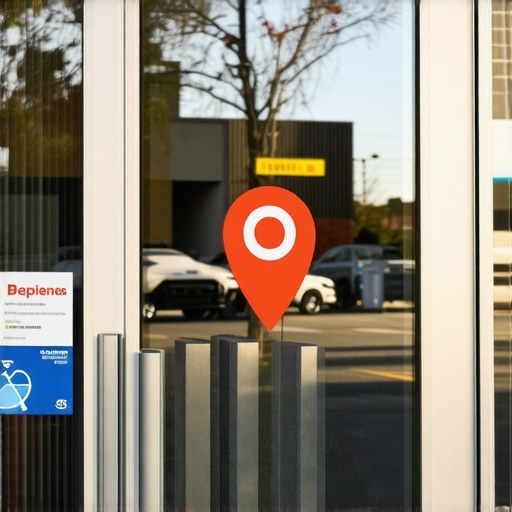
Don’t Let Your Service Area Settings Kill Your Visibility
A massive mistake I see is when owners try to cover the entire state. If you set your service area to a 100-mile radius, Google gets confused about where your home base actually is. It’s like trying to be a local hero in ten different cities at once; eventually, nobody knows who you are. This is exactly why your service area settings are hiding you from customers. Instead, focus on a tight 10-15 mile radius around your physical location. You can always use how hyperlocal targeting actually works without changing your address to expand your reach through content and local signals later. If you set too wide of a net, you often trigger the service area page mistake that stops your map pin from showing up where it matters most.
Build Trust Through Niche Citations Instead of Generic Lists
Most people think they need to be on every directory from A to Z. That’s old-school thinking that barely moves the needle today. To rank higher in the 3 pack results, you need relevance. If you’re a roofer, a link from a local hardware store’s blog is worth more than fifty generic business directories. I’ve seen profiles skyrocket just by getting mentioned on a local neighborhood association’s trusted vendors list. This is the core of google maps optimization: proving to Google that the community recognizes you as a local fixture, not just another digital entry in a database. I once helped a landscaping company gain a massive edge simply by sponsoring a local Little League team and getting a backlink from the town’s recreation page.
Most SEO ‘gurus’ will tell you that the secret to maps visibility is simply getting more reviews than the guy down the street. But here is the contrarian truth: I have seen businesses with 500 five-star reviews get absolutely crushed by a competitor with only 50. This happens because Google cares more about review velocity and ‘contextual relevance’ than a static total count. If you get twenty reviews in one week and then nothing for three months, Google’s algorithm flags that as unnatural. This is precisely why asking every customer for a review is actually hurting your map rank if it leads to suspicious spikes in activity. Consistency is what builds the trust needed to rank higher in the 3 pack.
Why your 500 reviews are losing to the competitor with fifty
The ‘oops’ factor I see most often is what I call the Review Plateau. Business owners work hard for a month, get a bunch of feedback, and then stop. Google sees this as a sign that the business might be declining or that the reviews were incentivized. According to the annual Whitespark Local Search Ranking Factors study, review recency and velocity are now among the top-tier signals for local algorithms. If your competitor is getting two reviews a week like clockwork while you’re sitting on a pile of reviews from 2022, they will eventually jump over you. Have you ever fallen into this trap of thinking a high total count was a permanent shield? Let me know in the comments. 
Does your rank tracker lie to you every Monday morning?
This is a sophisticated trap for those who think they have mastered google maps optimization. Most people use a tool that checks their rank from a single static point—usually the center of the city. But the ‘Map Pack’ is hyper-local. You might be #1 when someone is standing in your lobby, but #12 when they are two blocks away. This is why your local rank tracker is giving you a false sense of security. Real mastering map pack seo strategies to boost local visibility requires looking at a grid of rankings to see exactly where your ‘proximity bubble’ bursts. If you aren’t tracking across a wide grid, you are flying blind.
Stop stuffing keywords into your review responses
There is a persistent myth that you should cram your service keywords into your replies to customers. Not only does this look like a robot wrote it, but it can actually trigger spam filters. I’ve seen profiles lose significant phone calls because their replies were clearly written for an algorithm rather than a human. This is the honest reason your generic review replies wont win more leads. Instead, focus on ‘unstructured citations’—mentions of your business name and address on local blogs, news sites, or neighborhood forums. These are the unstructured citations your business is missing that act as the ‘hidden’ glue for your ranking. When Google sees local news sites or community blogs talking about you, it realizes why proximity is not the only factor in local ranking; authority matters just as much. If you want a strategy that doesn’t feel like a ‘cheap trick,’ look for affordable local seo services to dominate the 3 pack that prioritize these high-quality, real-world signals over old-school directory spam.
Once you’ve got the basics down, the real work begins: the daily grind of keeping that spot. I’ve seen too many business owners reach the top, celebrate with an expensive dinner, and then stop doing the very things that got them there. In my experience, the one weekly profile update that keeps your local leads from dropping is simply staying active. I personally spend 15 minutes every Monday morning uploading a single ‘behind-the-scenes’ photo and answering one Q&A question. It sounds trivial, but to Google, it’s a heartbeat monitor. It tells them this business is alive and kicking. If you want to rank higher in the 3 pack, you have to realize that visibility is a lease, not a deed. You have to pay the ‘rent’ every single week through engagement. I also stopped guessing where we stood years ago. I remember a client who thought they were dominating their city, but when we pulled a grid report, they were invisible just two miles west of their office. This is how we use local seo software to spot the visibility gaps your competitors miss. We use heat maps to find exactly where the ‘ranking wall’ is. If you see a sea of red dots on your map, you know you need more of the specific backlink types that push profiles into the 3 pack from those specific neighborhoods. It’s surgical, not a shotgun approach. 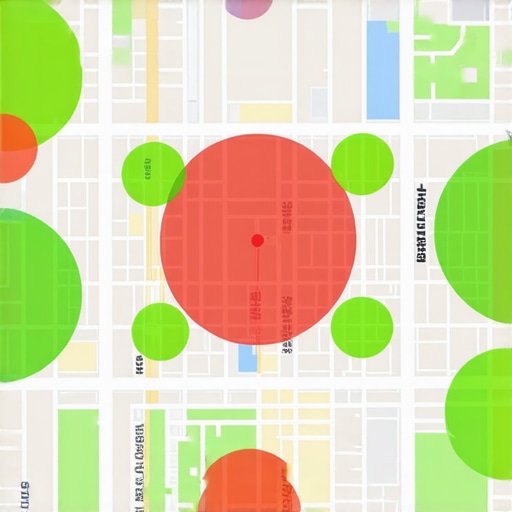
How can I keep my map position through the next big update?
Maintenance is the most overlooked part of google maps optimization. According to local SEO expert Joy Hawkins at Sterling Sky, the most stable rankings come from profiles that have a high ‘human signal’—meaning real people are clicking, calling, and asking for directions. My advice? Don’t just set it and forget it. Follow the weekly routine for dominating your neighborhood 3 pack by checking for ‘suggested edits’ from competitors. I’ve caught people trying to change my clients’ phone numbers or marking them as ‘permanently closed’ more times than I can count. Looking ahead, I predict that 7 google business profile tips for 2026 will revolve almost entirely around video and AI-driven ‘visual proof.’ Google is already testing ‘search by video’ for local businesses. If you aren’t posting short, 15-second clips of your work or your storefront, you’re going to be invisible to the next generation of searchers. Start small: today, go into your profile and add one photo of your most recent project. It’s a 30-second task that separates the winners from the crowd.
What I Learned the Hard Way About Local Trust
After years of trial and error, I’ve realized that the algorithm isn’t a monster to be tamed, but a partner that needs proof. One of the biggest shifts in my mindset came when I stopped obsessing over total review counts and started looking at how customers actually interact with a profile. I’ve seen that proximity is not the only factor in local ranking; it is often about the ‘digital footprint’ you leave across the local web. Here are a few lightbulb moments that changed everything for me:
- Authenticity beats polish every time: A grainy, real photo of your team working is worth more than ten high-end stock images. It builds a level of trust that Google’s AI can actually detect.
- The ‘Slow and Steady’ review win: Spiking your reviews looks like spam. Consistency is the secret sauce for map pack seo success.
- Defend your territory: If you aren’t watching your profile, your competitors are. I’ve learned the truth about why local rivals keep stealing your clicks, and usually, it’s because they are suggesting ‘edits’ to your listing that you haven’t caught yet.
Tools I Actually Use to Win the Map War
You don’t need a thousand-dollar software suite to rank higher in the 3 pack, but you do need the right data. I personally rely on Local Falcon for its grid-based tracking because it shows me exactly where my visibility dies off. For content and visuals, I use the checklist for optimizing profile photos for more clicks to ensure every upload serves a purpose. I also highly recommend Whitespark’s citation tools for finding those niche local mentions that others miss. We frequently use local seo software to spot the visibility gaps your competitors miss, which allows us to attack the areas where the competition is weakest.
Your Blueprint for a Top Spot is Ready
Dominating your local market isn’t about one giant leap; it’s about a hundred small, intentional steps. Every photo you upload, every review you answer with care, and every niche citation you build adds a layer of ‘armour’ to your ranking. You have the tools and the knowledge now to turn your profile from a static page into a lead-generating machine. Don’t let the fear of a suspension keep you from being bold with your google maps optimization. Start today by fixing one small error, and watch how the momentum builds over time. Which part of your profile are you going to fix first—the photos or the service areas? Let me know in the comments below!