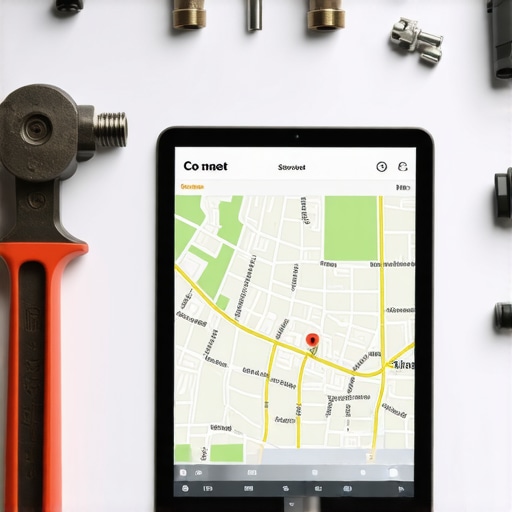
I remember the exact moment I realized I was accidentally sabotaging my neighbor’s plumbing business. I had spent hours in the Google Business Profile dashboard. I was checking off every tiny suburb and township within a fifty-mile radius. I figured more territory meant more revenue. It felt productive. It felt like growth. But then, the data came back. It was a total ghost town. Not only were we not ranking in the new towns, but our visibility in our home city started to tank too. It was a classic case of ‘thinning the soup’ until there’s no flavor left. This is exactly why your service area settings are probably hiding you from the people who actually need an emergency pipe repair right now. Today, I’m going to show you how to tighten that belt. We are going to focus on dominating the neighborhood blocks that actually pay the bills.
Stop Casting a Net Where There Are No Fish
Setting your service area isn’t about telling Google where you’re willing to drive. It’s about proving where you are actually relevant. When you tell the algorithm you service the entire state, you’re telling it you aren’t a specialist anywhere. I made the mistake of thinking Google was just a digital phone book. I thought I could just buy a bigger ‘ad’ by checking more boxes. In reality, it’s a proximity engine. If you want to rank higher in the Google Maps 3-pack today, you have to be realistic about your reach. You can’t be everywhere at once, and Google knows it. When I first started helping local tradesmen, I remember one specific HVAC client who wanted to cover the whole of South Florida. We listed 40 cities. Within a month, he wasn’t even appearing for searches at his own street address. Google saw the lack of geographical focus and essentially ghosted his profile.
Does a bigger service circle actually mean more jobs?
There is a persistent myth that checking more boxes translates to more impressions. In my experience, the opposite is true. According to the 2023 Local Search Ranking Factors report by Whitespark, proximity to the searcher remains the top-weighted signal for the map pack. By over-extending, you trigger filters that might cause your plumbing leads to dry up entirely. I’ve seen how small plumbers outperform big chains simply by owning a five-mile radius instead of renting a fifty-mile one. Have you ever expanded your service area settings only to find your phone stopped ringing altogether? It’s a common trap. It feels like you’re losing out if you don’t include that town two counties over. But trust me, the service area page mistake that most owners make is sacrificing local authority for a wide, empty net. Let’s look at how to actually structure these settings so the map pin actually moves.Think of your service area like a spotlight. If you point it at a single wall, it is blindingly bright. If you try to illuminate an entire football field with that same bulb, it becomes a dull, useless gray haze. To enhance maps visibility with proven seo techniques, you need that focused light. Google is looking for signals of local dominance, not broad mediocrity. When you select your service areas, you aren’t just making a list; you’re building a perimeter of authority.
Swap City Names for Precise ZIP Codes
Most business owners just type in the names of the five biggest cities near them and call it a day. That is a mistake. When you use broad city names, you’re competing against every single contractor in that entire metropolitan area. Instead, I want you to go into your dashboard and use specific ZIP codes. Start with the ones where you actually live and work. By using ZIP codes, you are providing the ‘proximity engine’ with surgical data. This precision helps you mastering map pack seo strategies to boost local visibility because it reduces the noise Google has to filter through.
How I Saved a Locksmith from the Austin Trap
A few years ago, I worked with a locksmith in Austin who was struggling. He had checked every box from Round Rock down to San Marcos—a massive 60-mile stretch. He was getting plenty of ‘views’ on his profile, but his phone was silent. We sat down and looked at where his actual high-paying jobs were coming from. It turned out 80% were within 8 miles of his house. We deleted every city name and replaced them with just four local ZIP codes. Within three weeks, his ‘Total Impressions’ actually dropped, but his ‘Phone Call’ button clicks tripled. He finally owned his backyard instead of being a ghost in the suburbs. 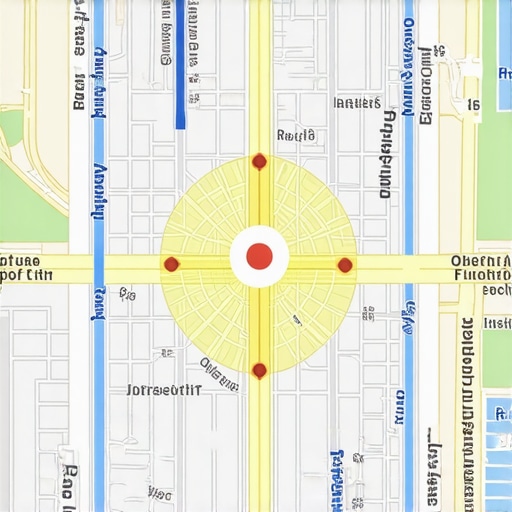
The 20-Mile Rule for Maximum Relevance
Unless you are in a extremely rural area, you should rarely have a service area radius larger than 20 miles. Google’s algorithm is inherently suspicious of service-area businesses that claim to be everywhere. If you want to build enough profile authority to rank in the next town over, you have to prove you are the king of your current town first. This is one of the 5 high impact profile settings most small businesses forget to toggle correctly. If your service area is too wide, Google looks at your lack of reviews from those far-off places and assumes you are spamming the system.
Match Your Service Area to Your Real-World Data
Google isn’t just looking at what you type into the dashboard. They are looking at the GPS data from your phone, the addresses mentioned in your customer reviews, and the locations tagged in your photos. If your dashboard says you serve a city 40 miles away, but you never upload a photo from that location, Google will ignore your setting. To truly succeed with google maps optimization, your digital footprint must match your physical tracks. This is why your service area settings are hiding you from customers if they are based on wishful thinking rather than actual job sites. When you align these settings with your actual service history, the map pin starts to move because the data finally makes sense to the algorithm.It is a bitter pill to swallow when you realize why high ratings alone won’t move your map pin higher. Most business owners believe that if they just reach 100 five-star reviews, the algorithm will magically crown them king. But here is the hard truth: I’ve seen businesses with 2,000 reviews lose out to a competitor with 40. Why? Because the competitor had better ‘geographical relevance’ and specific ‘unstructured citations’ that Google trusts more than a generic ‘Great job!’ review. This is one of the search signals that let competitors outrank you without better reviews. If your reviews don’t mention the service and the city together, they are just noise to the algorithm. You need to focus on the specific review phrases that actually move the needle for your map rank to actually see growth.
Don’t let keyword stuffing kill your momentum
The biggest trap I see is what I call ‘the over-optimization cliff.’ You think by putting ‘Best Plumbing Service Repair New York’ as your business name, you’re winning. In reality, you’re flagging yourself for a manual review or a filter that suppresses your reach. This explains why over-optimized business descriptions are actually hurting your map rank. Google’s AI is now sophisticated enough to distinguish between a natural business entity and a keyword-stuffed spam bot. I’ve watched multi-generational family businesses get wiped off the map because a ‘marketing guru’ convinced them to change their name to a string of keywords. This is one of the 4 costly errors keeping your shop out of the map pack. 
Can you really outrank a local competitor from ten miles away?
The short answer is yes, but it’s not about driving more. It’s about ‘prominence.’ Joy Hawkins, a leading voice at Sterling Sky, has frequently noted that while proximity is a ‘hard’ signal, prominence is the variable you can actually control. This is why your competitors are ranking in towns where they don’t have an office—they have built enough digital authority to ‘push’ their radius beyond the standard limit. If you want to achieve this, stop looking for shortcuts and start looking into affordable local seo services to dominate the 3-pack that focus on building actual brand mentions. Have you ever fallen into the trap of thinking a bigger radius would solve your lead problems? Let me know in the comments.I’ve spent too many nights staring at the ‘total views’ chart in the Google dashboard, thinking it meant something. It doesn’t. If those views are coming from a person 50 miles away who will never hire you, they are vanity metrics. To get real results, you need to see exactly where your pin drops off. I personally rely on grid tracking software like BrightLocal or WhiteSpark. This is how we use local seo software to spot the visibility gaps your competitors miss. Instead of a single ranking number, it gives you a colorful heat map across your city. If you see red circles just three blocks away from your office, you know you have a ‘relevance’ leak that no amount of reviews can plug on their own. I use these maps to prove my work is actually hitting the right streets. Most owners are looking at the map reporting data you’re ignoring, which usually results in them over-investing in the wrong neighborhoods.
Don’t Guess Where You Rank Use a Heat Map
When you look at a grid tracker, you might see that you rank #1 on your own doorstep but drop to #14 just two miles north. This is where google maps optimization becomes a game of inches. I use these tools because they show me exactly where my authority ends. If I’m weak in a specific ZIP code, I don’t just hope for the best; I go out and get a customer review specifically from a resident in that area. This type of surgical precision is the only way to enhance maps visibility with proven seo techniques in a crowded market.
How do I maintain my map rank without spending all day on it?
Consistency beats intensity every time. You don’t need to spend five hours a week on your profile. You need fifteen minutes on Tuesday morning. I follow the weekly routine for dominating your neighborhood 3-pack which involves answering one Q&A, uploading two job-site photos, and checking for ‘suggested edits’ from competitors. According to data from the BrightLocal Local Search Consumer Survey, 87% of consumers used Google to evaluate local businesses in 2023, and they notice when a profile hasn’t been updated in months. If you are short on time, learn how to audit your business profile in under ten minutes so you can catch errors before they tank your calls. 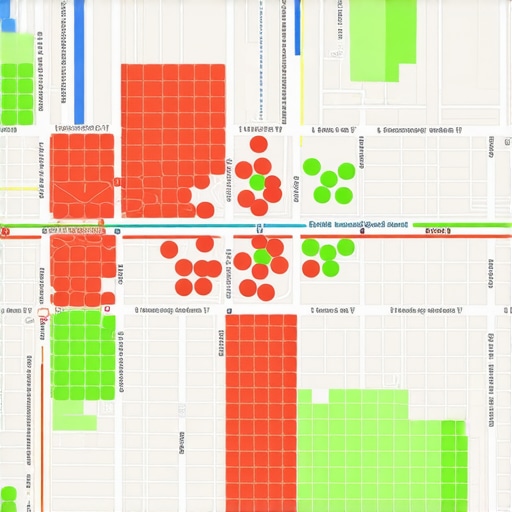
The Shift Toward Spatial Search and AI Realism
Looking ahead, I expect Google to move even further away from text-based queries toward spatial and visual search. By 2026, your photos and the ‘visual’ data in your profile will likely matter more than the keywords you write in your description. You should be preparing your map listing for the 2026 spatial search shift by uploading high-resolution, geotagged images that show you actually working in the neighborhoods you claim to serve. AI is getting better at recognizing the background of your photos to verify your location. If you want to mastering map pack seo strategies to boost local visibility, you need to start thinking about your digital presence as a living record of your physical work. Try this today: Go run a 10-minute audit on your current listing. If you see a sea of red circles on a grid map, start by trimming your service area ZIP codes down to your most profitable five and watch what happens to your call volume.
The Brutal Truth About Growing Too Fast on Maps
Reflecting on years of helping local businesses, the biggest lightbulb moment was realizing that Google rewards honesty over ambition. If you try to fake coverage across three counties, the algorithm eventually sniffs out the lack of real-world engagement. I have learned that fixing a map listing that stopped generating real phone calls usually starts with a painful audit where we delete every service area the owner hasn’t visited in the last ninety days. It feels like shrinking, but in reality, you are just concentrating your power. I have seen that how to fix a map listing that stopped generating real phone calls often involves returning to your roots. Don’t chase vanity impressions from people fifty miles away who will never pay your dispatch fee. Focus on being the undeniable expert for the three ZIP codes closest to your front door.
My Personal Toolkit for Winning the 3-Pack
I don’t believe in guessing when it comes to geographic relevance. My daily workflow relies on a few specific resources that help me see what the algorithm sees. First, I never start a project without a local heat map tool like BrightLocal or Local Falcon. You need to stop guessing your map rank and focus on these 4 data points instead to understand where your ‘authority’ actually ends. Second, I recommend the Whitespark Local Search Blog for staying ahead of the frequent, unannounced Google updates. Finally, I always keep a manual log of customer ZIP codes from my CRM. This real-world data is the ultimate sanity check for your dashboard settings. #IMAGE_PLACEHOLDER_E#
Take Back Your Local Market Today
The future of your business isn’t hidden in a massive, statewide radius—it’s in the neighborhood blocks where your trucks are already parked. By tightening your service area and focusing on google maps optimization that reflects your actual physical footprint, you stop being a ghost and start being a local authority. Don’t let the multi-million dollar chains with their massive budgets intimidate you; they can’t match your local proximity signals if you play your cards right. It is time to use affordable local seo services to dominate the 3-pack and claim the leads you’ve been leaving on the table. Have you ever noticed your rankings drop significantly just a few miles away from your main office? Let me know your experience in the comments below!