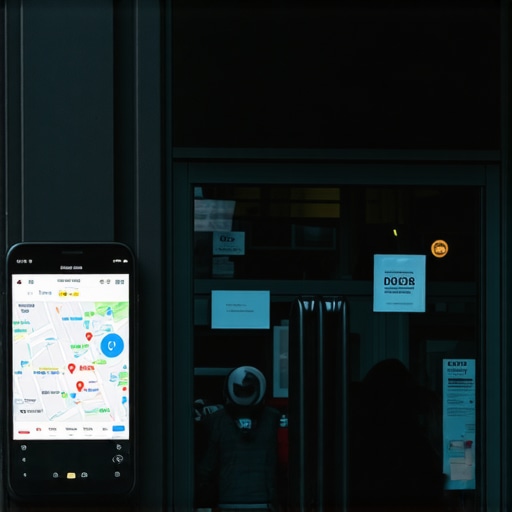
The 4 Costly Errors Keeping Your Shop Out of the Map Pack
It is a scenario I see play out almost every week. A local business owner calls me, frustrated and confused. They have a 4.9-star rating, a decade of history in the community, and a website that looks professional. Yet, when they search for their primary services, they are nowhere to be found in the top 3 results. Instead, a competitor with fewer reviews, a generic website, and half the tenure is sitting comfortably at the top of the Map Pack.
If this sounds familiar, you aren’t alone. The “Map Pack” – those coveted top three local results that appear alongside a map in Google Search – is the most valuable real estate in the digital world for local businesses. It is where the vast majority of clicks, calls, and “get directions” requests happen. But as we move toward 2026, the rules for google business profile seo have shifted. The old tactics of just “having a profile” are no longer enough.
As a Google Business Profile Product Expert, I’ve spent years analyzing why some profiles soar while others sink. Ranking isn’t just about proximity anymore; it’s a complex calculation of Relevance, Distance, and Prominence. If you are struggling to rank higher on google maps, it’s likely because you are committing one of four critical, costly errors. Let’s dive into what is actually keeping your shop in the shadows and how to fix it for the 2026 search landscape.
Error #1: The “Set It and Forget It” Freshness Gap
The most common mistake I encounter is the belief that a Google Business Profile (GBP) is a static directory listing. Many owners optimize their profile once – filling out the description, adding a few photos, and selecting categories – and then never touch it again. In the eyes of Google’s 2026 algorithm, a profile that isn’t updated is a profile that is potentially obsolete.
We are seeing a massive shift where review freshness and profile activity are starting to outweigh total review count or historical authority. Google’s primary goal is to provide users with accurate, “live” information. If your last review was six months ago and your last photo upload was in 2022, Google views your business as a risk. Why would they recommend you to a user if they aren’t 100% sure you are still operating at the same level of quality today?
The Death of Historical Authority
In the past, a business with 500 reviews from five years ago could coast on that authority indefinitely. That era is over. Today, a business with 50 reviews – all received within the last 90 days – will frequently outrank the “legacy” business. This is because “Freshness” has become a core local seo ranking factor. Google wants to see that people are interacting with you now.
Actionable Fix: Signaling “Life” to the Algorithm
To bridge the freshness gap, you need a consistent cadence of activity. This includes:
- Weekly GBP Posts: Use these to highlight offers, news, or behind-the-scenes content. This signals to Google that the lights are on and someone is home.
- Rapid Review Responses: Aim to respond to every review – positive or negative – within 24 hours. High-speed engagement is a trust signal that boosts your google business profile optimization efforts.
- Ongoing Photo Uploads: Don’t just upload professional shots once. Upload “raw” smartphone photos of your work or your shop weekly.
If managing this manually feels overwhelming, many agencies utilize a google maps ranking service to automate the posting and monitoring process, ensuring the “freshness” signal never drops. You can learn more about how we handle this in our guide on 7 Google Business Profile Tips for 2026.
Error #2: Service Area & Proximity Mismanagement
Proximity has always been a major factor, but how Google calculates it has become significantly more sophisticated. Many business owners try to “game” the system by setting an enormous service area or choosing every category that seems remotely related to their business. This often leads to the “Ghosting” effect – where you appear for no one because you tried to appear for everyone.
The Primary Category Trap
One of the most frequent technical errors I see is the misuse of google business profile categories. For example, a specialized plumbing contractor might select “Construction Company” as their primary category because they want to seem “bigger.” In reality, this dilutes their relevance for plumbing-specific searches. Your primary category carries the most weight; if it isn’t laser-focused on your core service, you are sabotaging your google business profile seo.
The 2026 “Spatial Search Shift”
We are currently witnessing the “Spatial Search Shift.” Google no longer just looks at your address; it uses Neighborhood Semantic Density. This means Google looks at the content of your reviews, your website, and your local citations to see if you actually have a presence in specific neighborhoods. If you claim to serve an entire metro area but all your digital signals are clustered in one small suburb, Google will “ghost” your profile in the other areas to protect the user experience.
Actionable Fix: Audit Your Proximity
To fix this, you must be honest with your data.
- Audit Your Categories: Use google business profile audit tool software to see what categories your top 3 competitors are using. Often, there is a “hidden” category that is driving the most traffic.
- Hyper-Local Content: Instead of general service pages, create “City Pages” on your website that mention specific landmarks, neighborhoods, and local events. This helps build the semantic density Google is looking for.
- Tighten Your Service Area: If you are a Service Area Business (SAB), don’t set a 50-mile radius if 90% of your business happens within 10 miles. Shrinking your radius can actually increase your visibility within that core area.
For a deeper look at why simply having the right address isn’t enough anymore, read our analysis on Why Perfect NAP Data is No Longer Enough.
Error #3: Ignoring Real-World “Footfall” & AR Signals
As we head into 2026, the line between the physical world and the digital world is blurring. Google is increasingly moving away from relying solely on what you *say* about your business and moving toward what it can *verify* through real-world data. This is where many “old school” SEO strategies fall flat.
Verified Footfall as a Ranking Factor
Google tracks anonymized location data from millions of users. They know how many people are actually walking into your store or how many phones are stationary at your place of business. This “Verified Footfall” is becoming a massive local seo ranking factor. If your profile says you are the most popular bakery in town, but Google sees zero foot traffic compared to the shop down the street, your rankings will eventually reflect that discrepancy.
The Rise of Augmented Reality (AR) Walkthroughs
Google is also integrating AR into local search. Profiles that feature high-quality 360-degree virtual tours and high-resolution, geo-tagged photos are being given priority. These aren’t just “nice to have” features anymore; they are verification tools. An AR walkthrough proves to Google that your physical location is real, active, and matches the description in your profile.
Actionable Fix: Prove Your Real-World Activity
You need to provide “real-world” proof of activity to maintain your google maps optimization.
- Encourage “Check-ins”: While you can’t incentivize reviews, you can encourage customers to use Google Maps to navigate to your shop or “check-in” while they are there.
- Invest in 360-Tours: A verified virtual tour can significantly boost your prominence. It provides a level of transparency that the algorithm rewards.
- Geo-Tagged Media: When you upload photos, ensure they contain metadata that confirms they were taken at your place of business.
Interestingly, simply having high-res photos isn’t a silver bullet. I’ve written about this extensively in Why Your High-Res Photos Aren’t Helping Your Map Pack Rank – it’s about the *context* and *interaction* with those photos, not just the pixel count. To track how these real-world signals are impacting your reach, using local seo tools is essential.
Error #4: Technical Data Silos & The Re-verification Trap
The final error is the most technical and often the most damaging. It involves how your data is structured across the web and how you interact with Google’s API. Many businesses suffer from “Data Silos,” where their website, their social profiles, and their GBP are sending conflicting signals to Google.
The Schema Gap
Your website is the “source of truth” for Google. If your website’s local business schema (the hidden code that tells search engines your name, address, and phone number) doesn’t perfectly match your Google Business Profile, Google experiences “cognitive dissonance.” When Google is unsure about your data, it defaults to a lower ranking to avoid showing incorrect information to users. This is a common hurdle in google business profile seo that many owners overlook.
The “OAuth Drop” and Re-verification Volatility
Here is an expert-level insight: I frequently see massive ranking drops immediately after a business owner connects a third-party tool to their GBP via OAuth or undergoes a forced re-verification. Google’s anti-spam filters are extremely sensitive. Any major change in how the profile is managed can trigger a “probationary period” where your rankings are suppressed while Google re-evaluates your legitimacy.
This is why the gmb ranking service you choose matters. If they are using “black hat” tools or unverified API connections, they could trigger a suspension or a permanent ranking “ceiling” that you can’t break through. We discuss these risks in our post on The Hidden Reasons Google Suspends Local Profiles.
Actionable Fix: Sync Your Technical Signals
- Perform a Professional Audit: Use a google business profile audit tool to check for NAP (Name, Address, Phone) consistency across the entire web. Even a missing suite number can cause issues.
- Match Schema to GBP: Ensure the LocalBusiness Schema on your website is an exact mirror of your GBP. This includes your operating hours and service categories.
- Avoid Frequent “Major” Edits: Once your profile is optimized, avoid making frequent changes to your core business name, address, or phone number unless absolutely necessary. These “high-stakes” edits are what trigger the re-verification trap.
At SEO Map Pack Service, we use specialized local seo software to spot the visibility gaps that these technical errors create, allowing us to fix them before they lead to a suspension.
Conclusion: Dominating the 2026 Map Pack
Ranking in the Map Pack in 2026 is no longer a matter of luck or simply “being the oldest shop in town.” It is a proactive discipline. The Map Pack is a moving target, and the algorithm is increasingly focused on real-time relevance and real-world verification.
To recap, if you want to claim your spot in the top 3, you must:
- Bridge the Freshness Gap: Treat your profile like a social media feed, not a yellow pages listing.
- Master Your Proximity: Focus on neighborhood semantic density rather than broad, generic service areas.
- Embrace Real-World Signals: Use AR, 360-tours, and footfall data to prove your business is active and legitimate.
- Eliminate Technical Silos: Ensure your website’s schema and your GBP are in perfect harmony.
Local SEO is about building “Prominence” through consistent, high-quality signals. If you are tired of seeing your competitors take the leads that should be yours, it’s time for a professional google maps audit. Whether you choose to do it yourself with the right local seo software or partner with an expert google maps ranking service, the key is to act now. The gap between the businesses that adapt to these 2026 shifts and those that don’t is only going to widen.
Don’t let your shop stay invisible. Identify your gaps, fix your errors, and take your rightful place at the top of the Map Pack.