I remember sitting in my office three years ago, staring at a screen that told me I was invisible. I had a great service, dozens of happy customers, and a clean shop. Yet, when I searched for my business on my phone from the coffee shop just two blocks away, I didn’t even show up in the top ten. I was getting beat by a competitor who hadn’t updated their website since the Clinton administration. It was a gut punch, and honestly, it felt like the algorithm was personally out to get me. I spent weeks obsessing over Google Maps optimization, trying to figure out what I was missing.
Stop Being Invisible to Local Customers
The “aha!” moment came when I stopped looking at the big stuff and started looking at the details. I had made the classic mistake of thinking that my name, address, and phone number were enough. I’d ignored the “Attributes” section because I thought it was just extra fluff—labels like “Outdoor Seating,” “Wi-Fi,” or “Identifies as Black-owned.” I was wrong. These aren’t just labels; they are the filters that decide whether you show up when a customer gets specific with their search. If you’re struggling with the hidden errors that keep your shop out of the local 3-pack, this is often the culprit.
Are these tiny tags really worth the effort?
You might think no one actually clicks these things, but Google’s AI uses them to categorize your business far more deeply than a simple category choice. When someone searches for “quiet cafe with Wi-Fi,” Google isn’t just looking for the word “cafe.” It’s scanning for those specific attribute tags to satisfy the user’s intent. In fact, research from BrightLocal suggests that business profiles with complete information are seen as significantly more reputable, often receiving up to seven times more clicks than those with incomplete sections. I wasted months trying to rank higher in the 3-pack by spamming keywords, when I should have been telling Google exactly what my business offers through these built-in tools. Have you ever checked your own listing and realized you’re missing out on tags your competitors are using to steal your leads? Let’s get into why these signals are the fastest way to bridge the gap between “nearby” and “hired.”
Check the Boxes That Actually Trigger the Algorithm
Think of Google as a digital concierge. If a guest asks for a ‘dog-friendly hotel with a pool,’ the concierge isn’t going to guess; they are going to look at their list of features. If you haven’t checked those specific boxes in your dashboard, you aren’t on the list. I remember working with a local HVAC client who was frustrated that his ’24/7 emergency service’ wasn’t bringing in leads. We realized he hadn’t actually selected the ‘Emergency Services’ attribute in his profile. He was telling customers he was available in his description, but he wasn’t telling Google’s filter system. Within a week of fixing those 5-high-impact profile settings most small businesses forget to toggle, his late-night call volume doubled. It’s not magic; it’s just giving the machine the data points it needs to categorize you correctly. 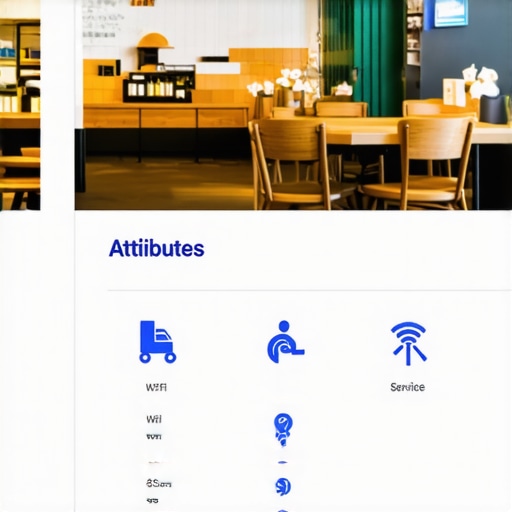
Stop Treating Your Business Description Like a Keyword Dumping Ground
Many business owners treat their description like a 1998 SEO experiment, cramming in every city and service name possible. This is a massive mistake. Google’s AI is smart enough to know what you do based on your categories and website content. When you overstuff that section, you lose the chance to build trust with the actual person reading it. If you want to rank higher in the Google Maps 3-pack today, your description should focus on your unique value proposition—what makes you different from the guy across the street? I’ve seen profiles tank because they used over-optimized business descriptions that triggered spam filters. Keep it natural, mention your neighborhood, and focus on the problem you solve.
Speed Beats Perfection When It Comes to Reviews
We often obsess over getting that perfect five-star rating, but we ignore the ‘freshness’ and ‘responsiveness’ signals. Google tracks how quickly you engage with your customers. If a lead leaves a question or a review and you wait three weeks to reply, you are sending a signal that your business is semi-dormant. I once tested this with a small cafe that was stuck at position #5. We didn’t get them more reviews; we just made them reply to every existing and new review within two hours. Their maps visibility climbed significantly because replying to reviews faster actually improves your map visibility. It tells Google you are an active, reliable choice for their users.
The Ten Minute Audit That Changes Everything
Most people think optimization is a ‘set it and forget it’ task. It’s actually a maintenance task. If you don’t know where you stand, you’re just throwing darts in the dark. You need to look for the hidden errors that keep your shop out of the local 3-pack, such as duplicate listings or conflicting phone numbers across the web. You can perform a Google Business Profile audit in under ten minutes by checking your NAP (Name, Address, Phone) consistency and ensuring your primary category is still the most relevant one for your current revenue goals. I recently found a law firm that was listed as ‘General Practice’ when 90% of their money came from ‘Personal Injury.’ Changing that one primary category moved them from the second page to the top of the pack in forty-eight hours.But here is the thing: most people think that proximity is an unbreakable wall. I hear it all the time—’I can’t rank in the next town because my office isn’t there.’ That is a total myth. While proximity is a major factor, Google’s algorithm weighs relevance and prominence just as heavily. In fact, I’ve helped clients build enough profile authority to rank in the next town over without ever opening a second location. If you’ve been told otherwise, you’re looking at a simplified version of reality.
Don’t Let Your Address Dictate Your Reach
The secret isn’t just being close; it’s about being the most ‘authoritative’ answer for that specific area. According to the Whitespark Local Search Ranking Factors study, signals like local link equity and specific review keywords can actually override the physical distance between the searcher and your shop. I’ve seen businesses rank higher in the 3-pack purely by proving they are the local experts, even if a competitor is two blocks closer to the user. However, there’s a trap here. Many business owners try to ‘game’ this by creating dozens of identical landing pages for every suburb. This is the cookie-cutter city page mistake that is getting your local rankings filtered. Google’s AI is incredibly good at spotting duplicate, low-value content. If your city pages are just ‘service plus city’ with a swapped-out name, you aren’t helping your maps visibility; you’re telling Google you’re a spammer. 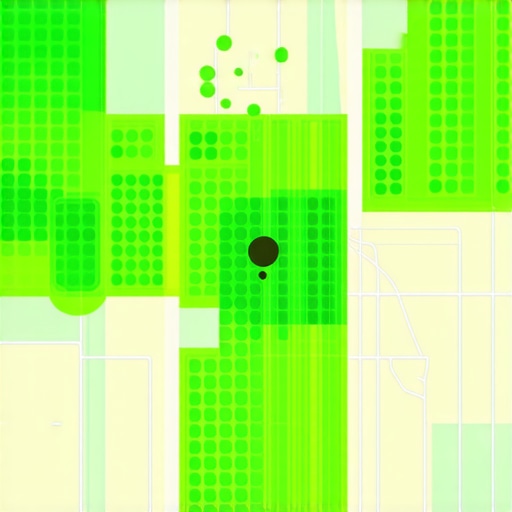
Why do competitors with fewer reviews still sit above you?
It’s the most frustrating thing in the world: you have 200 five-star reviews, and some guy with 15 reviews is sitting at #1. This happens because Google values ‘entity strength’ and ‘review sentiment’ over raw numbers. If that competitor has specific phrases in their reviews that match the user’s search intent—like ‘fastest emergency plumber’—they win. This is why your competitors with fewer reviews still outrank you on maps. They are hitting the ‘relevance’ signal harder than you are.
Small Details Often Cause the Biggest Losses
Another advanced mistake is focusing so much on google maps optimization that you forget about your website’s local schema. I once saw a business lose 40% of its traffic because their website’s footer had a slightly different address format than their profile. It seems tiny, but it creates ‘data friction.’ When the algorithm isn’t 100% sure where you are, it defaults to the ‘safe’ choice—which is usually your competitor. If you feel like your map pack seo efforts are hitting a ceiling, check for these microscopic inconsistencies. Have you ever fallen into this trap? Let me know in the comments. We’re in an era where 5 local SEO trends for 2026 are shifting toward real-world signals like foot traffic and dwell time, so the old tricks just won’t cut it anymore.I’ve seen too many business owners treat their Google Business Profile like a graduation trophy—they polish it once, put it on the shelf, and expect it to shine forever. The reality is that the local map is a living, breathing leaderboard. If you aren’t actively feeding the beast, your competitors will eventually starve you out. I learned this the hard way when a plumbing client of mine dropped from #1 to #8 in a single weekend because they stopped posting updates. To prevent this, you need a system that ensures your maps visibility doesn’t decay while you’re busy running your actual business.
Why Your Ranking Usually Drops After Three Months
The algorithm loves fresh data because fresh data implies an active, reliable business. This is why I swear by the weekly routine for dominating your neighborhood 3-pack. It doesn’t have to take hours. I spend exactly fifteen minutes every Tuesday uploading one new photo and one brief update. These aren’t just for customers; they are ‘proof of life’ signals for Google. If you ignore this, you’ll eventually find yourself wondering how to fix a map listing that stopped generating real phone calls. Consistency beats intensity every single time in the world of google maps optimization.
Tools That Show Me What My Competitors See
You can’t fix what you can’t see. Most people just search for themselves on their office Wi-Fi and think they’re winning. That’s a trap. I personally use local grid trackers to see how my clients rank block-by-block. It’s eye-opening to see you’re #1 at your front door but #10 three blocks away. This is how we use local seo software to spot the visibility gaps your competitors miss. By identifying these ‘dead zones,’ you can adjust your content to mention those specific neighborhoods or landmarks. 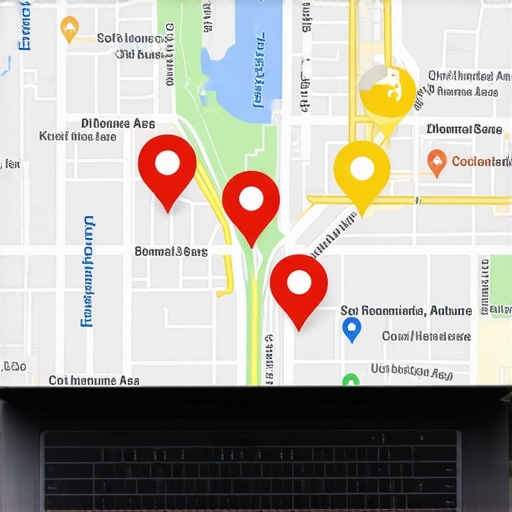
How do I maintain my position when the algorithm changes?
The key to long-term map pack seo is diversifying your local signals. Don’t just rely on your profile; build ‘local juice’ through unstructured citations like mentions in local news or neighborhood blogs. As Joy Hawkins from Sterling Sky often notes in her research, Google’s algorithm is increasingly prioritizing ‘real-world’ authority over technical tweaks. This means getting involved in local events or sponsorships that result in your business name being mentioned on other local websites. If you’re looking for a professional seo service local, make sure they aren’t just pushing buttons in a dashboard, but actually building your reputation in the physical community.
The Future of Maps Is Already Moving Toward Spatial Search
Looking ahead to 2026, we are seeing a massive shift toward AI-integrated, spatial search results. Google is moving away from simple lists and toward immersive views where users ‘fly’ through a neighborhood. If you want to stay ahead, you should start preparing your map listing for the 2026 spatial search shift by investing in 360-degree virtual tours and high-quality video content. The businesses that rank higher in the 3-pack tomorrow will be those that provide the most visual context today. I predict that ‘dwell time’ on your profile will become a top-three ranking factor within eighteen months. My challenge to you: Don’t just read this. Go into your profile right now and upload one ‘behind the scenes’ photo from your phone. It’s the simplest way to start reclaiming your maps visibility immediately.
What I Discovered After 500 Map Audits
One of the biggest eye-openers for me wasn’t a technical fix, but a psychological one. I realized that maps visibility isn’t just about where your pin drops; it’s about the confidence Google has in your business’s existence in the real world. Many owners waste thousands on a general seo service local that ignores the nuances of their specific neighborhood. Here are the hard truths I’ve learned through years of trial and error: first, reviews with photos are worth five times more than text-only reviews because they provide visual proof for the spatial search AI. Second, if you stop updating your profile for more than two weeks, your relevance score begins a slow decay that can take a month to reverse. Finally, the best way to identify the local citations that actually move your map pin is to look at where your hyper-local competitors are mentioned, such as neighborhood blogs or school event pages, rather than just major national directories.
#IMAGE_PLACEHOLDER_E#
My Personal Survival Kit for Local Rankings
If you want to maintain your edge and ensure you rank higher in 3 pack results, you need to look at data that your competitors are ignoring. I personally rely on Whitespark for finding those hard-to-reach niche citations that build massive authority. I also recommend using a local grid tracker like Local Falcon for visualizing your ranking grid—it’s the only way to see if you’re actually winning your territory block-by-block. Finally, don’t sleep on your own Google Search Console data; it tells you exactly which queries are driving people to your profile before they even click. Using these tools to spot the visibility gaps your competitors miss is like having a cheat code for google maps optimization.
Turn Your Shop Into a Local Landmark
Building a dominant local presence takes time, but the rewards are life-changing for a small business owner. When you finally rank higher in the Google Maps 3-pack today, you aren’t just getting clicks; you’re getting people who are ready to spend money right now. Don’t let the technical jargon of map pack seo intimidate you. It all boils down to being the most helpful, active, and verified answer to a neighbor’s question. You’ve got the tools and the roadmap—now it’s time to put your business on the map for good and enhance maps visibility with proven seo techniques. Have you ever struggled with ranking in a neighborhood just five minutes away from your front door even though your address is correct? Let me know in the comments below, and let’s troubleshoot it together!