I remember sitting in my home office at 2 AM, refreshing my browser for the twentieth time, and staring at a blank space where my business should have been. I had just spent months on Google Maps optimization, collecting glowing reviews and polishing my photos, yet my competitor—who had half the reviews and a terrible website—was sitting pretty in the top spot. It felt like I was wearing an invisibility cloak. I wasn’t just losing rank; I was being filtered out entirely. This is a visceral frustration many local owners face: you exist, you’re verified, but Google acts like you’re a ghost. Today, I’m going to show you exactly how to tell if you’re being silenced by the algorithm and the specific steps I took to finally rank higher in the 3-pack without pulling my hair out. Have you ever noticed your calls suddenly drop off a cliff even though your dashboard says everything is fine?
Why Your Profile is Stuck in the Search Results Graveyard
In my early days, I made the classic mistake of thinking more was always better. I tried to keyword stuff my business name, thinking it would give me an edge. Instead, Google quietly filtered me into oblivion. Filtering isn’t a suspension; it’s more like being invited to a party but forced to stand in the kitchen while everyone else dances in the living room. It often happens because of proximity overlaps or duplicate categories. According to data from BrightLocal, proximity remains the primary ranking factor, but it also triggers the ‘Possum’ filter if your business shares an address or a phone number with a more authoritative listing in the same niche. If you’ve been wondering why you can’t rank further from your physical office, filtering is likely the culprit. I once helped a local plumber who was recovered from a total ranking collapse simply by identifying that he was being filtered because a competitor moved into the office suite next door.
Is the Google Filter Actually Real or Am I Just Paranoid?
It’s easy to feel like the algorithm has a personal vendetta against you, but the truth is usually much more technical. Google’s goal is to provide variety. If three businesses in the same building all offer the same service, Google might only show one to keep the results ‘diverse.’ This is why your maps visibility can vanish even if your SEO is technically sound. We are going to dive into the specific diagnostic tests you can run right now to see if the filter is currently choking your leads.To see if the algorithm is actually hiding you, perform the ‘Zoom-In Test.’ Search for your primary keyword—say, ’emergency plumber’—and if you aren’t in the top 20, start zooming in directly on your office address. If your pin suddenly appears as you get closer, you’re being filtered out in favor of a neighbor. I saw this happen with a local boutique gym I worked with last spring. They were invisible for the broad term ‘gym’ because three other CrossFit boxes were on the same block. We didn’t just hope for the best; we pivoted their strategy to focus on mastering map pack SEO strategies that highlighted their unique specialized equipment. Within weeks, they weren’t just visible; they were the only ones showing up for specific high-intent searches.
Run These Fixes to Pull Your Business Out of the Shadows
The first thing you need to realize is that Google’s ‘Possum’ filter is looking for reasons to simplify the map. If your data matches a competitor’s too closely, you’re gone. You need to create ‘daylight’ between your listing and the rest of the pack.
Pick a Primary Category That Cuts Through the Noise
Most owners pick the most obvious category and stop there. That is a massive mistake. Your local business category choice is the strongest relevancy signal you have. If everyone is a ‘Lawyer,’ try being a ‘Personal Injury Attorney.’ I once helped a client who was stuck at rank #12 simply because they were categorized as a generic ‘Contractor.’ We did a 10-minute audit, found a more specific niche, and watched them rank higher in the 3-pack almost instantly. 
Update Your Listing Without Getting Suspended
I know the fear. You want to fix your address or change your phone number, but you’re terrified of the dreaded ‘Business Profile Suspended’ red bar. The trick is to make incremental changes. When you’re learning how to handle map listing updates without getting suspended, the rule of thumb is: never change the name, address, and phone number (NAP) all in the same hour. I once had a client panic and change their business name three times in a day to ‘test’ keywords; they were de-indexed by dinner time. Treat your profile like a living document, not a billboard you can swap every five minutes.
Clean Up the Data Mess That Confuses Google’s Bot
If your business is listed as ‘Ste. 101’ on your website but ‘Unit 101’ on Yelp, Google gets a ‘smell’ of inconsistency. You need to audit your business profile for consistency errors immediately. This isn’t just about being a perfectionist; it’s about building trust with the algorithm. Think of it like a GPS: if the coordinates are off by even a few feet, the driver (or the customer) gets frustrated and goes elsewhere. Most generic SEO services fail because they focus on backlinks when they should be focusing on this foundational accuracy. I remember spending a whole Saturday fixing just 15 citations for a local cafe, and that single afternoon of work did more for their maps visibility than the six months of blog posts they had previously paid for.
Stop Obsessing Over Your Total Review Count
Most people think that hitting 100 five-star reviews is a magic ticket to the top. In my experience, that’s a complete myth. I’ve seen businesses with 40 reviews outrank giants with 400 because they understood why local reviews with photos move the needle more than text alone. It’s about the context and the visual evidence, not just the quantity. If your reviews mention specific services and include high-quality photos of your work, Google’s AI builds a much stronger connection between your business and the user’s intent than a simple ‘Great job!’ ever could. If you’re looking for affordable local SEO services to dominate the 3-pack, you need a strategy that prioritizes this high-signal content over raw volume.
Does your website speed actually change where your pin drops?
You might think your website and your map pin are separate entities, but they are tethered by a very short leash. According to the 2023 Local Search Ranking Factors study by Whitespark, on-page signals are now the second most critical factor for Google Maps optimization. This means why your website speed actually affects your Google Map ranking is no longer a theory; it’s a technical reality. If your site takes five seconds to load on a mobile device, Google is less likely to recommend you in the 3-pack because they know the user experience will be poor once the customer clicks ‘Website’. It’s an advanced nuance that mastering map pack SEO strategies must address at the foundational level.
Why automated bots are killing your local credibility
The biggest ‘oops’ I see from owners trying to rank higher in the 3-pack is the use of ‘set it and forget it’ tools. Specifically, why automated review replies are hurting your local trust signals cannot be overstated. Google’s algorithm is getting incredibly good at spotting canned responses. When you reply to every customer with the exact same ‘Thank you for your business,’ you’re missing a massive opportunity to use the secret to ranking for near me searches without the keyword. Personalizing your responses with the neighborhood name or the specific service provided acts as a fresh relevancy signal that bots simply can’t replicate. Also, as you look at how to optimize your profile for voice search on mobile devices, remember that conversational, human-written text is what Siri and Alexa are looking for. Have you ever fallen into this trap of using automated tools to save time? Let me know in the comments.
Once you have cleaned up the ‘Possum’ filter issues, the real challenge begins: staying on top. I have seen too many business owners treat Google Maps optimization like a one-time renovation project when it is actually a garden that needs constant weeding. If you stop feeding the algorithm, your competitors—who are likely using affordable local SEO services to dominate the 3-pack—will eventually overtake you. To prevent this, I rely on a ‘grid-tracking’ methodology. Checking your rank by standing in your office is a vanity metric; you need to see how you perform two miles away at a stoplight or five miles away in a different zip code. Using the best way to track your map rank across a whole city ensures you aren’t flying blind while your leads fluctuate.
How can I maintain my local visibility over the long haul?
Maintenance isn’t just about avoiding errors; it is about consistent signaling. I follow the ‘Rule of Weekly Freshness.’ Google rewards active profiles because they provide the most accurate information to users. This is why your map listing needs fresh content every single week. Whether it is a new photo of a finished project or a quick update on holiday hours, these micro-signals tell the bot that the lights are on and someone is home. According to Joy Hawkins, a leading expert at Sterling Sky, even small adjustments to your service area or attributes can trigger a re-crawl that keeps your profile relevant in a shifting market. 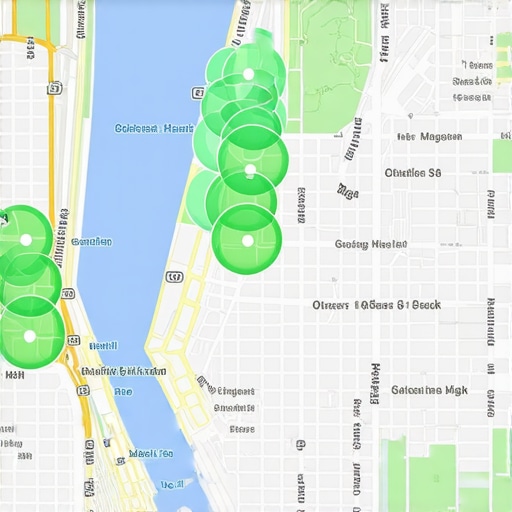
Stop Guessing and Start Seeing the Search Grid
The most effective tool in my belt isn’t a complex AI writer; it is a simple grid ranker that visualizes proximity. If you see a sea of green ‘1s’ and ‘2s’ around your office but a wall of red ’10s’ just three blocks away, you don’t have a ranking problem—you have a relevancy or proximity gap. I often teach clients how to leverage Google Posts to stay at the top of the 3-pack specifically to bridge those gaps. By mentioning the neighborhoods where you are currently ‘red’ in your posts, you can slowly expand your radius of influence. As you look at the specific data points that prove your map ranking is profitable, you will notice that the businesses that scale are the ones that treat their profile like a social media feed rather than a static yellow-page listing. Looking ahead, I suspect that within the next 24 months, Google will begin prioritizing listings that feature ‘Verified Video Tours’ directly from the owner, as AI-generated text reviews start to lose trust with the general public. Don’t wait for the update to hit. Try this today: Pick one high-margin service you haven’t mentioned lately and create a Google Post featuring a real, unedited photo from your smartphone. It is the fastest way to signal immediate relevance without spending a dime on ads.
What I Learned After Years of Fighting the Google Algorithm
Looking back at the thousands of businesses I’ve analyzed, a few truths stand out that you won’t find in a basic checklist. First, google maps optimization isn’t about gaming the system; it’s about proving to Google that you are the most reliable option in the room. I’ve realized that you must stop over-optimizing your business name and fix these 3 profile errors instead if you want to see real movement. Second, the algorithm values ‘humanity’ more than we think. A grainy, real-life photo of your team working will out-convert a high-res stock photo every single time. Lastly, your local business category choice is your foundation—if that’s wrong, nothing else matters.
The Tools That Actually Make My Map Pin Move
I don’t believe in using dozens of complicated software suites. Instead, I stick to a few high-impact resources that provide real clarity. I personally trust Local Falcon for visualizing exactly where my maps visibility drops off block by block. For citations, I rely on Whitespark because their research into ranking factors is the gold standard in our industry. Most importantly, I use my own smartphone to capture the ‘Weekly Freshness’ that keeps the algorithm interested. If you need a more hands-off approach, looking into a professional seo service local can save you dozens of hours of manual data entry and verification headaches.
Your Path to the Top 3 Starts Today
You now have the exact roadmap to step out of the search results graveyard and claim your spot at the top. Local SEO is a marathon, not a sprint, but the rewards—constant calls, booked appointments, and a growing business—are well worth the effort. Don’t let the technical jargon intimidate you. Start with one fix, then another, and soon you’ll find yourself ranking higher in the 3-pack consistently. Remember, the goal is to be the most helpful answer to a user’s local problem. Go out there and make your business the obvious choice for your community. Have you ever noticed your business pin disappearing when you search from just a few blocks away? Let me know your experience with the ‘zoom test’ in the comments below!