
I remember sitting at my kitchen table, staring at a screen that told me I was effectively invisible. I had just launched my business, got a shiny new LLC, and felt incredibly clever by renting a P.O. Box at the local post office to keep my home address private. I waited for the phone to ring. I waited for the emails. Nothing happened. It was a visceral failure that taught me a hard lesson: while I was technically open for business, to the world of search, I simply did not exist. I had fallen into a trap that many well-meaning entrepreneurs fall into, thinking privacy was more important than presence. Today, I am going to show you exactly why that mailbox is a lead-killing weight around your neck and how you can fix your visibility without turning your home into a public landmark.
Google Demands a Physical Footprint
When you are trying to rank higher in the Google Maps 3 pack today, you are essentially asking Google to vouch for your legitimacy. They want to be certain that if a customer drives to the address listed on your profile, there is a real human being there to help them. A P.O. Box is a digital ghost. It tells the algorithm you are hiding, and in the high-stakes world of google maps optimization, transparency is the only currency that actually buys you a spot at the top. I learned the hard way that the risk of using virtual offices for local rankings is far too high for most small businesses to survive. You think you are being smart, but you are really just being filtered out of the conversation.
Is a physical office really worth the extra overhead?
I know what you are thinking because I thought it too. Paying for a physical office space just to satisfy an algorithm feels like a massive reach, especially if you work on-site at your clients’ homes. You might be skeptical and wonder if mastering map pack seo strategies is even possible for a one-person show. The answer is a resounding yes, but the path to success never goes through a post office. According to the official Google Business Profile guidelines, P.O. Boxes or mailboxes at remote locations are strictly prohibited. If you try to bypass this, you aren’t just risking a low rank; you are inviting a permanent suspension that can take months to resolve. I want to help you avoid the frustration I felt when my first listing was nuked. Have you ever had your business profile rejected or suspended because of your address setup? It’s a gut-wrenching moment, but it is often the real reason your service area business is invisible to the neighbors who need you most. Let’s look at how to fix this the right way.
Stop Hiding and Start Appearing: The Real Way to Set Up Your Address
The first step isn’t just deleting your P.O. Box; it is understanding how to leverage your actual location without compromising your family’s privacy. I remember working with a local plumber, Dave, who spent two years and thousands of dollars on a fancy downtown mailbox that did absolutely nothing for his maps visibility. He was stuck on page four, invisible to everyone in his actual neighborhood. We sat down, deleted that fake address, and set him up as a Service Area Business (SAB) using his home address—which we kept hidden from the public. Within three weeks, the phone calls started coming in because he finally stopped being a digital ghost. This is the profile verification secret most local businesses get wrong: Google doesn’t hate home-based businesses; it hates deceptive ones.
The Switch from Ghost Office to Service Area Hero
When you transition to a Service Area Business, you tell Google, “I don’t have a storefront where people visit me, but I serve people in these specific zip codes.” This is crucial for google maps optimization. You must go into your profile settings, remove the physical street address of the mailbox, and instead define your service areas. Don’t be greedy here—if you try to cover a 100-mile radius, you’ll dilute your relevance. Stick to where you actually work. Often, why your service area settings are hiding you from customers is simply because you’ve claimed too much territory, making Google think you are a national chain rather than a local expert.

Don’t Guess at Your Categories
Google relies heavily on your business category to decide when to show your pin. If you are a “Residential Remodeler” but you only listed yourself as a “General Contractor,” you are missing out on high-intent searches. You need to how to optimize your business category for the local 3-pack by selecting one primary category that matches your biggest money-maker and then using secondary categories for the rest. I’ve seen businesses jump five spots in the rankings just by changing their primary category from something generic to something specific. This is a core pillar of effective map pack seo strategies.
Photos That Prove You Are Real
Google’s AI is incredibly smart—it scans your photos to see if they look like a real business or a stock photo graveyard. To rank higher in the Google Maps 3 pack today, you need original photos of your truck, your tools, and your team in action. I always tell my clients to follow the checklist for optimizing profile photos for more clicks, which includes taking photos at the job site. When you upload a photo taken in your service area, the GPS metadata (the hidden location data in the file) tells Google that you are exactly where you say you are. It’s a trust signal that no P.O. Box can ever replicate. If you’re struggling to get that initial green light, knowing how to verify your business without waiting for a postcard can save you weeks of downtime.
The Review Volume Myth That is Costing You Money
Most business owners I talk to are obsessed with the total number of reviews they have. They think if they just hit 100 or 500 reviews, they will magically stay at the top forever. I used to believe this too, until I saw a local roofer with 12 reviews outrank a franchise with over 200. The reality is that Google prioritizes ‘Review Velocity’—how consistently you are getting new feedback—over the raw total. If you got 50 reviews three years ago and nothing since, Google views your business as stagnant or potentially closed. This is why review velocity is more important than total count in the eyes of the current algorithm. You need a steady pulse of feedback to maintain your maps visibility.
Why does your neighbor with half the reviews still outrank you?
It’s frustrating to see a competitor with a mediocre rating sitting in the top spot while you’re buried. Often, the secret lies in the keywords customers use within those reviews. When a customer mentions a specific service like ’emergency pipe repair,’ it acts as a massive relevancy signal. According to the BrightLocal Local Search Ranking Factors study, the presence of keywords in reviews is one of the top factors that help you rank higher in the 3 pack. It’s not just about being liked; it’s about being relevant to the specific search query. If you aren’t encouraging customers to mention what you actually did for them, you are leaving money on the table. This is a nuance many affordable local seo services often overlook.
Stop Stuffing Your Business Name Before Google Notices
There is a massive ‘oops’ factor I see every week: keyword stuffing the business name. You might see a competitor named ‘Quick Plumbers – Best Drain Cleaning & Water Heaters’ and think you should do the same. It works… for about ten days. Then, the ‘Suggested Edit’ from a competitor or an automated sweep by Google hits you, and your listing is suspended. I’ve helped dozens of owners through the hidden penalty for keyword stuffing your business name, and the recovery process is a nightmare. Instead of gaming the name, focus on proven seo techniques like building local authority and ensuring your google listing needs specific trust signals that prove you are the real deal. Have you ever fallen into this trap of trying to outsmart the name field? Let me know in the comments. Let’s dig deeper into the actual signals that move the needle without risking a permanent ban.
Stop Blindly Checking Your Rank from Your Own Couch
The biggest mistake I see owners make after they finally break into the top results is assuming they’ve won the war. Google Maps is a living, breathing ecosystem. If you are standing still, you are actually moving backward because your competitors are likely hiring an seo service local to hunt you down. I remember a locksmith in Phoenix who dominated for three years then vanished overnight because he stopped feeding the machine. To avoid this, you need to understand why your map ranking dropped after the recent update and realize that maintenance is just as important as the initial setup.
The Specific Software That Tells Me When I Am Losing Money
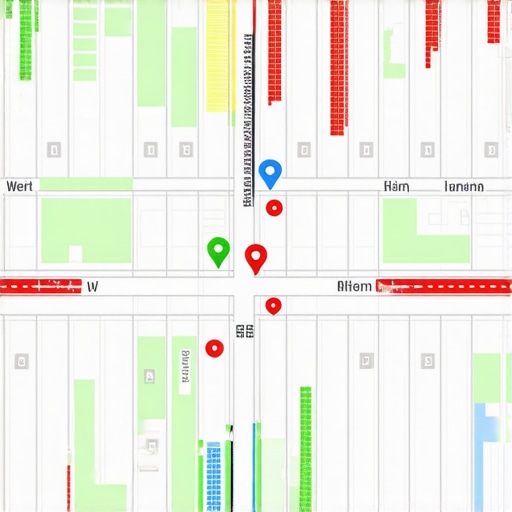
I don’t just ‘search’ for my business on my phone. That’s a waste of time because Google shows you what it thinks you want to see based on your own history. Instead, I use geo-grid tracking tools like Local Falcon or BrightLocal. These tools show you exactly where your maps visibility starts to fade as you move blocks away from your office. It’s the only way to get an honest look at the battlefield. When I see a red dot appearing in a neighborhood where I used to be green, I know exactly where to focus my next round of google maps optimization efforts. This is the best way to track your map rank across a whole city without the bias of your own device history.
How do I keep this momentum going for years?
The secret isn’t a one-time ‘hack’; it’s a content cadence. You need to treat your profile like a social media feed. I personally set a calendar reminder to post a new ‘Update’ every Tuesday. It doesn’t have to be a masterpiece—just a photo of a finished job and a quick sentence. This signals to the algorithm that the business is active. According to the 2023 Local Search Ranking Factors survey by Whitespark, consistent profile activity is a growing signal for long-term retention. If you’re wondering the truth about how often you need to post to your profile, the answer is at least once a week to maintain peak map pack seo health. You should also be active in the Q&A section—don’t wait for customers to ask questions. You can post your own frequently asked questions and answer them yourself. It’s a perfectly legal way to use the QA section to convert map searchers while stuffing in some extra relevancy signals.
Predicting the Future of Local Search
I’ve been watching the trends, and I’m convinced that voice search and AI-driven snapshots are going to make your site’s actual content even more vital for your map placement. Google is moving toward ‘Zero-Click’ searches, where they give the answer directly on the map. To stay ahead, you need to learn how to optimize for voice search on google maps now. This involves using natural, conversational language in your business description and posts. If you want to rank higher in 3 pack results in 2025, you have to stop thinking like a robot and start thinking like a helpful neighbor. If you’re feeling overwhelmed, don’t hesitate to contact us to see how we can automate these signals for you. My best advice? Go find three old questions in your Q&A section and give them a detailed, helpful update today. It’s a small move that tells Google you’re still the local authority.
What I Learned After My First Listing Was Nuked
If there is one thing I want you to take away from my journey, it is that Google rewards honesty over cleverness every single time. When I tried to use that P.O. Box, I wasn’t just ‘hiding’ my address; I was hiding my reputation. Today, google maps optimization is less about technical tricks and more about proving you are a neighbor who actually shows up. One lightbulb moment for me was realizing that my profile isn’t a static billboard—it’s a digital storefront that needs sweeping and stocking just like a real shop. If you’ve felt stuck, remember that how we recovered a map listing from a total ranking collapse always started with stripping away the ‘hacks’ and going back to the basics of user trust.
The Tools That Keep My Map Pin Moving
You don’t need a massive budget to win the neighborhood war, but you do need the right eyes on the problem. I personally rely on geo-grid trackers because they strip away the bias of my own search history. Knowing how we use software to spot visibility gaps on maps changed everything for my clients. I also swear by a simple smartphone; taking a fresh photo every week is worth more than a dozen low-quality backlinks. #IMAGE_PLACEHOLDER_E# If you are just starting, affordable local seo services to dominate the 3-pack are a great way to handle the heavy lifting while you focus on the actual work. Trust the data, not your gut feeling, when it comes to your maps visibility.
Stop Being the Best Kept Secret in Town
Your community needs the service you provide, but they can’t call you if they can’t find you. Transitioning from a ‘ghost’ office to a legitimate service area hero is the most empowering move you can make for your bottom line. It’s time to rank higher in the Google Maps 3 pack today by showing the algorithm—and your customers—that you are real, you are active, and you are ready to help. Don’t let a fear of privacy stop you from building a legacy. If you need a partner to help navigate these waters, feel free to contact us anytime. Have you ever had a moment where you realized your ‘smart’ SEO strategy was actually holding you back? Let me know in the comments below!