I remember sitting in my home office three years ago, staring at a Google search result that made absolutely no sense. I had just spent months polishing my business profile, collecting reviews like they were gold coins, and ensuring my address was pixel-perfect. Yet, there I was, buried on page two of the local results, while a competitor with a half-finished profile and two measly reviews was sitting pretty in the top spot. It felt like I was screaming into a void. I had fallen for the biggest myth in local search: the idea that your map listing lives in a vacuum. That night, after a lot of coffee and deep-diving into data, I realized my mistake. My website was a ghost town of generic text, and Google had no reason to trust that I actually did what my profile claimed. I was focusing so much on the ‘map’ that I forgot the ‘search’ part of the equation. Today, I want to show you how to stop making that same mistake and finally rank higher in the Google Maps 3-pack today by fixing what is happening under the hood of your own website.
Your Business Profile Can Not Do All the Heavy Lifting
When I first started offering a seo service local business owners could rely on, I treated the website and the Google Business Profile like two separate neighbors who never talked. I was wrong. Google uses your website as the ‘proof’ for your map listing. If your site is thin or lacks local context, your map pin will stay stuck in the mud. I remember one specific client who had a verified profile but was completely invisible. We found out it was because their website never actually mentioned the specific neighborhoods they served. Once we aligned the two, their visibility exploded. It turns out that high ratings alone will not move your map pin if the algorithm cannot find supporting evidence on your domain. You need to optimize your site for local search intent to bridge that gap. According to the experts at Moz, on-page signals from your website are one of the top three factors that determine whether you show up when someone nearby searches for your services. It is not just about keywords; it is about authority. Have you ever felt like you are doing everything right on your profile but still aren’t seeing the phone ring?
Does your site really change where your pin shows up?
I get this question a lot from skeptical shop owners. They think the website is just a digital business card. But the truth is, Google is constantly ‘crawling’ your pages to see if you are a relevant match for a searcher’s query. If someone searches for ’emergency pipe repair’ and your website only says ‘plumbing,’ you might lose out to a smaller guy who has a dedicated page for emergency repairs. Even technical things like website speed affects your Google Maps placement because Google wants to send users to a site that does not frustrate them. I made the early mistake of ignoring these technical bits, thinking they were for the ‘big guys,’ but in the local world, they are the difference between being found and being forgotten. We are going to look at how to structure your content so it acts like a magnet for that 3-pack.
Connect Your Content to Your Physical Neighborhood
If you want to rank higher in the Google Maps 3-pack today, you have to stop writing for a global audience and start writing for your neighbors. Think of your website as a digital GPS signal. If you only talk about ‘plumbing,’ Google isn’t sure where that signal should land. But when you talk about ‘leaky faucets in the historic district of West End,’ you are giving the algorithm a specific coordinate. I once worked with a local roofing contractor who was getting crushed by national franchises. We stopped trying to compete on the broad term ‘roofing’ and started building out pages that specifically addressed ‘hail damage repair near the Oakwood Sports Complex.’ By creating this geographical anchor, we gave Google the ‘proof’ it needed to move their map pin from page three to the number one spot in less than a month. You can how-to-use-hyperlocal-content-to-win-the-neighborhood-map-war by documenting exactly where your team is working every single day.
Stop Guessing Which Keywords Your Neighbors Actually Use
Generic keyword tools are great, but they often miss the slang and landmarks that locals use when they search. I learned this the hard way when I realized a client’s customers weren’t searching for ‘luxury condos’ but were actually typing in ‘apartments near the waterfront pier.’ Once you identify these hyperlocal terms, you must how-to-optimize-your-site-for-local-search-intent so your content aligns with the way real people talk at the grocery store. This is a core part of google maps optimization that most business owners overlook because they are too focused on the technical jargon of their industry.

Look for Local Mentions Instead of Giant Backlinks
In the world of map pack seo, a link from your local little league team’s website or a neighborhood blog is often worth more than a link from a massive national news site. Google sees these local mentions as ‘votes of confidence’ from your specific community. Why small local links drive better rank than guest posts is simple: it proves you are a physical part of the local economy. I remember a messy campaign where we spent thousands on high-authority guest posts with zero movement in the 3-pack. We pivoted, sponsored a local 5k run, and got a single link from the event page. Suddenly, the phone started ringing. It turns out that why-local-backlinks-are-different-than-standard-seo-links is because they provide geographical relevance that a generic blog simply cannot offer. You need to where-to-build-niche-citations-instead-of-directories to truly signal your location to the crawlers.
Why Perfect Data is No Longer the Only Goal
Years ago, you could win just by having your name, address, and phone number (NAP) identical everywhere. While consistency is still important, why-perfect-nap-data-is-no-longer-enough-to-move-your-map-pin is because the algorithm has evolved. It now looks for ‘engagement signals’ and ‘unstructured citations’ like mentions on social media or local news clips. If you want to mastering-map-pack-seo-strategies-to-boost-local-visibility, you have to look beyond the spreadsheet of directory listings and start building a real digital presence in your city. This is how you enhance-maps-visibility-with-proven-seo-techniques that actually last through algorithm updates.
How to Guide Customers to Mention Your Keywords
Reviews are the lifeblood of maps visibility, but the content of the review matters just as much as the star rating. When a customer writes, ‘They did a great job,’ it’s nice. When they write, ‘They fixed my water heater in Downtown Austin,’ it’s SEO gold. You can use the-review-psychology-that-gets-customers-writing-more detailed feedback by simply asking the right questions during the hand-off. I started telling my clients to ask, ‘What service did we perform for you today and which neighborhood are you in?’ This subtle nudge why-the-review-psychology-that-gets-customers-writing-more works so well is because it naturally injects keywords into your profile without looking forced. Remember, why-high-ratings-alone-will-not-move-your-map-pin if those ratings lack the context of what you actually do and where you do it. This is a primary pillar of affordable-local-seo-services-to-dominate-the-3-pack that yields high-impact results for a seo service local businesses can actually afford.
One of the biggest lies I was told when I started was that proximity is king. Everyone said, ‘If you aren’t within two blocks of the user, you won’t show up.’ That’s simply not true anymore. I’ve seen businesses rank five miles away while the shop next door is nowhere to be found. The reason? The proximity filter isn’t an iron curtain; it’s a flexible boundary that expands if your digital authority is high enough. If you have been told you can’t reach customers in the next town over, you are falling for the hidden proximity trap that keeps small businesses from scaling.
Why being the closest shop isn’t a guaranteed win
In my experience, Google will favor a ‘prominent’ business further away over a ‘weak’ one right next door. According to a study by BrightLocal, prominence—which is essentially your brand’s overall digital footprint—is often the tie-breaker. This is where google maps optimization moves from basic data entry into real strategy. 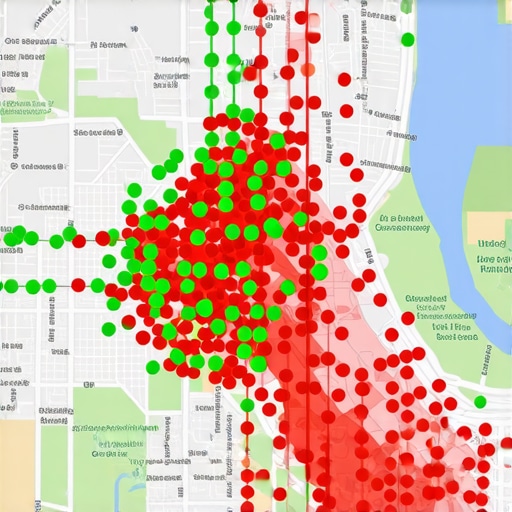
Beware of the sudden review surge
Here is a mistake I see all the time: a business owner gets excited about SEO, sends a mass email to hundreds of past clients, and gets dozens of reviews in 24 hours. To Google’s spam filters, this looks like a red flare. I’ve seen entire profiles get ‘ghosted’ because their review velocity spiked unnaturally. This is why review velocity is more important than total count in the long run. If you don’t pace yourself, why asking every customer for a review might hurt you becomes a very painful reality. Another common ‘oops’ moment I see involves the risk of using virtual offices for local rankings. Google is smarter than we think, and they can spot a shared coworking desk from a mile away.
Is your tracking tool actually lying to you?
Most people check their rank from their office computer and think they know where they stand. But local search is incredibly granular. You might be #1 in your lobby and #7 three blocks away at the coffee shop. This is why your local keyword tracking is probably lying to you if it only gives you a single average number. To truly see the gaps, you need a grid-based view of your city. Have you ever fallen into this trap? Let me know in the comments. I’ve spent years mastering map pack seo strategies to boost local visibility, and it almost always comes down to these subtle nuances. You have to enhance maps visibility with proven seo techniques that respect how the algorithm actually functions in the real world.
Stop treating your map listing like a set-it-and-forget-it billboard
I’ve seen dozens of business owners climb to the top of the 3-pack only to disappear three months later because they stopped doing the very things that got them there. You can’t just ‘finish’ SEO. It’s more like keeping a lawn—if you stop watering, the brown spots appear fast. I personally swear by a specific grid-tracking tool because it transforms a single ranking number into a visual heat map. It showed me that one of my clients was invisible to people standing just across the highway. By identifying that gap, we could use software to spot visibility gaps on maps and adjust our strategy. This isn’t just about pride; it’s about making sure your map rankings are making money by reaching people in the right zip codes. If you aren’t looking at your ranking on a granular, block-by-block level, you are basically flying a plane with a broken altimeter.
How do I keep my map ranking high month after month?
It comes down to a consistent, manageable cadence rather than a once-a-year overhaul. I follow the weekly routine for dominating your neighborhood 3-pack, which includes a five-minute check on competitor edits. This is where most people lose ground. According to Joy Hawkins at Sterling Sky, monitoring ‘suggested edits’ on your own profile—and reporting keyword-stuffed names on others—is one of the most effective ways to maintain your position. If a competitor is cheating by adding city names to their business title when it’s not their legal name, Google wants to know. Beyond that simple hygiene, even one weekly profile update keeps your local leads from dropping by signaling to the algorithm that your business is active, responsive, and open for business. I recommend setting a recurring calendar invite for Tuesday mornings just to post one new photo or a quick update to keep the momentum going.
The software that actually shows where you are winning
I don’t just guess where my clients rank; I use tools that simulate a user’s physical location at different GPS coordinates. This is the only way to see the proximity filter in action and understand why a customer two miles away sees a different 3-pack than someone at your front door. 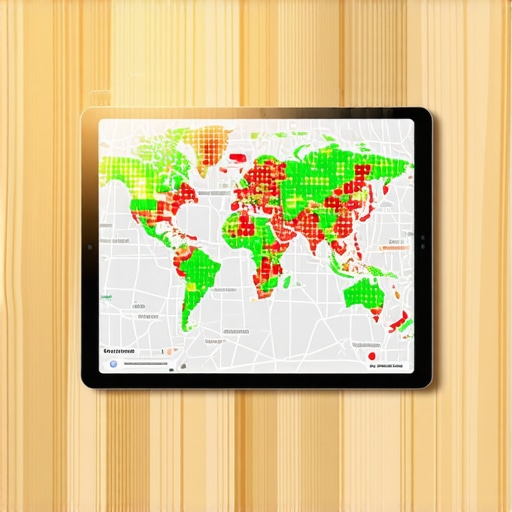 Looking ahead, I predict that ‘visual authority’ is going to be the next big battleground. Google is getting incredibly good at reading what is actually inside your photos using AI. I’ve started experimenting with Google Lens to see how it identifies products in storefront photos. It’s clear that the ‘hidden’ data within your images is becoming just as important as your business name. If you say you’re a high-end restaurant but your photos show a cluttered kitchen, the AI will catch the discrepancy. Start planning for 7 google business profile tips for 2026 to beat local rivals by investing in high-resolution, staged imagery now. This isn’t just fluff; it’s the future of how Google determines who deserves the top spot. Try this today: Open your business profile and check your ‘Secondary Categories.’ Most people only set one. If you want to use secondary categories to appear in more searches, you might find a whole new audience you didn’t even know existed. It’s an advanced move that takes three minutes but can widen your reach significantly.
I remember sitting in my home office three years ago, staring at a Google search result that made absolutely no sense. I had just spent months polishing my business profile, collecting reviews like they were gold coins, and ensuring my address was pixel-perfect. Yet, there I was, buried on page two of the local results, while a competitor with a half-finished profile and two measly reviews was sitting pretty in the top spot. It felt like I was screaming into a void. I had fallen for the biggest myth in local search: the idea that your map listing lives in a vacuum. That night, after a lot of coffee and deep-diving into data, I realized my mistake. My website was a ghost town of generic text, and Google had no reason to trust that I actually did what my profile claimed. I was focusing so much on the ‘map’ that I forgot the ‘search’ part of the equation. Today, I want to show you how to stop making that same mistake and finally rank higher in the Google Maps 3-pack today by fixing what is happening under the hood of your own website.
Your Business Profile Can Not Do All the Heavy Lifting
When I first started offering a seo service local business owners could rely on, I treated the website and the Google Business Profile like two separate neighbors who never talked. I was wrong. Google uses your website as the ‘proof’ for your map listing. If your site is thin or lacks local context, your map pin will stay stuck in the mud. I remember one specific client who had a verified profile but was completely invisible. We found out it was because their website never actually mentioned the specific neighborhoods they served. Once we aligned the two, their visibility exploded. It turns out that high ratings alone will not move your map pin if the algorithm cannot find supporting evidence on your domain. You need to optimize your site for local search intent to bridge that gap. According to the experts at Moz, on-page signals from your website are one of the top three factors that determine whether you show up when someone nearby searches for your services. It is not just about keywords; it is about authority. Have you ever felt like you are doing everything right on your profile but still aren’t seeing the phone ring?
Does your site really change where your pin shows up?
I get this question a lot from skeptical shop owners. They think the website is just a digital business card. But the truth is, Google is constantly ‘crawling’ your pages to see if you are a relevant match for a searcher’s query. If someone searches for ’emergency pipe repair’ and your website only says ‘plumbing,’ you might lose out to a smaller guy who has a dedicated page for emergency repairs. Even technical things like website speed affects your Google Maps placement because Google wants to send users to a site that does not frustrate them. I made the early mistake of ignoring these technical bits, thinking they were for the ‘big guys,’ but in the local world, they are the difference between being found and being forgotten. We are going to look at how to structure your content so it acts like a magnet for that 3-pack.
Connect Your Content to Your Physical Neighborhood
If you want to rank higher in the Google Maps 3-pack today, you have to stop writing for a global audience and start writing for your neighbors. Think of your website as a digital GPS signal. If you only talk about ‘plumbing,’ Google isn’t sure where that signal should land. But when you talk about ‘leaky faucets in the historic district of West End,’ you are giving the algorithm a specific coordinate. I once worked with a local roofing contractor who was getting crushed by national franchises. We stopped trying to compete on the broad term ‘roofing’ and started building out pages that specifically addressed ‘hail damage repair near the Oakwood Sports Complex.’ By creating this geographical anchor, we gave Google the ‘proof’ it needed to move their map pin from page three to the number one spot in less than a month. You can learn how to use hyperlocal content to win the neighborhood map war by documenting exactly where your team is working every single day.
Stop Guessing Which Keywords Your Neighbors Actually Use
Generic keyword tools are great, but they often miss the slang and landmarks that locals use when they search. I learned this the hard way when I realized a client’s customers weren’t searching for ‘luxury condos’ but were actually typing in ‘apartments near the waterfront pier.’ Once you identify these hyperlocal terms, you must optimize your site for local search intent so your content aligns with the way real people talk at the grocery store. This is a core part of google maps optimization that most business owners overlook because they are too focused on the technical jargon of their industry.
Look for Local Mentions Instead of Giant Backlinks
In the world of map pack seo, a link from your local little league team’s website or a neighborhood blog is often worth more than a link from a massive national news site. Google sees these local mentions as ‘votes of confidence’ from your specific community. Why small local links drive better rank than guest posts is simple: it proves you are a physical part of the local economy. I remember a messy campaign where we spent thousands on high-authority guest posts with zero movement in the 3-pack. We pivoted, sponsored a local 5k run, and got a single link from the event page. Suddenly, the phone started ringing. It turns out that why local backlinks are different than standard SEO links is because they provide geographical relevance that a generic blog simply cannot offer. You need to know where to build niche citations instead of directories to truly signal your location to the crawlers.
Why Perfect Data is No Longer the Only Goal
Years ago, you could win just by having your name, address, and phone number (NAP) identical everywhere. While consistency is still important, why perfect NAP data is no longer enough to move your map pin is because the algorithm has evolved. It now looks for ‘engagement signals’ and ‘unstructured citations’ like mentions on social media or local news clips. If you want to begin mastering map pack SEO strategies to boost local visibility, you have to look beyond the spreadsheet of directory listings and start building a real digital presence in your city. This is how you enhance maps visibility with proven SEO techniques that actually last through algorithm updates.
How to Guide Customers to Mention Your Keywords
Reviews are the lifeblood of maps visibility, but the content of the review matters just as much as the star rating. When a customer writes, ‘They did a great job,’ it’s nice. When they write, ‘They fixed my water heater in Downtown Austin,’ it’s SEO gold. You can use the review psychology that gets customers writing more detailed feedback by simply asking the right questions during the hand-off. I started telling my clients to ask, ‘What service did we perform for you today and which neighborhood are you in?’ This subtle nudge works because it naturally injects keywords into your profile without looking forced. Remember, high ratings alone will not move your map pin if those ratings lack the context of what you actually do and where you do it. This is a primary pillar of affordable local SEO services to dominate the 3-pack that yields high-impact results for a seo service local businesses can actually afford.
One of the biggest lies I was told when I started was that proximity is king. Everyone said, ‘If you aren’t within two blocks of the user, you won’t show up.’ That’s simply not true anymore. I’ve seen businesses rank five miles away while the shop next door is nowhere to be found. The reason? The proximity filter isn’t an iron curtain; it’s a flexible boundary that expands if your digital authority is high enough. If you have been told you can’t reach customers in the next town over, you are falling for the hidden proximity trap that keeps small businesses from scaling.
Why being the closest shop isn’t a guaranteed win
In my experience, Google will favor a ‘prominent’ business further away over a ‘weak’ one right next door. According to a study by BrightLocal, prominence—which is essentially your brand’s overall digital footprint—is often the tie-breaker. This is where google maps optimization moves from basic data entry into real strategy.
Beware of the sudden review surge
Here is a mistake I see all the time: a business owner gets excited about SEO, sends a mass email to hundreds of past clients, and gets dozens of reviews in 24 hours. To Google’s spam filters, this looks like a red flare. I’ve seen entire profiles get ‘ghosted’ because their review velocity spiked unnaturally. This is why review velocity is more important than total count in the long run. If you don’t pace yourself, why asking every customer for a review might hurt you becomes a very painful reality. Another common ‘oops’ moment I see involves the risk of using virtual offices for local rankings. Google is smarter than we think, and they can spot a shared coworking desk from a mile away.
Is your tracking tool actually lying to you?
Most people check their rank from their office computer and think they know where they stand. But local search is incredibly granular. You might be #1 in your lobby and #7 three blocks away at the coffee shop. This is why your local keyword tracking is probably lying to you if it only gives you a single average number. To truly see the gaps, you need a grid-based view of your city. Have you ever fallen into this trap? Let me know in the comments. I’ve spent years mastering map pack SEO strategies to boost local visibility, and it almost always comes down to these subtle nuances. You have to enhance maps visibility with proven SEO techniques that respect how the algorithm actually functions in the real world.
Stop treating your map listing like a set-it-and-forget-it billboard
I’ve seen dozens of business owners climb to the top of the 3-pack only to disappear three months later because they stopped doing the very things that got them there. You can’t just ‘finish’ SEO. It’s more like keeping a lawn—if you stop watering, the brown spots appear fast. I personally swear by a specific grid-tracking tool because it transforms a single ranking number into a visual heat map. It showed me that one of my clients was invisible to people standing just across the highway. By identifying that gap, we could use software to spot visibility gaps on maps and adjust our strategy. This isn’t just about pride; it’s about making sure your map rankings are making money by reaching people in the right zip codes. If you aren’t looking at your ranking on a granular, block-by-block level, you are basically flying a plane with a broken altimeter.
How do I keep my map ranking high month after month?
It comes down to a consistent, manageable cadence rather than a once-a-year overhaul. I follow the weekly routine for dominating your neighborhood 3-pack, which includes a five-minute check on competitor edits. This is where most people lose ground. Monitoring ‘suggested edits’ on your own profile—and reporting keyword-stuffed names on others—is one of the most effective ways to maintain your position. If a competitor is cheating by adding city names to their business title when it’s not their legal name, Google wants to know. Beyond that simple hygiene, even one weekly profile update keeps your local leads from dropping by signaling to the algorithm that your business is active, responsive, and open for business. I recommend setting a recurring calendar invite for Tuesday mornings just to post one new photo or a quick update to keep the momentum going.
The software that actually shows where you are winning
I don’t just guess where my clients rank; I use tools that simulate a user’s physical location at different GPS coordinates. This is the only way to see the proximity filter in action and understand why a customer two miles away sees a different 3-pack than someone at your front door. Looking ahead, I predict that ‘visual authority’ is going to be the next big battleground. Google is getting incredibly good at reading what is actually inside your photos using AI. I’ve started experimenting with Google Lens to see how it identifies products in storefront photos. It’s clear that the ‘hidden’ data within your images is becoming just as important as your business name. If you say you’re a high-end restaurant but your photos show a cluttered kitchen, the AI will catch the discrepancy. Start planning for 7 google business profile tips for 2026 to beat local rivals by investing in high-resolution, staged imagery now. This isn’t just fluff; it’s the future of how Google determines who deserves the top spot. Try this today: Open your business profile and check your ‘Secondary Categories.’ Most people only set one. If you want to use secondary categories to appear in more searches, you might find a whole new audience you didn’t even know existed. It’s an advanced move that takes three minutes but can widen your reach significantly.
The Uncomfortable Truth Behind My Failed Local Campaigns
I used to think that sheer volume was the only thing that mattered. I spent dozens of hours building citations on obscure directories that no one would ever read, only to realize that map pack seo is more about quality and relevance than a long list of entries. The real breakthrough came when I understood the quiet signals that actually push you into the 3-pack, such as how often users interact with your directions or call your business directly. I also discovered that the unstructured citations your business is missing—like a casual mention on a local news blog or a neighborhood social media group—often carry more weight than a hundred generic directory listings. Don’t get stuck in the cycle of ‘busy work’; focus on the signals that actually prove you are a pillar of your community.
The Reliable Sources That Keep My Strategy Sharp
If you want to go deeper than the surface level, I highly recommend following the case studies at BrightLocal or Sterling Sky. They test the algorithm in ways that individual business owners simply cannot. I personally rely on a few specific checklists to keep my workflow tight, especially when optimizing profile photos for more clicks, because your visual brand is often your first digital handshake with a customer. Always be skeptical of your dashboard data; the data your map reporting tool is likely ignoring can often lead you to focus on the wrong metrics while missing the real growth opportunities. Understanding why most local map embeds fail to move the needle has also been a game-changer for my own site structure.
It’s Time to Reclaim Your Neighborhood
You now have the tools, the strategy, and the mindset to win. Local SEO isn’t just about technical toggles; it’s about claiming your space in your community’s digital square. By aligning your website content with your real-world service area and engaging with your customers authentically, you will finally rank higher in the Google Maps 3-pack today. Your neighbors are searching for your expertise—make sure you’re the first one they see. Have you ever noticed your ranking drop suddenly after a flurry of reviews, or does your local reach feel capped at a certain distance? Let me know your story in the comments below.