
I sat there, staring at a phone that refused to ring, wondering if I’d accidentally offended the Google gods. My business profile was verified. I had the photos, the hours were set, and I even had a few decent reviews. Yet, my traffic wasn’t just dipping; it was falling off a cliff. I used to think that the little ‘Verified’ badge was a golden ticket to the top of the map pack, but I was dead wrong.
Stop Thinking Verification is the Finish Line
It’s a gut punch when you realize that ‘verified’ only means Google knows you exist, not that they actually trust you enough to show you to customers. I spent weeks tweaking my description and obsessing over my NAP data, only to realize I was making one of those 5 simple profile errors that kill phone calls. Today, I’m going to pull back the curtain on why your visibility is tanking and how we can actually rank higher in the Google Maps 3-pack by focusing on the signals that actually move the needle.
Does Google even care about my small business anymore?
I get it. You’re skeptical. You’ve probably heard that only the big chains with massive budgets can win. But here’s a secret I learned the hard way: I once tried to outspend a franchise on ads, and it was a total disaster. The truth is, small shops often outperform national chains because they can tap into hyper-local signals that corporate offices simply can’t touch. My biggest mistake early on was thinking that once I was verified, the work was done. I ignored the quiet signals that push you into the 3-pack, like engagement and fresh content. According to industry research from Sterling Sky, ranking shifts are often caused by Google testing local relevance, meaning your listing must be dynamic, not static. Have you noticed your impressions dropping even though your dashboard says everything is fine? It’s a frustrating spot to be in, but we’re going to fix it. We’ll look at why your local keyword tracking data might be lying to you and what metrics actually equate to money in the bank.
Feed the Algorithm What it Craves Every Single Week
Think of your Google Business Profile like a high-maintenance houseplant. If you don’t water it, it wilts. I remember working with a local plumber who was crushing it, then he stopped posting updates for three weeks because he got busy. His phone stopped ringing almost overnight. That’s because of the one weekly profile update that keeps your local leads from dropping. Google wants to see that you are ‘open for business’ in the most literal sense. This means uploading a photo of a completed job or a quick update about a holiday special. It’s not about being a social media influencer; it’s about signaling activity.
Why Speed Beats Stars When Replying to Reviews
Most people think a 4.8 rating is the finish line. But I’ve seen businesses with 4.2 ratings outrank the ‘perfect’ shops because they reply within minutes. We’ve found that why replying to reviews faster improves your visibility is tied to engagement metrics that Google uses to gauge your reliability. When you do reply, don’t just say ‘thanks.’ Use the review reply secret that actually wins more map clicks by mentioning specific services or neighborhoods in your response without sounding like a robot. #IMAGE_PLACE_HOLDER_B#
Stop Chasing Giant Backlinks and Go Hyper-Local Instead
I used to spend thousands trying to get mentioned on big national news sites, thinking it would help my local rank. It was a waste of money. I finally realized that why small local backlinks drive better map rankings than industry guest posts is because relevancy is regional. A link from the local high school football booster club carries more weight for your 3-pack position than a generic guest post from a site based in another country. This is the core of mastering map pack seo strategies to boost local visibility.
Toggle These Three Settings Before Your Competitors Do
If you haven’t looked at your ‘Attributes’ lately, you’re leaving money on the table. Google is constantly adding new ones—like ‘Identifies as veteran-led’ or ‘Wheelchair accessible’—that change how you appear in specific searches. In my experience, there are the only three attributes that actually change your rank depending on your specific niche. If you aren’t using them, you’re invisible to customers who filter their searches. We are moving away from simple distance-based results because why proximity is not the only factor in local ranking anymore; it’s about who provides the most complete and active profile to the user. To truly unlock your business potential, you have to treat your dashboard as a living document.
I used to believe that local SEO was a numbers game. Get 50 more reviews than the guy down the street, and the algorithm would naturally crown me king of the 3-pack. But here is a hard truth I learned after watching a client with a perfect 5.0 rating lose their spot to a ‘messy’ business with a 4.3: Google isn’t looking for perfection; it’s looking for authenticity. Most people fall into the trap of review gating—only asking for feedback when they know the customer is happy. It sounds smart, but why asking every customer for a review is actually hurting your map rank comes down to ‘review velocity’ and patterns. If your reviews only come in bursts of five stars every Tuesday, the algorithm smells a rat. This is the review mistake that makes your 5-star rating invisible to local searchers because Google begins to de-prioritize your listing in favor of businesses with a more natural, albeit slightly ‘bruised,’ feedback loop.
The NAP Consistency Myth That’s Wasting Your Time
If you’re still spending hours making sure every ‘St.’ is changed to ‘Street’ across the internet, you’re living in 2014. I’ve seen countless business owners stress over minor directory discrepancies while their actual map visibility stays stagnant. The reality is that why perfect nap data is no longer enough to move your map pin is due to Google’s sophisticated entity matching. They know who you are. Instead of chasing perfection on directories no one visits, you should be hunting for the unstructured citations your business is missing. Think local news mentions, neighborhood blog features, or even a shoutout from a local podcast. These carry ten times the weight of a ‘Yellow Pages’ listing because they prove you are a real participant in the local economy, not just a data entry project.
#IMAGE_PLACE_HOLDER_C#
Why do competitors with zero reviews sometimes rank higher?
It’s the question that keeps business owners up at night. You have 100 reviews; they have zero, yet they are sitting at the top. This happens because Google prioritizes ‘relevance’ and ‘proximity’ over ‘reputation’ in specific scenarios. According to research from Joy Hawkins at Sterling Sky, if a competitor’s name contains a high-value keyword or if their physical location is a literal block closer to the searcher, they can bypass your five-star reputation entirely. This is exactly why competitors with zero reviews sometimes rank higher. To fight this, you can’t just buy more reviews; you have to out-signal them in other areas, such as increasing your local relevance through hyper-local content and localized backlinks. Have you ever fallen into this trap where a ‘worse’ business is beating you? Let me know in the comments. We need to stop looking at the dashboard and start looking at how we’re actually ‘living’ in the digital neighborhood. To truly unlock your business potential, you have to move past these beginner myths and start playing the game the way the algorithm actually sees it today.
Stop flying blind with your reporting data
Scaling isn’t about doing more; it’s about doing the right things repeatedly without burning out. I’ve wasted hundreds of hours on manual checks before I realized how we use local seo software to spot the visibility gaps your competitors miss. Specifically, I rely on heat-map tracking. Why? Because a single ‘average’ rank is a lie. You might be #1 at your front door and #10 three blocks away. This is why your local rank tracker is giving you a false sense of security if it’s only providing a static zip-code level report. I use tools like GMB Everywhere or Local Falcon to see exactly where the ‘visibility wall’ is so I can target my next local backlink strategy to push those boundaries. Identifying these dead zones is the first step to unlock your business potential. 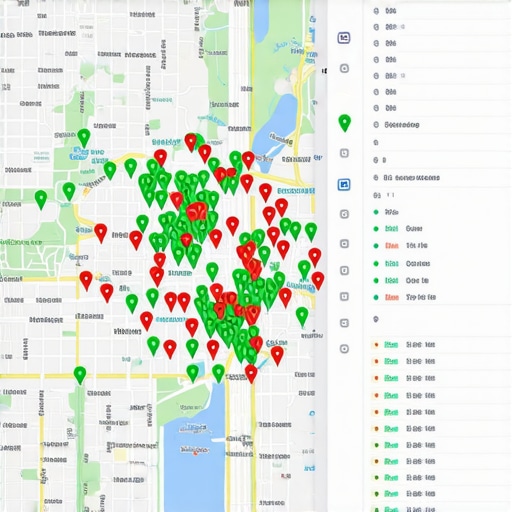
How can I maintain my map visibility as the neighborhood gets more crowded?
The key is consistency, not intensity. You don’t need a massive marathon session once a month; you need ten minutes every Tuesday. I’ve seen rankings tank because an owner ignored the map reporting data you’re ignoring that’s killing your roi, specifically ‘Discovery’ versus ‘Branded’ searches. If your discovery numbers drop, your local relevance is fading. You fight this by executing the weekly routine for dominating your neighborhood 3-pack. This involves checking for ‘suggested edits’ that Google might have auto-applied to your profile. As Joy Hawkins from Sterling Sky often notes, Google’s automated ‘AI’ edits can sometimes revert your correct data to something outdated found on an old directory, causing immediate ranking drops and leading to the 4 costly errors keeping your shop out of the map pack.
Prepare for the 2026 spatial search revolution
Looking ahead, the way we search is shifting from flat lists to ‘spatial’ experiences. We are already preparing your map listing for the 2026 spatial search shift by prioritizing high-resolution, 360-degree photos and entity-based content. If you aren’t thinking about how to optimize for voice search on google maps now, you’ll be invisible when AI assistants become the primary way people ‘browse’ local services. It’s no longer just about keywords; it’s about becoming the definitive answer for a specific location. To stay ahead, implement 7 google business profile tips for 2026 to beat local rivals starting today. My best advice for right now? Open your dashboard and look at your attributes. If you haven’t toggled the latest ones Google added this month, you are already falling behind. Contact us if you need a hand spotting those hidden gaps before your competitors find them.
What I Wish I Knew Before My First Profile Suspension
After years of managing local listings, I’ve realized that the algorithm rewards the ‘alive’ business, not just the one with the most reviews. I used to obsess over keeping a perfect 5.0 rating, only to find out why asking every customer for a review might hurt you if it triggers spam filters or creates unnatural patterns. Here are the shifts that actually changed my results:
- Engagement is the new backlink: Google notices when people click your ‘Call’ button or ask for directions. These real-world interactions carry more weight than static data.
- Hyper-local signals beat generic ones: A single mention on a local neighborhood blog is worth more than a dozen generic directory listings. This is how how small shops outperform national chains in local results by proving they are an actual part of the community.
- Attributes are your secret edge: Most owners ignore them, but toggling the only three attributes that actually change your rank can make you visible to high-intent searchers using specific filters.
The Only Tools That Actually Help Me Win on Maps
I don’t believe in bloated software suites. To maintain local dominance, I rely on a lean toolkit that provides high-value data. First, I use GMB Everywhere to audit competitor categories; it is essential for anyone serious about google maps optimization-unlock your business potential. Second, I recommend Local Falcon for heat-map tracking. It will show you why your local rank tracker is giving you a false sense of security by proving you aren’t actually ranking just two blocks away from your store. Finally, I follow the Sterling Sky blog religiously because their real-world testing is the only way to stay ahead of algorithm shifts.
Your Map Pin Represents More Than Just a Coordinate
Building a strong local presence is about being the most helpful, most active, and most authentic option in your neighborhood. If you are feeling overwhelmed by the technical side, start with affordable local seo services to dominate the 3-pack to get the foundation right. Your business deserves to be the first thing customers see when they need help. Focus on small, consistent updates rather than massive one-time overhauls to keep your map pack seo strategy healthy and growing. Have you ever noticed a competitor ranking above you even though they have way fewer reviews? Let me know your experience in the comments below.