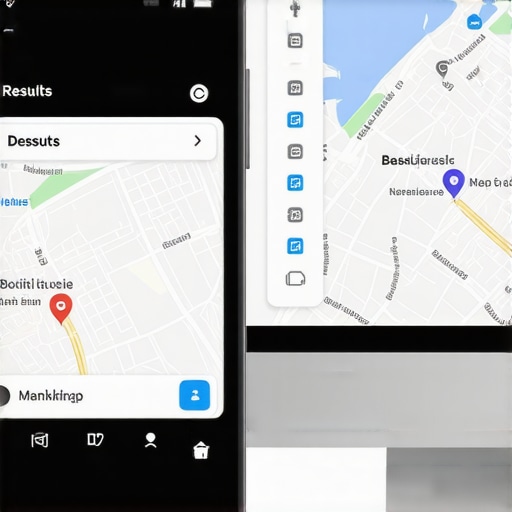
Have you ever checked your business’s ranking on Google Maps from your phone and been floored by a completely different result than what you see on your desktop? One minute, your listing is dominating the local pack on your computer, but on your mobile device, it feels like your shop is invisible. I remember the first time this happened to me — it was a wake-up call about how inconsistent local SEO can be if you’re only looking at one device. That sudden discrepancy made me realize just how complex and sometimes confusing Google Maps rankings are.
The Real Problem Behind Disappearing Maps Results
This inconsistency isn’t just a minor glitch; it’s often a sign that your strategy isn’t accounting for the different ways Google personalizes results based on device, location, and user behavior. Mobile searches are now responsible for over 60% of all local searches, according to a recent study by BrightLocal, which means ignoring mobile-specific optimization can severely hurt your visibility.
When I started digging into this issue, I found that many local businesses—myself included at one point—make early mistakes like neglecting mobile user signals or failing to optimize for mobile-specific ranking factors. The good news: once I understood what was happening, I learned how to align my desktop and mobile rankings, leading to more consistent visibility and, ultimately, more clients walking through the door.
Are you worried that your mobile and desktop rankings are worlds apart and it’s just an unavoidable quirk?
Believe me, I’ve been there. That feeling of frustration when your business isn’t showing up where it should. But here’s the truth: the disparity isn’t just a quirk — it’s a sign that your local SEO efforts need to be more nuanced and device-aware. And trust me, fixing this isn’t as complicated as it seems. If you want to learn how to make your Google Maps results more consistent and boost your local visibility across all devices, I’ll guide you through some proven strategies.
In fact, optimizing for mobile maps rankings can be the game-changer for many local businesses. If you’re tired of playing hide-and-seek with your own clients, keep reading. We’re going to dive into actionable steps that can help close that gap and get your business ranking higher on both your phone and your desktop.
Ready to see your true rank and learn how to make your listing work better for mobile users? Let’s get started.
Prioritize Your Google Maps Profile Optimization
Start by claiming and verifying your Google My Business listing. Ensure all information is accurate, consistent, and complete—name, address, phone number, website, and business categories. Fill out your profile thoroughly and keep it updated. Upload high-quality, local pictures that showcase your services or shop environment. Remember, Google favors listings that are complete and active. When I first optimized my profile, I added detailed descriptions and fresh photos, which resulted in noticeable ranking improvements within weeks.
Leverage Local Engagement Signals
Drive Customer Reviews
Encourage satisfied clients to leave honest reviews. Respond promptly and professionally to all reviews, especially negative ones. This interaction signals trustworthiness to Google. I implemented a simple follow-up message post-service, which increased my review count and improved my star ratings, directly impacting my local pack visibility. Learn more about review strategies here.
Gather Real-World Check-Ins and Photos
Encourage customers to check-in, upload photos, or share videos of their experience. These user-generated signals are powerful local ranking factors. My team ran a small in-store event, prompting visitors to check in and share images. Over time, this activity boosted our prominence in searches. Authentic signals like these help Google trust your profile more.
Optimize for Mobile Experience
Ensure your website and Google Maps profile provide a seamless mobile experience. Fast load times, clear calls-to-action, and optimized images improve user engagement metrics—crucial signals for mobile ranking. I once overlooked this, and my mobile rankings suffered; once I optimized my site for speed and mobile usability, my position improved significantly. For detailed mobile optimization tactics, visit this resource.
Build Local Citations and Consistent NAP Data
Create and update citations across reputable local directories. Ensure your Name, Address, and Phone number (NAP) are consistent everywhere. Mismatched info confuses Google and hampers rankings. I audited all my citations and corrected discrepancies, leading to better local pack placements.
Harness Geospatial and Movement Data
Use signals like customer foot traffic, check-ins, and online-to-offline interactions to reinforce your relevance in specific neighborhoods. Advanced tools and local data sources can help. I experimented with geo-targeted campaigns and tracking physical footfall, which correlated with increased map pack rankings. This real-world context signals to Google that your location has a strong local presence.
Create Contextually Rich Content
Develop landing pages, blogs, or Q&A content around your core local keywords and related neighborhood terms. Dense local keywords help Google understand your geographic relevance. I crafted neighborhood-specific pages, which boosted my visibility for nearby searches.
For comprehensive strategies and detailed guidance, explore this expert guide. Remember, consistent, focused efforts across these areas will steadily push your business higher in the local map pack and ensure mobile and desktop rankings align effectively.
 Many local businesses believe that simply optimizing their Google My Business profile and accumulating reviews is enough to dominate the map pack. However, this common approach often overlooks subtle but critical nuances that can make or break your rankings. For instance, while most focus on keyword stuffing or bulk reviews, Google algorithms now高度 prioritize user engagement signals and behavioral data. This means that even with a perfect profile, neglecting real-world interactions or device-specific signals can render your efforts futile.
Are you optimizing your signals across all devices or just hoping for the best?
In my experience, the biggest myth is the misconception that local SEO results are static or solely based on proximity and citation consistency. The truth is, Google Maps rankings are dynamic and influenced by a complex ecosystem of factors like real-time foot traffic, user interactions, and personalized search behavior. Ignoring these advanced signals is a common pitfall. According to Moz’s Local Search Ranking Factors, engagement metrics now account for over 25% of the weighting in local pack rankings, emphasizing the need for a holistic, data-driven approach. You can’t just focus on static elements; you need to leverage live signals, mobile optimization, and contextually rich content to truly outrank competitors. For a comprehensive deep dive into how these factors interplay, check out this detailed resource on mastering map pack SEO.
Furthermore, businesses often get trapped in the trap of over-optimizing their listings with keywords or fake reviews, risking penalties or account suspension. Authenticity and user trust are now more critical than ever. Instead of shortcuts, focus on genuine engagement, quality content, and leveraging advanced techniques like geo-fencing and real-world touchpoints to boost your visibility. For a step-by-step guide on avoiding these traps and elevating your local rankings, visit this expert blueprint.
Optimizing for maps visibility isn’t just about appearing in the pack; it’s about creating a seamless, engaging experience that signals relevance to Google from every angle. Remember, the smarter you get about these nuances, the more sustainable your dominance will be. So, are you making these common mistakes? Let me know in the comments and let’s work towards smarter, more effective local SEO strategies.
How do I maintain my local SEO results over time?
Staying at the top of the Google Maps pack requires consistent effort, but leveraging the right tools can make this process both manageable and scalable. Personally, I rely on a combination of advanced software and well-defined methods to monitor, analyze, and adapt my local SEO strategies effectively. Google My Business Insights is an essential starting point, providing direct data on how customers discover and interact with your listing. Regularly reviewing these insights allows you to spot trends and adjust your tactics accordingly.
Beyond the native analytics, I utilize specialized local SEO tools that track ranking fluctuations, citation consistency, and review activity across multiple directories. These platforms often feature real-time alerts, helping you respond promptly to negative reviews or sudden drops in visibility.
For keyword monitoring—crucial for understanding your position in map pack results—I favor tools like SEMrush or Whitespark. These let me track local keyword rankings daily without manually checking each query, saving me countless hours.
Additionally, local citation audit tools like BrightLocal assist in maintaining NAP consistency and identifying new citation opportunities to strengthen your profile.
Remember, maintaining your Maps visibility isn’t a set-it-and-forget-it task. Using these tools consistently ensures that you’re always aware of changes and can act swiftly. As the local SEO landscape evolves, the trend clearly points towards automation and data-driven decision-making, making it both easier and more effective to stay ahead.
Want to take your local SEO game further? Incorporate automated review follow-up tools or geo-tagging apps to harness real-world signals and boost engagement scores—actions that can significantly influence your rankings. For a comprehensive resource on maximizing your maps visibility, be sure to check out this expert guide. Start small by integrating one analytical tool today and watch your local presence grow. Remember, consistency with the right tools pays off in the long run and keeps your Maps rankings solid and scalable.
The Unforeseen Lessons That Changed My Approach to Map Pack SEO
One of the most eye-opening moments in my local SEO journey was discovering how nuanced and unpredictable Google Maps rankings can be. I used to believe that simply optimizing my profile and gathering reviews was enough, but I soon realized that without a holistic, device-aware strategy, my efforts could fall flat. The real lesson? Success depends on understanding and leveraging the subtle signals Google uses across different devices and user behaviors.
Another lightbulb moment was recognizing the power of real-world interactions. Encouraging customers to physically check-in or share authentic photos transformed my visibility. It became clear that Google places increasing value on genuine engagement and behavior-based signals, rather than just static listing information. This changed how I approach local SEO—not just as an online task, but as a comprehensive strategy that bridges the digital and physical worlds.
Finally, I learned that consistency and ongoing monitoring are vital. No matter how well-optimized your profile is today, evolving algorithms and local market dynamics mean you must stay vigilant. Utilizing the right tools and regularly updating your signals can make the difference between disappearing from the map and staying top of mind for your community.
Tools and Resources That Elevated My Local SEO Game
For anyone serious about mastering Google Maps rankings, I highly recommend starting with the comprehensive local SEO guide. It covers foundational strategies and advanced tactics that have personally helped me keep a competitive edge.
In addition, this toolkit offers valuable insights into monitoring your rankings, citations, and engagement metrics—all essential for sustained success.
Don’t overlook tried-and-true SEO techniques that can amplify your local presence, especially on mobile devices where most searches happen. Combining these resources creates a powerful arsenal to outrank competitors and solidify your spot in the 3-pack.
Your Next Step Towards Map Pack Mastery
Leading your local SEO efforts requires confidence, persistence, and strategic innovation. By applying the lessons learned and leveraging trusted tools, you’re well on your way to transforming your Google Maps visibility. Remember, the journey is ongoing—adaptation and continual optimization are your best allies in staying ahead in a competitive landscape.
Are you ready to implement these insights and watch your local rankings soar? Share your experiences or questions below—I’d love to hear how you’re planning to elevate your Google Maps game!
Comments are closed.