
I remember sitting in my shop on a rainy Tuesday afternoon, staring at a silent phone. At that point, I had over fifty 5-star reviews—every single one of them earned through hard work and genuine customer care. My shop was the best in the neighborhood, but when I searched for my services from the coffee shop just two blocks away, I was nowhere to be found. I wasn’t even on the second page of the local results. I felt like a ghost haunting my own business. I had fallen into the trap of thinking that being the best was enough to win. It wasn’t. I spent months waiting for Google to notice me while a competitor with three mediocre reviews and a website from 2005 stayed glued to the top. This was my wake-up call: visibility is a technical game, not just a popularity contest. [image1]
Stop Being a Local Ghost
It is incredibly frustrating to do everything right and still get ignored by the algorithm. You provide the quality, you get the feedback, but the traffic just doesn’t follow. Early on, I made the massive mistake of thinking I could simply out-review everyone else. I focused entirely on the stars and completely ignored my maps visibility signals. I didn’t realize that high ratings alone won’t move your map pin higher if your profile lacks the specific data points Google actually prioritizes. Today, we are going to fix that invisibility cloak. I am going to show you how a proper google maps optimization strategy can bridge the gap between being a great business and being a visible one.
Is Google Intentionally Ignoring Your Hard Work?
It certainly feels like a personal vendetta when you see inferior businesses ranking above you. However, it is usually just a matter of missing trust signals. According to a study by BrightLocal, 87% of consumers used Google to evaluate local businesses in 2022, but the algorithm often weighs proximity and technical relevance much heavier than your average star rating. Have you ever looked at the local 3-pack and felt like the system was rigged against the little guy? I’d love to hear if you’ve faced that same wall. It isn’t that Google hates your shop; it’s that it doesn’t quite ‘see’ it yet. To change that, we have to move beyond the review count and start mastering map pack seo.
Why Star Ratings Are Only One Piece of the Puzzle
I used to believe the map pack was a pure popularity contest, but it’s actually a relevance test. If you aren’t consistently sending ‘neighborhood signals’ to the search engine, you remain a digital phantom. This is often caused by the 4 costly errors keeping your shop out of the map pack that most owners never even think to check. We need to look at your business through the eyes of the machine to understand why your seo service local efforts might be stalling out despite your stellar reputation.
Fix Your Invisible Foundation Today
Thinking of the Google algorithm like a skeptical librarian helped me realize why my shop was buried. A librarian won’t recommend a book if they aren’t 100% sure what it’s about or where it belongs on the shelf. Your Google Business Profile is that book. If your data is fuzzy, you stay in the basement. Effective google maps optimization starts with removing the guesswork for the machine.
Define Your Territory Without Confusing the Algorithm
The biggest mistake I ever made was greed. I thought if I told Google I served the entire tri-state area, I’d get more calls. Instead, my maps visibility tanked. Google saw my tiny shop and my massive service area and thought, ‘There’s no way this one person can provide quality service 50 miles away.’ It flagged my profile as irrelevant. I spent three weeks wondering why my phone was dead until I realized the service-area page mistake that stops your map pin was my own doing. I shrunk my radius to a tight 10-mile circle, and the leads returned almost overnight. 
The High-Impact Settings You Probably Skipped
Most owners fill out their name and phone number and call it a day. That is the bare minimum, and the bare minimum doesn’t rank higher in 3 pack results. You need to dive into the ‘Attributes’ section. This is where you tell the algorithm if you have Wi-Fi, if you are veteran-owned, or if you offer specific sub-services. These aren’t just labels; they are data points that trigger for specific searches. I’ve found that the only three attributes that actually change your rank often revolve around how you define your core business category versus your secondary ones. If you mislabel these, your seo service local efforts are built on quicksand.
Build Digital Trust That Google Can Measure
Trust isn’t a feeling; it’s a set of technical signals. One of the most overlooked signals is how your website communicates with your map listing. If your site is slow or doesn’t mention your city, Google’s trust in your location drops. Why your website speed affects your google maps placement is simple: Google wants to provide a good user experience. If clicking your ‘Directions’ button leads to a site that takes ten seconds to load, you’re a liability to them.
Stop Collecting Stars and Start Sparking Conversations
Reviews are great, but the ‘Review-Reply’ is the secret weapon for map pack seo. I used to just copy-paste ‘Thanks for the review!’ to every customer. It did nothing. Then I started including the service name and the neighborhood in my replies. For example, ‘Glad we could help with your brake repair in Downtown Seattle!’ This tells Google exactly what you do and where you do it. Implementing the review-reply secret that actually wins more map clicks turned my profile from a static page into a dynamic signal-generator.Let’s dig deeper into the mechanics of the map pack, because this is where most business owners lose the game before they even start. Everyone tells you that the secret to maps visibility is just getting more 5-star reviews. In my experience, that is a dangerous half-truth. If you focus solely on the volume of stars, you might actually trigger a spam filter. Google’s algorithm looks at ‘review velocity’—the speed at which you gain feedback. If a shop that usually gets two reviews a month suddenly gets twenty in a weekend, the algorithm doesn’t see a popular business; it sees a potential manipulation. This is why asking every customer for a review is actually hurting your map rank if you aren’t careful about the timing and the phrasing. Have you ever fallen into this trap? Let me know in the comments.
Why Does the Guy With Zero Reviews Still Beat You?
It feels like a glitch in the matrix when a competitor with no website and zero feedback sits comfortably in the 3-pack while you’re stuck on page four. The truth is that why competitors with zero reviews sometimes rank higher often comes down to ‘unstructured citations.’ While you are busy chasing stars, they might have been mentioned in local news articles, neighborhood blogs, or niche-specific lists that Google trusts more than a random Yelp profile. I’ve seen time and again that why generic directory listings are failing and where to build niche citations instead is the real differentiator for high-competition keywords. According to the 2023 Whitespark Local Search Ranking Factors study, ‘on-page signals’ and ‘behavioral signals’ like click-through rates often carry more weight than the actual review count. If people are searching for your competitor by name, Google assumes they are the authority, regardless of their star rating.
Is Your Business Name Setting You Up for a Suspension?
One of the most common ‘oops’ factors I see is the temptation to keyword-stuff your business name. Adding ‘Best Plumber’ or your city name to your official title might give you a temporary boost in map pack seo, but it is a ticking time bomb. Google’s AI has become incredibly aggressive at flagging ‘non-legal’ names. One day you are at the top, and the next, your listing has vanished. I’ve spent months helping clients learn how to fix a map listing that stopped generating real phone calls after they were shadowbanned for this exact reason. 
The Proximity Myth That Limits Your Growth
Most people assume they can only rank for people standing right outside their door. While proximity is a factor, it is not the end-all-be-all. If your seo service local strategy is built correctly, you can expand your ‘ranking bubble’ far beyond your physical location. The reason why proximity is not the only factor in local ranking is that Google prioritizes relevance and prominence. If your website is technically sound and your google maps optimization includes hyper-local content about surrounding neighborhoods, the algorithm will feel confident showing your pin to users 10 miles away. However, you must avoid the ‘cookie-cutter’ approach. If you just copy and paste the same text for every service area, you’ll trigger a duplicate content filter. This is a nuanced game where technical precision meets genuine local authority. If you want to rank higher in 3 pack results, you have to stop acting like a national chain and start acting like a local landmark.Maintaining that top spot isn’t a ‘set it and forget it’ situation. I’ve seen too many business owners do the hard work of google maps optimization, hit the #1 spot, and then vanish six months later because they stopped feeding the beast. To avoid this, I rely on a strict schedule. I personally use heat-mapping tools like Local Falcon or BrightLocal to see exactly where my ranking ‘bubble’ is shrinking. It’s fascinating and terrifying to see how a new competitor can eat into your territory while you aren’t looking. This is how we use software to spot visibility gaps on maps before they turn into a drop in phone calls. I recommend running these audits monthly at a minimum; anything less and you’re flying blind.
How do I maintain my map ranking month after month?
Consistency beats intensity every single time. You don’t need to spend five hours a week on your profile, but you do need the one weekly profile update that keeps your local leads from dropping. For me, that’s usually a fresh photo of a completed project or a quick update in the Q&A section. This constant activity tells Google’s AI that the business is alive and well. If you’re overwhelmed, you can learn how to audit your business profile in under ten minutes to keep things moving without losing your mind. As Joy Hawkins of Sterling Sky often points out in her technical deep-dives, Google’s algorithm increasingly favors businesses that demonstrate real-world activity through their profiles, making frequency just as important as accuracy. 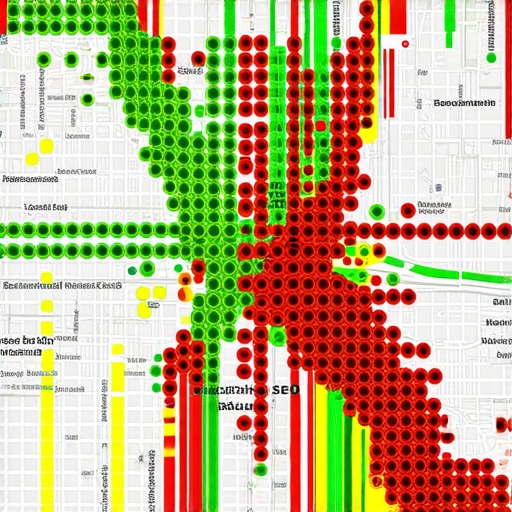
Stay Ahead of the 2026 Spatial Search Shift
The game is changing again. We are moving toward what experts call ‘spatial search,’ where AI interprets the physical layout of your business and the specific neighborhood context even more deeply. If you aren’t preparing your map listing for the 2026 spatial search shift, you’re going to be left behind by the next wave of seo service local updates. I predict we’ll see a massive emphasis on video-based ‘neighborhood signals’ and AI-generated summaries of your local reputation. To rank higher in 3 pack results in the future, you’ll need to prove you are a pillar of the community, not just a service provider with a mailbox.
The Tools I Actually Use Every Day
I don’t believe in buying every shiny new piece of software. My toolkit is lean because I want results, not extra subscriptions. I focus on tools that help me with map pack seo by tracking more than just keywords. I want to see click-through rates and driving direction requests. If you want to scale, you need to understand the weekly routine for dominating your neighborhood 3 pack. It’s about building a fortress around your location. My advice? Start today by running a free audit and finding one visibility gap. Go ahead and try to update your ‘Attributes’ based on what I mentioned earlier—it takes two minutes and can change your maps visibility by tomorrow morning.
Hard Truths I Learned While Fighting for the Number One Spot
One thing I wish someone had told me years ago is that consistency is far more valuable than a one-time burst of effort. I’ve seen businesses buy hundreds of reviews and get suspended overnight, while the guy who gets one honest review a week slowly climbs to the top. I also realized that maps visibility isn’t just about where you are, but how clearly you communicate your value to the machine. Another massive lightbulb moment was discovering that why asking every customer for a review is actually hurting your map rank if the timing looks unnatural to Google’s spam filters. Trust is built over time, not bought in a weekend.
The Exact Tools I Trust to Keep My Shop Busy
I don’t like overcomplicating things, so I keep my technical stack very lean. First, I always use a heatmap tool like Local Falcon; it shows you exactly where your rank drops off so you aren’t guessing. I also rely on BrightLocal because they make it easy to learn how to audit your business profile in under ten minutes, which is perfect for busy owners. Lastly, Whitespark is my go-to for finding those niche citations that competitors overlook. These tools help me with google maps optimization by providing data that the standard dashboard simply hides from you. I use them because they turn vague feelings into actionable growth. Using how we use software to spot visibility gaps on maps has saved me hundreds of hours of trial and error.
Turn Your Map Pin into a Growth Engine
Stepping out of the shadows and into the spotlight isn’t just about technical tweaks; it’s about claiming your space in the community you serve. You’ve put in the work to build a great business, and now you have the blueprint to make sure everyone else knows it too. Don’t let the technical side intimidate you. Start with a small weekly routine for dominating your neighborhood 3 pack and watch as the phone starts ringing more often. You have the quality; now it’s time to get the seo service local results you deserve.
Which specific neighborhood or zip code has been the hardest for you to break into? Let me know in the comments below!