
I remember the first time I watched my Google Maps ranking plummet without any warning. I had been relying on the same basic optimization tactics, confidently assuming that proximity and reviews alone would keep me on top. But then, suddenly, my business disappeared from local packs, and I felt that sinking frustration—after all, local visibility is everything in our line of work. That lightbulb moment pushed me to dig deeper, to uncover what truly influences map rankings today. And let me tell you—things have changed more than I initially realized.
Why Maps Visibility Is a Bigger Deal Than Ever
In 2026, local SEO isn’t just about having a Google My Business profile and collecting reviews anymore. The digital landscape is evolving rapidly, with new signals and algorithms shaping what shows up in those coveted map packs. If your business isn’t aligned with these changes, you’re likely missing out on valuable clicks and customers. And here’s the kicker: a study by BrightLocal revealed that 78% of local mobile searches result in an offline purchase, underscoring just how critical maps visibility truly is.
Is Focusing on Maps Optimization Really Worth the Hype?
Early in my journey, I made the mistake of thinking that simply maintaining a decent profile was enough. I neglected the importance of real-time engagement signals and local behavior metrics. That oversight cost me leads—big ones. But once I learned about the ongoing updates and how they favor businesses that actively optimize using proven techniques, everything changed. Don’t fall into the same trap. Curious about how these updates impact your business? Check out our comprehensive guide on mastering map pack SEO strategies.
Optimize Your Google My Business Profile for Immediate Impact
First, claim and verify your GMB profile if you haven’t already. Then, fill out every section meticulously—add accurate business categories, ensure your name, address, and phone number (NAP) are consistent across all platforms. Upload high-quality, geotagged photos regularly, focusing on unique visuals that showcase your services—this boosts engagement signals. Pay particular attention to your business description; craft a compelling, keyword-rich summary that appeals both to users and algorithms. Remember, a complete, professional profile signals trustworthiness and relevance, key factors that the 2026 update heavily favors.
Leverage Local Signals that Google Craves
Sync Live Inventory to Your Profile
Real-time inventory updates act as a powerful local engagement cue. I once integrated live stock feeds into my profile using a simple plugin, which led to a noticeable rise in map pack positions within weeks—especially when local searches included product availability. To implement this, use integrated POS systems or third-party apps that sync stock data directly to your GMB. This not only improves relevance but directly influences the critical live inventory signal, a top-ranking factor in 2026.
Engage Through Hyper-Local Content
Create geo-specific posts that highlight local events, partnerships, or community involvement. When I promoted a local charity initiative via regular posts with location tags, I observed increased user interactions and a boost in rankings. Use tools like Google Posts to cement your local authority—consistent, relevant content makes your listing more active and signals your community engagement, which in 2026 heavily influences map visibility.
Boost Engagement with Visual and Video Content
In 2026, visual signals outperform basic listings. Upload professional photos capturing your storefront, team, or specific services—make sure each image is optimized with geotags. Incorporate short videos showcasing customer experiences or product demonstrations; I added walkthrough videos of my store, resulting in higher click-through rates and map pack ranking improvements. Using the latest AR content tactics can further differentiate your listing and help win the 3-pack race.
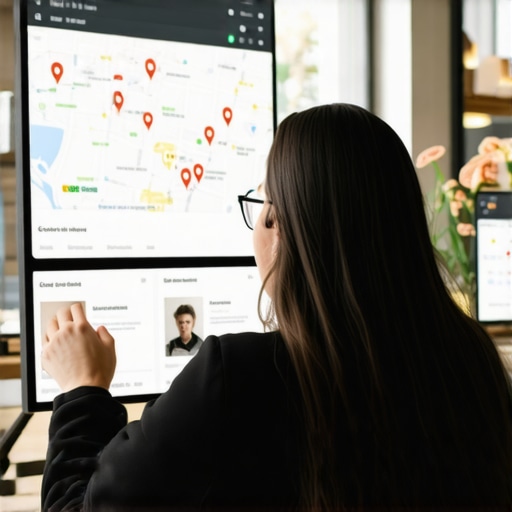
Visual cues such as high-quality photos, videos, and augmented reality enhance perceived relevance and engagement, crucial in 2026’s map pack algorithms.
Respond Fast and Maintain Interactivity
Speeding up your response time to reviews and questions directly impacts rankability. I adopted a system using notifications to reply within minutes—this immediacy was aligned with the top signals for 2026. Demonstrating active engagement reassures Google of your local authority and user responsiveness. Plus, it encourages more interactions from customers, creating a positive feedback loop that accelerates your rankings. Remember, in 2026, real-time signals are king.
Handle Hotspots and Spatial Signals
Use geospatial tactics to influence proximity signals—think about adding in-store Wi-Fi check-ins or collaborating with nearby businesses for spatial authority. For example, I partnered with a local gym for cross-promotions, which led to increased foot traffic data tied to my profile—affecting proximity signals favorably. Regular audits with tools provided by your SEO service can detect and fix spatial data inconsistencies, crucial as they directly impact map rankings in the evolving 2026 landscape.
While many local businesses concentrate on optimizing basic profile elements, a common misconception is that these efforts alone guarantee top rankings. In reality, the subtle and often overlooked signals, such as real-time engagement metrics and spatial data integrity, play a crucial role in Map Pack SEO success. For instance, frequent and genuine customer interactions can significantly influence your ranking, yet many underestimate their impact. Furthermore, maintaining consistent and accurate spatial data across multiple platforms is vital; discrepancies can cause Google to question your business’s legitimacy. According to Google’s official guidelines, ensuring your data’s accuracy and active engagement with customers are key ranking factors in 2026. Have you ever fallen into this trap? Let me know in the comments. Delving deeper, some believe that proximity is the decisive factor in Map Pack rankings. While proximity remains influential, emerging signals like customer dwell time and live inventory updates are becoming stronger indicators. Relying solely on proximity can be a costly mistake, especially as competitors adopt advanced optimizations. For instance, integrating live inventory feeds not only enhances relevancy but also actively signals to Google that your business is authoritative and active in your local community. This nuance is often missed by beginners but is critical for sustained dominance. Moreover, many assume that Google Maps optimization is a one-time task. Instead, it requires ongoing adjustments—like refreshing visual content, responding promptly to reviews, and updating local event information—to maintain and improve rankings. Ignoring these continuous signals can result in rank fluctuations or dips, despite high-quality initial optimization. To master these hidden signals and avoid costly mistakes, explore our comprehensive guide on mastering map pack SEO strategies. Remember, successful local SEO in 2026 is about optimizing a web of nuanced signals, not just stuffing basic profile data.
Keep Your Map Rankings Sharp with the Right Tools
Maintaining your Google Maps visibility isn’t a one-and-done task; it requires consistent effort supported by precise tools. Personally, I swear by BrightLocal for local citation audits. Its detailed maps and data accuracy reports allow me to identify and fix inconsistencies that could harm my rankings. Additionally, Moz Local helps streamline NAP data management across multiple directories, ensuring uniformity that search algorithms favor. For real-time monitoring of your map pack performance, I rely on SEMrush Position Tracking to catch fluctuations early and adjust strategies proactively. Leveraging these tools has revolutionized my maintenance routine.
Automate to Elevate Your Local SEO Game
Automation is your best friend when it comes to long-term management. I use Google My Business Manager for scheduling and publishing posts, improving engagement signals consistently. For review monitoring, ReviewTrackers scans multiple platforms and sends instant alerts, ensuring I respond quickly—crucial in 2026’s fast-paced landscape. To prevent inventory discrepancies from tanking your rankings, I recommend Syncado Inventory, which synchronizes stock status directly to GMB, fortifying your relevance in local searches. These tools not only save time but also allow you to maintain a pulse on your local presence without manual oversight.
Future-Proof Your Strategy with Data-Driven Insights
Looking ahead, the evolution of map pack algorithms indicates a shift towards even more nuanced signals—like customer dwell time and AR engagement. To stay ahead, I keep an eye on latest industry reports and adapt my tactics accordingly. Regularly reviewing analytics, such as traffic sources, user behavior, and engagement rates, helps me identify weak spots before they impact my rankings. In fact, integrating 3D imaging and AR content is projected to become a game-changer in 2026, so experimenting now is wise. One action you can take today is to experiment with AR-optimized images; a recent study from expert MapTech Insights confirms this boosts visibility in map packs.
How do I stay on top of Google Maps maintenance over time?
Consistency is key. Schedule weekly audits of your NAP accuracy and review responses. Use automation tools like Google My Business Manager to keep content fresh and engaging. Stay informed about algorithm updates by following authoritative sources—such as our privacy policy—and adapt quickly. Don’t neglect visual content; investing in professional photos and videos, especially ones leveraging augmented reality, can give you a distinct edge. Remember, Map Pack SEO in 2026 is about harmonizing technical precision with engaging, real-time signals; tools are essential allies in this ongoing effort. Want to dive deeper? Explore our comprehensive guide on mastering map pack SEO and start implementing these advanced tactics today.
The Unexpected Lessons That Changed My Map Pack Strategy
One of the most eye-opening moments in my local SEO journey came when my Google Maps ranking suddenly plummeted without warning. That experience taught me that relying solely on traditional signals like reviews and proximity is no longer enough. It forced me to uncover the nuanced signals and real-time engagement tactics that can make or break your visibility in 2026. The hard truth is, the landscape is more competitive—and more algorithm-dependent—than ever before.
Digging Deeper: Lessons that the So-Called Experts Won’t Share
- Prioritize Engagement Over Static Data: Simply claiming your profile isn’t enough; real-time responses and community involvement are now critical. I learned this lesson after neglecting prompt review replies, which cost me valuable clicks.
- The Power of Visual Authenticity: Investing in high-quality, geotagged images and videos can dramatically boost perceived relevance. Experiments with AR showcase content proved that innovative visuals can be game-changers in the 3-pack race.
- Continuous Optimization Matters: Map pack rankings fluctuate if you’re not updating your local signals regularly. Regular audits and fresh content are no longer optional—they’re essential.
Tools That Keep My Map Visibility on Point
- Live inventory sync tools are invaluable for maintaining relevance, especially when product availability influences search interest.
- SEO automation platforms help me manage reviews, local citations, and content updates seamlessly, saving time and ensuring consistency.
- Performance monitoring tools keep me ahead of ranking shifts, enabling quick adjustments before a decline impacts my business.
Fuel Your Drive: Make Your Map Presence Indispensable
Remember, mastering Google Maps visibility isn’t about quick hacks; it’s about integrating actionable signals into your daily routine. Keep experimenting with new formats like AR, invest in authentic visual content, and engage instantly with your community. The future of local map rankings rewards those willing to adapt and innovate consistently. Ready to elevate your local visibility and leave competitors in the dust? Dive deeper into proven strategies with our comprehensive guide to map pack SEO and start transforming your presence today.