I remember the exact moment I realized I was losing visibility on Google Maps. A potential customer told me they couldn’t find my business location, despite top rankings just a few months earlier. It was a lightbulb moment—just because you’re there today doesn’t mean you’ll stay there tomorrow. In the fiercely competitive local SEO landscape, especially in 2026, maintaining that coveted 3-Pack spot requires more than just claiming your listing.
Why Your Google Maps Ranking Could Drop Overnight
As I dug deeper, I discovered it’s a constant game of adapting and fixing. Without proactive Google Maps optimization, you’re essentially relying on luck. Changes in Google’s local algorithms, inconsistent citation management, or outdated profile info can all push you down the rankings unexpectedly. A recent study shows that 60% of consumers visit a local business within a day of their search, making visibility in the local pack not just important—it’s essential for survival in today’s market. If you’ve faced silent drops in your rankings, you’re not alone. But what if I told you that four simple fixes could help you reclaim or even boost your position?
Is Google Maps Optimization Really Worth the Effort?
Early on, I made the mistake of ignoring the power of consistent profile updates, thinking my initial setup was enough. Trust me, it’s not. Your competitors are constantly tweaking their profiles, gathering reviews, and optimizing their data—so should you. The good news? There are proven strategies that, if applied correctly, can safeguard your spot and improve your local visibility. Want to learn how I turned things around? Let’s dive into the four key fixes that made all the difference. And if you’re wondering whether these tactics are worth your time, check out this detailed guide on Google Maps optimization techniques that truly move the needle.
Claim and Optimize Your Listing
First, ensure your Google My Business (GMB) profile is claimed and verified. Log into your Google account, access the GMB dashboard, and claim your business if you haven’t already. Fill out every section meticulously, including your business name, accurate address, phone number, website, and categories. Think of your GMB profile as your storefront window—every detail invites customers in and signals relevance.
Build Consistent and Accurate Citations
Appear everywhere your business is listed online—local directories, industry-specific platforms, and social media. Inconsistent NAP (Name, Address, Phone number) data can confuse Google and harm your rankings. Use tools or services to audit existing citations, and correct discrepancies to maintain uniformity. This is similar to reinforcing the foundation of a building—stability in citations underpins your visibility.
Leverage Local Content and Keywords
Create content that resonates with your local audience. Incorporate geo-specific keywords naturally into your website and GMB posts. For example, instead of vague descriptions, say, “Your go-to bakery in downtown Chicago” to send clear signals to Google about your location relevance. This technique is like planting flags—marking your territory firmly in the local landscape.
Gather and Respond to Reviews
Reviews act as social proof and influence rankings significantly. Encourage satisfied customers to leave positive feedback by providing direct links or prompts after purchase. When responding, acknowledge their experience genuinely, which demonstrates active engagement. Think of reviews as digital word-of-mouth—they build trust and tell Google you’re an active and reputable business.
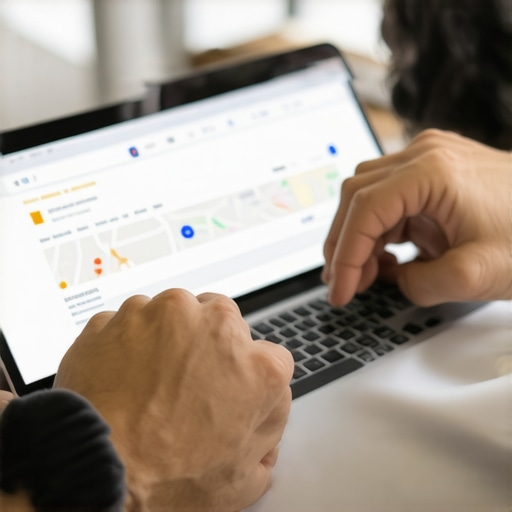
Image prompt: Close-up of a business owner replying to a customer review on a laptop, emphasizing review management and engagement in Google Maps optimization.
Implement Local SEO Strategies on Your Website
Optimize your site with local schema markup, embed Google Maps, and ensure mobile responsiveness. Incorporate your city or neighborhood keywords into titles, headers, and meta descriptions. These technical tweaks act like signposts—helping Google understand exactly where you serve and boosting your relevance within local searches.
Monitor, Analyze, and Adjust
Regularly track your Google Maps rankings using tools or analytics dashboards. Observe which strategies yield improvements and identify drops. Adjust your tactics accordingly, such as updating listings or refreshing content. This ongoing process is akin to tuning a musical instrument—small adjustments lead to harmonious visibility.
Applying these fixed actions consistently will strengthen your local presence. For in-depth insights and tailored recommendations, explore resources like map pack SEO strategies or consider professional services for advanced optimization.
Many businesses believe that simply optimizing their Google My Business profile and collecting reviews are enough to rank higher in the local 3-Pack. However, a common misconception is that Google Maps visibility is solely about surface-level tactics. In reality, there are nuanced factors that many overlook, which can significantly impact your rankings. For instance, Google places a heavy emphasis on user engagement signals, such as click-through rates and direct interactions, which are often neglected even by seasoned local SEO services. Ignoring these can lead to stagnant or declining visibility despite aggressive optimization efforts.
One myth I frequently encounter is the idea that consistency in NAP data alone guarantees top rankings. While uniformity is crucial, recent studies show that *user behavior metrics* can outweigh mere data accuracy. Google’s algorithm increasingly considers how users interact with your listing and website, rewarding businesses that foster active engagement. You might feel confident that fixing citations is enough; but without tracking engagement, you’re flying blind. Want to get a competitive edge? Focus on strategies that boost direct user actions, such as booking, calling, or visiting your website from Maps.
Is Your SEO Strategy Missing the Human-Centric Factors That Google Values?
Another critical aspect frequently missed is the integration of local content that resonates with your community. Advanced map pack optimization involves creating hyper-local content, participating in local events, and leveraging user-generated content that signals authenticity and relevance. According to a recent report by Moz, local search rankings are now heavily influenced by “local brand signals,” which include community engagement and reputation, not just technical SEO elements—so broaden your approach beyond keywords and citations. To truly excel, consider investing in tactics that cultivate trust and community presence, like hosting local workshops or sponsoring neighborhood initiatives. For in-depth insights on how to turn engagement into rankings, visit this comprehensive guide on [Google Maps optimization techniques](https://seomappackservice.com/google-maps-optimization-unlock-your-business-potential).
Beware of relying solely on automation tools that scrape citations or generate reviews. While these can shortcut certain tasks, they risk creating inconsistent signals or fake engagement that Google can detect, leading to penalties or drops in rankings. Authentic, high-quality interactions from real customers hold more weight and foster sustainable growth in visibility. Regularly auditing the authenticity of your signals and ensuring genuine customer involvement are essential steps to avoid the “oops” trap of short-lived gains. For a deeper dive into what to watch out for, check out this article on [map pack SEO pros and cons](https://seomappackservice.com/map-pack-seo-proven-strategies-to-rank-higher-on-google-maps-2024).
So, what’s the takeaway? Elevating your Google Maps ranking requires appreciating the complex ecosystem that Google assesses—beyond just fixing profiles and building citations. Learn to measure and optimize for user engagement, community relevance, and authentic signals. Are you accounting for these hidden factors? Have you ever fallen into this trap? Let me know in the comments.Maintaining a high ranking in Google Maps over time requires more than a one-and-done approach; it demands consistent monitoring, precise tools, and strategic adjustments. I personally rely on dedicated software like BrightLocal and Whitespark because they offer comprehensive citation audits, reputation tracking, and local SERP monitoring. These tools help me identify fluctuations in rankings and citation inconsistencies quickly, so I can act before minor issues become ranking disasters. For instance, BrightLocal’s Citation Tracker pinpoints discrepancies across hundreds of directories, ensuring my listings stay uniform and trustworthy, which is crucial for map pack rankings.
What techniques do I use to sustain long-term visibility?
Besides automation, I emphasize manual oversight through local map audits, engagement tracking, and review management. I often implement Google My Business Insights to understand user interaction patterns and adjust my strategies accordingly. Looking ahead, I predict that AI-driven analytics will become even more integral—helping local SEO professionals anticipate ranking changes before they occur and adapt proactively. Learning to harness these emerging technologies now positions you advantageously for the future of map pack SEO.
Another critical aspect I recommend is consistent content updates tied to local events. This fresh activity signals relevance to Google and keeps your profile active and engaging. Plus, leveraging tools like SEMrush for keyword tracking and sentiment analysis helps me refine my local content and respond to customer feedback swiftly. For scaling your efforts, consider automation that integrates review requests, citation updates, and engagement prompts, but always ensure authenticity to prevent penalties. To deepen your understanding of these tactics, explore our detailed guide on Google Maps optimization techniques that drive enduring success.
How do I maintain map visibility year after year?
Regular audits are key. I schedule monthly check-ins using tools like SEMrush and Google Search Console to detect drops early. Staying on top of Google’s algorithm updates through industry blogs and participating in local SEO webinars further helps me adapt quickly. Implementing proactive reviews management, citation refinement, and local content creation as a continual process ensures my visibility doesn’t just rebound but consolidates. Additionally, fostering genuine community engagement—hosting local events or sponsoring neighborhood initiatives—amplifies my signals of trustworthiness and relevance. Don’t forget that keeping your map pack SEO sharp involves continuous learning and fine-tuning—embrace new tools and strategies to stay ahead of competitors. For instance, integrating an automated review solicitation system while maintaining authentic customer interactions can significantly boost your long-term map rankings. Want to optimize your local presence more effectively? Try leveraging the latest insights from expert sources and keep your strategies dynamic, adjusting as Google evolves.
The Hardest Lesson I Learned About Maps Visibility, SEO Service Local, Rank Higher in 3 Pack, Map Pack SEO, Google Maps Optimization
One of my biggest eye-openers came when I realized that even after optimizing my Google My Business profile, my rankings could still plummet unexpectedly. The true challenge lies in understanding that Google Maps ranking isn’t just about surface-level tactics but about building a resilient, adaptive local presence. Over time, I learned that tracking engagement signals like click-through rates and customer interactions often outweigh mere citation consistency, revealing that Google’s algorithm favors active community participation more than many realize. This lightbulb moment compelled me to shift from a reactive to a proactive approach, continuously refining my local strategy to stay ahead amidst ever-changing signals.
Where to Go from Here
My essential toolkit for maintaining dominant Google Maps visibility includes tools like BrightLocal, for citation audits, and Semrush for keyword tracking and sentiment analysis. These resources have proven invaluable in my journey, providing clarity and direction when managing complex local SEO challenges. They help me understand where my efforts pay off and where adjustments are necessary. Investing in the right tools is akin to having a trusted compass—guiding your local SEO efforts with precision and confidence, especially as the map pack landscape continues evolving in 2026.
Your Turn to Try
Remember, mastering Google Maps visibility isn’t a one-time achievement but an ongoing journey. Embrace continuous learning, leverage proven tools, and stay connected with your community. As you refine your strategies, you’ll find that a genuine, human-centric approach often surpasses the most complex technical tweaks. Are you ready to take your local Google Maps rankings to the next level? Share your experiences or ask questions in the comments below—every insight helps build a stronger local business community!
,
This post really hits home for me, especially the part about the importance of ongoing profile updates and genuine engagement. I’ve noticed that even small tweaks—like updating photos or responding to reviews—can significantly influence local visibility over time. When I first started, I underestimated the power of reviews and community signals, focusing mainly on citations and keywords. But I quickly learned that actively engaging with customers and updating my content regularly keeps my business relevant in Google’s eyes.
One challenge I face is maintaining that consistency amidst a busy schedule. Tools like BrightLocal and SEMrush have been game-changers in helping me stay on top of reviews and local keywords, but I wonder—what are some effective ways to encourage more customers to leave reviews without seeming pushy? Also, how do you balance ongoing content updates with other marketing efforts? Would love to hear if others have found successful strategies for keeping local buzz alive without overwhelming their day-to-day operations.
This post really emphasizes the importance of constantly monitoring and updating your Google Maps profile—it’s a proactive process rather than a set-it-and-forget-it task. I’ve personally seen how even slight discrepancies in citation consistency or outdated photos can impact rankings more than I initially realized. I agree that community engagement signals like reviews and local content are increasingly influential in 2026, aligning with Google’s shift toward valuing authentic user interactions. What’s interesting to me is how many small businesses overlook the power of local stories or news to boost topical relevance. I’ve had success by tying my content to local events or recent community news, which seems to give a natural boost to visibility. Do others find that integrating hyper-local content genuinely improves their rankings, or is it more of a supplementary tactic? I’d love to hear tips on balancing ongoing content updates with daily operations, especially for small teams managing multiple marketing channels.