I’ll never forget the day I stood in the pouring rain outside a client’s new bakery, staring at my iPhone in total disbelief. According to the map, I was precisely where I needed to be. In reality? I was staring at a locked dumpster behind a dry cleaner three doors down. My client was rightfully panicked. If I, someone who does this for a living, couldn’t find the front door, how was a hungry person in a moving car supposed to? That was the moment I realized that map pack seo strategies to boost local visibility aren’t just about keywords; they are about digital geography that actually matches the sidewalk. Most people assume that once they verify their address, the job is done. I made that same mistake early on, thinking Google’s automated geocoding was infallible. It isn’t. When a mobile user searches for you, their phone is balancing GPS data, Wi-Fi signals, and cell tower triangulation, often resulting in a ‘drift’ that can put your business pin in an alleyway or on the wrong side of a median. If you want to know how to rank higher in the Google Maps 3-pack today, you have to realize that a misplaced pin is a silent killer for your conversion rates. Today, I’m going to show you how to take manual control of your coordinates and stop losing customers to the ‘vacant lot’ syndrome. Have you ever tried searching for your own business while parked out front, only to see the blue dot and your pin blocks apart? Let me know in the comments, because you aren’t alone.
Your Phone Thinks Your Business Moved Down the Street
When we talk about google maps optimization, we often focus on reviews or photos, but for mobile users, proximity and accuracy are king. According to data from Think with Google, 76% of people who search on their smartphones for something nearby visit a business within a day. If that smartphone tells them you are located at a physical impossibility, they aren’t going to hunt for you; they’re going to click on the next guy. This happens because Google’s ‘best guess’ for your rooftop location is often based on the center of your property parcel, not your actual front door. I’ve seen 5 simple profile errors that are killing your phone calls, and a lazy pin placement is usually at the top of the list.
Can a Tiny Pin Really Tank Your Entire Business?
You might be skeptical. Does it really matter if the pin is twenty feet off? In the world of seo service local, those twenty feet are the difference between being ‘on the way’ and being ‘too much trouble.’ Google tracks ‘pogo-sticking’—when a user starts navigation to your shop but cancels it halfway through because they can’t see your building. This sends a massive negative signal to the algorithm. We need to dive into why proximity is not the only factor in local ranking, but it is certainly the one that dictates the user experience. If you’ve noticed your foot traffic is down, check these 7 fixes for business profiles that stopped getting calls to see if your digital location is the culprit.
Take the Wheel of Your Digital Map Pin
To stop the ‘drift’ I mentioned earlier, you have to move from passive observer to active navigator. Google’s algorithms are great, but they don’t know your parking lot has a one-way entrance from the back alley. Log into your dashboard and find the location settings. Don’t just type the address; click ‘Edit’ on the map itself. You can zoom in until you see the rooftop details and manually drag that red pin to the exact spot where a human being actually enters your building. This is the foundation of google maps optimization because it aligns the digital signal with the physical reality. If your pin is in the middle of a massive shopping center roof, a driver using CarPlay might be told they have ‘arrived’ while they are still 400 feet away on a busy four-lane road. 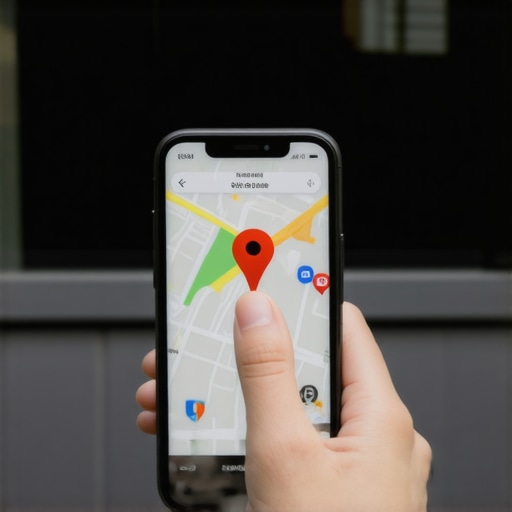
How a Pizza Joint Saved Their Month Just by Moving a Red Dot
I worked with a small pizzeria last year that was struggling despite having great reviews. Their pin was technically on their building, but it was centered over the kitchen, which backed up to a residential fence. Delivery drivers and new customers were constantly being routed to a dead-end street behind the restaurant instead of the main parking lot. We moved the pin thirty feet to the front door. Within two weeks, their ‘Direction Requests’ in the GBP insights didn’t just go up—the completion rate did. This proves why proximity is not the only factor in local ranking; it’s about accessibility. If the algorithm sees users reaching your destination successfully rather than canceling the trip, your authority climbs.
Why Niche Citations Beat Yellow Pages Every Time
Most business owners think they need to be on every directory from 2004 to rank. That’s a waste of energy. To really rank higher in the Google Maps 3-pack today, you need digital breadcrumbs that actually mean something to your specific city. I’m talking about the unstructured citations your business is missing from local news and blogs. If a local neighborhood blog mentions your shop’s name and address, Google views that as a much stronger ‘local’ signal than a generic listing on a national site. These small, hyper-local mentions act as a vote of confidence that you actually exist where you say you do.
Check These High Impact Settings Before Tonight
There are a few ‘hidden’ toggles that can dramatically change how you appear to mobile searchers. Go into your profile and look at your ‘Attributes.’ Are you a ‘Women-owned’ business? Do you have ‘Outdoor seating’? These aren’t just fluff; they are searchable filters. While you are there, you should how to audit your business profile in under ten minutes to ensure no one has suggested a ‘user edit’ that moved your pin back to the wrong spot. I’ve seen competitors try to move pins to nearby intersections just to mess with a rival’s rankings. It sounds petty, but in the world of seo service local, your physical location is your most valuable asset. Also, keep an eye on 5 local seo trends for 2026 that are changing the 3-pack forever, especially regarding how spatial data and augmented reality are starting to play a role in how pins are displayed to pedestrians versus drivers.There is a pervasive myth in the world of seo service local that your total number of reviews is the only metric that matters. I hear it every week: ‘If I just hit 100 five-star ratings, I’ll finally rank higher in the Google Maps 3-pack today.’ In reality, the algorithm is far more obsessed with ‘Review Velocity’—the pace at which you receive feedback—than the static total count. If you’ve been stagnating at 50 reviews for a year, Google assumes your business is no longer the ‘hottest’ option in town. This is why high ratings alone won’t move your map pin higher if they are old and cold. Have you ever fallen into this trap of focusing on the total number while ignoring the consistency? Let me know in the comments.
Why Does Your Competitor with Fewer Reviews Still Outrank You?
It feels like a personal insult when a newcomer with ten reviews jumps over your seasoned profile. But here’s the nuance: Google looks for ‘Unstructured Citations’ and behavioral signals over simple review counts. According to the 2024 BrightLocal Local Search Ranking Factors study, real-world engagement—like how many people click your ‘Call’ button or ask for directions after a search—now carries massive weight. If that competitor is getting mentioned on local blogs or neighborhood news sites, those are the unstructured citations your business is missing. These act as high-octane fuel for google maps optimization because they prove your relevance in a specific geographic neighborhood, not just a broad industry. 
The Forbidden Business Name Hack That Kills Profiles
We need to talk about the ‘Oops’ factor that gets more businesses banned than anything else: keyword stuffing your business name. You might see a boost for a week by changing your name to ‘A1 Plumbing & Emergency Drain Repair Chicago,’ but you are painting a giant target on your back. This is one of the 4 costly errors keeping your shop out of the map pack long-term. Google’s AI is incredibly good at cross-referencing your legal business name with your Secretary of State filings. When the hammer drops, you’ll be searching for steps to take immediately after your business profile gets suspended, which is a stress nobody needs. Instead, focus on how to identify the local citations that actually move your map pin without breaking the rules. Another major mistake is ‘NAP’ (Name, Address, Phone) inconsistency. While why perfect nap data is no longer enough to move your map pin is a valid discussion, having wild variations across the web still creates a ‘trust gap.’ If you want to enhance maps visibility with proven seo techniques, you have to prioritize brand authority over cheap tricks. If you’ve seen your call volume drop, it’s often because your ‘relevance’ signal has weakened compared to a competitor who is using how to use local events to boost your map visibility to stay current. Don’t let your profile become a digital fossil.I’ve spent thousands of hours staring at ranking reports, and if there is one thing I’ve learned, it’s that your standard SEO dashboard is probably lying to you. Most tools give you a single ‘average’ position for a keyword, but that doesn’t reflect the reality of a mom looking for a plumber while standing in her kitchen versus sitting in her office five miles away. This is why your local keyword tracking data is probably lying to you. To get a real grip on your visibility, you need to use coordinate-based grid tracking. I personally rely on tools that generate a heat map over your city because it reveals the ‘proximity wall’—that invisible line where your ranking drops from #1 to #15 just by crossing a specific street. Knowing where the gaps are is only half the battle; the other half is how we use local seo software to spot the visibility gaps your competitors miss. If I see a competitor ranking in a zone where they have no business being, I dig into their unstructured citations. Are they getting mentions from a local little league team or a neighborhood association? Those are the signals that scale.
How do I keep my rankings steady when the algorithm shifts?
The secret isn’t a ‘set it and forget it’ strategy. It’s about the one weekly profile update that keeps your local leads from dropping. I set a recurring calendar invite every Tuesday morning to do a ‘sweep’ of my clients’ profiles. I’m looking for user-suggested edits—Google allows anyone, including your competitors, to suggest that your business is ‘permanently closed’ or that your website URL should point somewhere else. According to Joy Hawkins of Sterling Sky, a leading expert in local search, the ‘Vicinity Update’ made proximity even more aggressive, meaning you can’t afford a single error in your service area settings. If you aren’t checking these manually, you are essentially leaving your front door unlocked in a bad neighborhood. 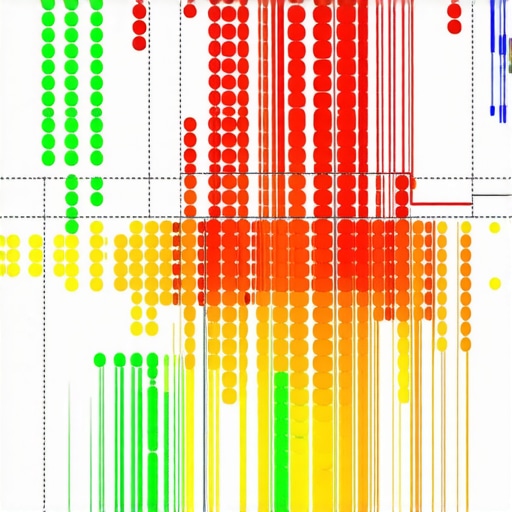 Looking ahead, we are moving toward what I call ‘Spatial Context SEO.’ Google is already preparing your map listing for the 2026 spatial search shift, where things like the signage in your storefront photos will be ‘read’ by AI to verify your niche. If your photos show a generic office building but you claim to be a ‘high-end spa,’ the discrepancy will trigger a ranking penalty. You need to start enhancing maps visibility with proven seo techniques that prioritize visual proof of your physical location. Don’t just take my word for it—go into your ‘Suggested Edits’ right now and see if there are any pending changes you didn’t authorize. It’s the fastest way to save your ranking before the weekend rush.
The Reality Check Most Agencies Won’t Give You
I used to think that just getting more reviews was the ‘holy grail,’ but I was wrong. The algorithm cares more about how many people actually interact with your listing than a pile of static five-star ratings. This is why high ratings alone won’t move your map pin higher if no one is clicking your call button or checking your hours. Another ‘lightbulb moment’ was seeing how the unstructured citations your business is missing can propel a brand faster than any paid ad; a single mention in a local neighborhood news article often carries more weight than fifty generic directory listings. Lastly, never underestimate the power of your service areas. I’ve found that the service area page mistake that stops your map pin is the silent reason why most businesses never rank in the wealthy suburbs just a few miles away.
My Daily Toolkit for Dominating the Street View
To stay ahead, I recommend focusing on tools and resources that provide real-world spatial data. First, use a grid tracking tool to verify how we use local seo software to spot the visibility gaps across different neighborhoods; an ‘average’ rank is just a guess. Second, stay updated on algorithm shifts by following the 7 google business profile tips for 2026 to keep your profile from becoming a digital relic. Finally, prioritize your google maps optimization by regularly auditing your user-suggested edits to ensure your data remains untampered by competitors.
Claim Your Spot on the Digital Sidewalk
Local SEO is a marathon through your own city’s streets. By taking manual control of your coordinates and optimizing your profile for real human interaction, you can rank higher in the Google Maps 3-pack today and turn your business into a local landmark. Don’t let your digital presence drift into the alleyway—guide your customers right to your front door. Have you checked your map pin location lately to see if it’s actually at your front door? Drop a comment below and let me know what you found.