I’ll never forget the sinking feeling in my gut when a client asked why their phone hadn’t rung in three weeks despite my ‘expert’ map strategy. I had spent hours dutifully copying and pasting iframe codes onto every footer, sidebar, and contact page I could find. I was convinced that by literally plastering a map on the site, Google would have no choice but to see us as the local authority. I was wrong. Dead wrong. It turns out, I was just making the website heavier without actually giving the algorithm what it wanted. Today, I want to pull back the curtain on why most local map embeds fail to move the ranking needle and show you what actually works to get those leads flowing again.
The Day I Realized My Map Embeds Were Just Decorative
It’s a common trap we all fall into when we start chasing google maps optimization. We think more is better. I once thought that if one map was good, five maps were better. I even made the mistake of embedding maps for cities where the client didn’t even have a physical office—a classic move that usually leads to a suspended local profile. The truth is, a map embed is a signal, but it’s a weak one if it isn’t backed up by real-world data and localized content. Have you ever felt like you’re doing everything the ‘gurus’ say, but your map pin stays stuck on page four?
Is stuffing maps on every page actually worth the hype?
Many people will tell you that a map embed is the ‘secret sauce’ for local SEO, but if it’s not implemented correctly, it’s just a broken link to nowhere. In fact, research from major SEO authorities like BrightLocal suggests that while on-site signals matter, the technical execution of your Google Business Profile and its connection to your site is what truly drives the engine. If your map isn’t interacting with the rest of your local signals, it’s essentially invisible to the bots.
The Real Reason Your Map Isn’t Helping You Rank
Most business owners treat their map like a digital sticker. You slap it on the contact page and hope for the best. But if you want to rank higher in the Google Maps 3-pack today, you need to understand that the embed is just the tip of the iceberg. I’ve seen so many folks stop relying on map embeds once they realize that things like quiet signals and niche citations carry way more weight. My big mistake early on was ignoring the ‘relevance’ factor—I was showing a map, but I wasn’t proving to Google that my business was the most relevant solution for the searcher’s specific problem. We’re going to change that right now by looking at the strategy behind the code.
Stop Pasting Code and Start Building Local Relevance
To truly enhance maps visibility with proven SEO techniques, you have to treat your website like a digital bridge to your physical storefront. Most people just grab the iframe and walk away, but that’s like putting a billboard in your basement. I remember working with a small HVAC shop that had zero visibility outside their immediate block. We didn’t fix it by adding more maps. We fixed it by using quiet signals—specifically, we overhauled their Local Business Schema and matched it perfectly to their Google Business Profile. The shift from decorative to functional starts with how your website talks to Google’s bots behind the scenes.
Give the Bots a Clear Roadmap with Schema
If your website doesn’t have structured data, you’re making Google guess your location. You need to implement LocalBusiness schema that explicitly links your “hasMap” property to your actual Google Maps URL. This isn’t just about technical flair; it’s about making sure your mastering map pack seo strategies includes the data points the algorithm trusts most. Many people wonder why your local schema isnt moving the needle on google maps, and usually, it’s because the NAP (Name, Address, Phone) data on the page doesn’t align with the JSON-LD script hidden in the header. Accuracy here is non-negotiable.
How to Win the Neighborhood War
You don’t need a massive budget to outrank local franchises with a small budget. You need neighborhood signals. Think of it like this: a map embed is a general “I am here” signal, but a neighborhood-specific landing page is a localized authority signal. I once helped a plumber who was getting crushed by national chains. We stopped focusing on the big city keywords and started building out pages for three specific suburbs, embedding maps that were centered on those specific zip codes. We combined this with how small plumbers outperform big chains strategies, using photos of their trucks parked in front of local landmarks. The result was a 40% jump in calls in two months because Google finally understood the service area radius.
Quality Citations Beat Quantity Every Time
Stop wasting time on generic business directories that nobody visits. If you want to rank higher in the Google Maps 3-pack today, you need to know how to identify the local citations that actually move your map pin. Focus on the 4 citation sources that actually drive map visibility: industry-specific sites, local news mentions, community blogs, and high-authority niche platforms. Generic links are noise; niche citations are authority. When I shifted from building 100 random citations to just 5 localized ones for a client, their map impressions didn’t just crawl up—they exploded because the relevance factor was undeniable.
The Weekly Routine That Keeps the Calls Coming
Consistency is the fuel for your visibility. You need to establish the weekly routine for dominating your neighborhood 3 pack. This includes small tasks like checking your how to use attributes to stand out settings or ensuring your Google Posts are updated with fresh content. If you stop relying on map embeds as your only tool and start treating your profile as a living entity that interacts with your website, the ranking needle will finally move in your favor.Let’s dig deeper into the ‘Review Trap.’ Most gurus will tell you to get as many 5-star reviews as possible. While that sounds logical, why high ratings alone won’t move your map pin higher is one of the most frustrating lessons I’ve had to learn. I once watched a client with 400+ reviews lose the top spot to a competitor with only 12. Why? Because the competitor had superior behavioral signals. The search signals that let competitors outrank you without better reviews are often hidden in how users interact with your listing. If people find your site, stay there, and actually click the ‘Call’ button, Google sees you as the most relevant answer for that specific search query. Whitespark’s Local Search Ranking Factors survey confirms this shift, highlighting that conversion factors like click-through rates are increasingly vital for google maps optimization.
Don’t kill your ranking with a sudden review spike
Here is the ‘Oops’ factor most people ignore: review velocity. If you haven’t received a review in months and suddenly get 30 in a single weekend, you’ve just painted a giant target on your back. I’ve seen countless profiles get flagged because they tried to ‘catch up’ too fast. This is why asking every customer for a review is actually hurting your map rank if it isn’t done naturally. It looks like manipulation to the algorithm.
Why do competitors with zero reviews sometimes rank higher?
It feels like a glitch in the matrix when you see a listing with no feedback sitting in the #1 spot while you’re grinding for every star. Usually, this happens because their rank higher in the Google Maps 3-pack today strategy is built on a foundation of proximity and category relevance that is so strong it overrides the social proof factor. Or, they might be benefiting from quiet signals like unlinked mentions on high-authority local news sites. 
Why perfect data isn’t a silver bullet anymore
We used to preach that NAP (Name, Address, Phone) consistency was the holy grail. However, why perfect NAP data is no longer enough to move your map pin is becoming the new reality. Google’s AI is smart enough to handle minor formatting variations. What it cannot ignore is a total lack of engagement. If you aren’t using 7 tips for better local engagement on google maps, such as responding to Q&A or posting photos, you’re just a static entry in a database. Have you ever fallen into this trap of focusing on ‘perfect’ data while ignoring real human engagement? Let me know in the comments.
Stop Guessing and Start Tracking Real Proximity
I used to think that seeing a single #1 ranking on my phone while standing in the client’s lobby meant we had won. It didn’t. I was just standing on top of the pin. To truly scale, you need to see the whole battlefield. This is how we use local seo software to spot the visibility gaps your competitors miss. I personally rely on grid-based tracking tools like Local Falcon or BrightLocal because they show you a 13×13 mile map of exactly where your ranking drops off. If you are green in the center but red two blocks away, you don’t have a ranking problem; you have a proximity and relevance problem. By identifying these ‘dead zones,’ I can tailor specific localized content or the specific backlink types that actually push your profile into the 3-pack to bridge those gaps.
How do I maintain my map visibility over time?
Consistency isn’t about doing a hundred things once; it’s about doing three things every single week. First, I perform the one weekly profile update that keeps your local leads from dropping by refreshing the Q&A section or adding a high-resolution, geo-tagged photo. Second, I audit the ‘Attributes’ section. Google frequently adds new niche-specific tags, and if your competitors toggle ‘Identifies as veteran-led’ or ‘Wheelchair accessible’ before you do, they can leapfrog you in filtered searches. According to research by Sterling Sky’s Joy Hawkins, these small attribute shifts can have a surprising impact on how Google categorizes your business relevance for specific long-tail queries. Third, I check for ‘suggested edits’ from the public, which can silently change your hours or phone number if left unmanaged.
The 2026 Shift You Need to Anticipate Today
We are moving toward what experts call ‘Spatial Search.’ This means Google won’t just look at where you are, but how you fit into the local ecosystem of events, news, and transit. I am already preparing your map listing for the 2026 spatial search shift by encouraging clients to get mentions on local event calendars and community blogs. The algorithm is becoming less about static keywords and more about real-time local engagement. 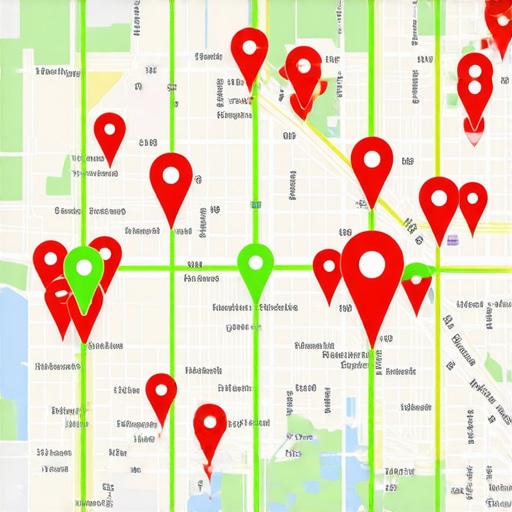
Scale Your Success Without Getting Suspended
If you want to expand to a second or third location, don’t just copy-paste your existing strategy. Each neighborhood is a different ‘mini-algorithm.’ You need to master how to rank higher in the google maps 3-pack today by treating each new pin as its own entity with unique local signals. Avoid the temptation to use virtual offices or shared co-working spaces without a dedicated suite, as these are the fastest ways to get a hard suspension. Instead, focus on building deep roots in each specific zip code. If you’re feeling stuck, I highly recommend looking at the only three attributes that actually change your rank and ensuring they are perfectly optimized right now. Go check your ‘Attributes’ tab in your Business Profile—this one-minute task might be the simplest win you’ll find today.
The Brutal Truth About What Actually Moves the Map Pin
Over years of trial and error, I’ve realized that chasing rankings is a fool’s errand if you aren’t chasing relevance first. Here is what the gurus won’t tell you: an embed is just a signpost, not the destination. I’ve seen many instances where local hvac shops lose customers to competitors with half the reviews because they ignored user intent. My biggest lightbulb moment was discovering that Google cares more about how a real person interacts with your listing than how many times you mention a keyword in your description. If your map listing gets clicks but no one ever calls, you’ve likely built a beautiful billboard in a desert. Stop obsessing over the ‘perfect’ setup and start focusing on the signals that prove you are a living, breathing part of your local community.
Tools That Keep Me From Flying Blind
You can’t fix what you can’t see, which is why I never start a campaign without a specific toolkit. I rely heavily on Local Falcon for its grid-style visualization because it proves that ranking isn’t a single number—it’s a physical geography. I also closely follow the research from Sterling Sky; their real-world tests often debunk the common myths that lead to a map listing that stopped generating real phone calls. Finally, don’t overlook your own Google Insights. It’s the only raw data that shows exactly how people are finding you and whether they actually care once they do.
#IMAGE_PLACEHOLDER_E#
Your Path to Dominating the Local Neighborhood
The road to the top of the 3-pack isn’t paved with shortcuts or secret hacks; it’s built on the back of consistent, small wins. Whether you are just starting your google maps optimization journey or you’re trying to recover a lost position, remember that the algorithm rewards businesses that provide the best user experience. Take those five minutes every week to update your attributes, post a fresh photo, or answer a customer question. These are the bricks that build your local authority. You’ve got the strategy, now it’s time to execute. Which part of your Google Business Profile do you find most frustrating to manage—the reviews or the technical schema? Let me know below!