
I remember sitting in my home office at 2 AM, refreshing my browser for the hundredth time, watching my client’s local shop sit stuck on page four of the map pack. I had spent weeks tweaking the ‘About’ section and uploading fifty photos of their lobby. Nothing moved. It was a punch to the gut because I thought I was doing everything right. It turns out, I was just playing with the window dressing while the foundation was crumbling. That was the night I realized I was focusing on ‘feel-good’ metrics instead of the raw math Google actually cares about for google maps optimization. We’re going to cut through the noise today and look at the only three levers that actually move the needle for your business.
Stop Chasing Ghost Signals in the 3-Pack
I used to think that the more keywords I crammed into a business description, the faster the phone would ring. I was wrong. In fact, you should stop stuffing keywords in your profile because Google’s AI is way smarter than it was five years ago. My early mistake was treating the map pack like a standard search engine where more text equals more rank. It does not. According to official Google documentation, their local algorithm is primarily weighted on three pillars: relevance, distance, and prominence. If you aren’t optimizing for those specific signals, you’re just spinning your wheels. This is why you often see how small shops outperform national chains in local results despite having a fraction of the marketing budget. They aren’t doing ‘more’ work; they are doing the right work. Have you ever felt like you were doing everything the ‘experts’ told you, yet your maps visibility remained flat as a pancake?
Does this stuff even work for businesses without a huge budget?
It’s easy to get cynical when you see a competitor with 300 five-star reviews sitting at the top while you’re left in the dust. You might wonder why high ratings alone won’t move your map pin higher, and you’d be right. I have seen profiles with a 4.2 rating dominate the 3-pack because they mastered the proximity and prominence signals while the ‘big guys’ got lazy. We are going to break down how to trigger these specific signals so you can finally see a return on your effort. It is time to stop guessing and start focusing on what actually drives rank higher in 3 pack results for your specific neighborhood.
Dialing in Your Business Identity for the Algorithm
Think of your Business Profile as a passport. If the details don’t match exactly what the agent expects, you aren’t getting through the gate. To rank higher in 3 pack results, your primary category must be a bullseye, not a ‘maybe.’ I once worked with a boutique law firm that insisted on being listed generally under ‘Legal Services.’ They were invisible. The moment we switched their primary category to ‘Estate Planning Attorney’ and moved ‘Legal Services’ to a secondary slot, they jumped from page three to the top of the map pack within forty-eight hours. This wasn’t magic; it was just removing the friction for Google’s bot. You need to identify the quiet signals that actually push you into the 3-pack, starting with how you label your core offer.
Pick Your Battles with Primary Categories
Most business owners treat categories like a buffet, grabbing everything that looks remotely tasty. This dilutes your relevance. If you’re a plumber who also does HVAC, you have to decide which one pays the bills this month and make that your primary. Google’s algorithm needs a clear ‘hook’ to hang your business on. When you try to be everything to everyone, you end up being nothing to the algorithm.
Build Authority Where the Map Pack Can See It
Prominence isn’t just about having the most reviews; it’s about the quality and location of the digital ‘chatter’ around your brand. You should stop wasting time on generic web directories that haven’t been updated since 2012. Instead, you need to know where to build niche citations instead of directories. This means getting mentioned on local news sites, neighborhood blogs, or even a local Little League sponsor page. These hyper-local links act as a digital ‘vote of confidence’ from your specific community, which is a massive signal for map pack seo.
Get Specific Phrases into Your Customer Feedback
Here is a trick I used for a local coffee roaster that was struggling against a nearby Starbucks. We didn’t just ask for ‘five stars.’ We asked customers to mention the specific neighborhood and the product they bought. When Google sees twenty reviews mentioning ‘best espresso in North Loop,’ it connects those dots. This is one of the specific review phrases that actually move the needle for your map rank. It turns your reviews into a relevance-boosting machine rather than just a vanity metric. 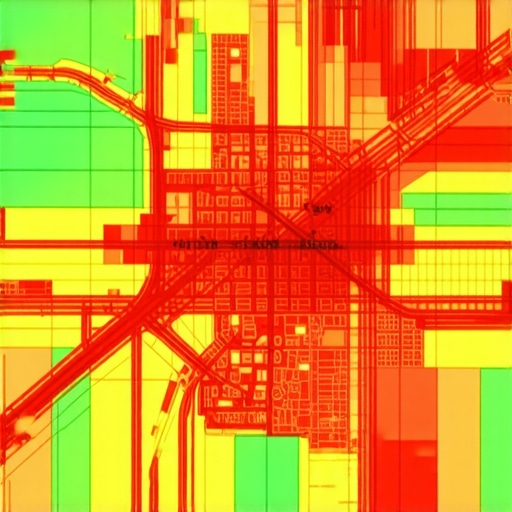
Optimize the Digital Footprint Attached to Your Pin
Your map listing is not an island. It is tethered to your website by an invisible cord. If your site is slow, clunky, or lacks local signals, it will drag your map pin down into the depths of page two. Many people don’t realize why your website speed affects your google maps placement, but Google views a poor website experience as a liability. They don’t want to recommend a business that provides a frustrating user experience. You can easily spot these issues if you how to audit your business profile in under ten minutes and cross-reference it with your site’s mobile performance. If your site takes five seconds to load on a 4G connection, you’ve already lost the lead before they even saw your phone number. High-performance seo service local strategies always prioritize the technical health of the landing page because that is where the conversion actually happens.
I see it every single day: a business owner gets their profile verified, uploads some photos, and then waits for the phone to ring. When it doesn’t, they double down on the wrong things. They think that more is always better—more keywords, more generic citations, and more reviews at any cost. But the reality of google maps optimization is far more subtle. You aren’t just competing against a list; you’re competing against a living, breathing algorithm that values authenticity over sheer volume. Let’s dig deeper into why the ‘brute force’ method usually fails.
Stop treating reviews like a simple numbers game
Everyone tells you that you need the most reviews to win. In my experience, that is a half-truth that leads to a massive ‘oops’ factor. If you suddenly spike from two reviews a month to fifty in a week because of a contest or a push, Google’s fraud filters will likely flag your profile. This is why asking every customer for a review is actually hurting your map rank if you don’t have a steady, natural velocity. The algorithm looks for patterns. A sudden surge followed by silence looks like manipulation. According to the BrightLocal Local Consumer Review Survey, the recency and frequency of reviews are often more impactful than the raw total for building consumer trust and algorithmic relevance. If your review profile looks like a barcode of highs and lows, you are triggering red flags instead of ranking signals.
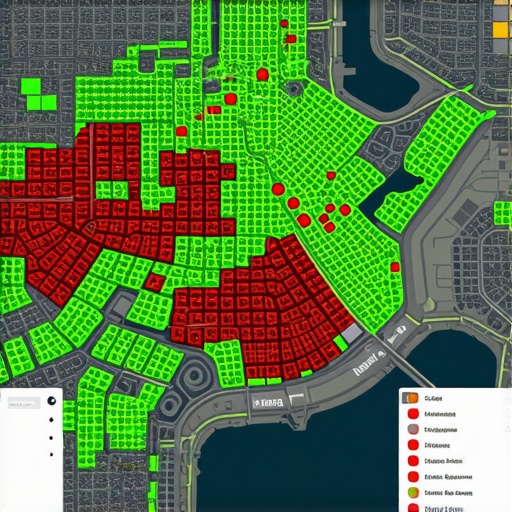
Have you ever fallen into this trap? Let me know in the comments. It’s a common mistake, but it’s one of the 4 costly errors keeping your shop out of the map pack. To truly rank higher in 3 pack results, you need a sustainable system, not a one-off sprint.
Why your service area settings might be your biggest blind spot
Another nuance that most people miss involves the ‘service area’ settings. If you’re a plumber or a locksmith, you might be tempted to check every city within a fifty-mile radius. This is a mistake. When you spread your service area too thin, you dilute your local prominence. Google tries to match the best local provider to the user; if you claim to cover the entire state, you look less ‘local’ than the guy who focuses on three specific zip codes. This is why your service area settings are probably hiding you from the local 3-pack. You are essentially telling the algorithm you are a generalist when it is looking for a specialist. We’ve found that tightening your service area to your actual physical proximity often results in a massive jump in visibility for your core neighborhood.
How do you tell if your ranking data is actually lying to you?
This is the question that separates the pros from the amateurs. Most people use a basic rank tracker and see a ‘Number 1’ spot and celebrate. But why your local rank tracker is giving you a false sense of security is simple: proximity. If you are standing in your office, you will almost always rank first. If you move two blocks away, you might be in fifth. To get a real handle on map pack seo, you need to look at grid-based tracking that shows your performance across the entire city, not just at your desk. Furthermore, you need to identify the unstructured citations your business is missing from local news and community sites. These are the nuances that move the needle when the ‘basic’ stuff is already done. If you want a strategy that actually converts, you have to look for affordable local seo services to dominate the 3-pack that understand these technical layers.
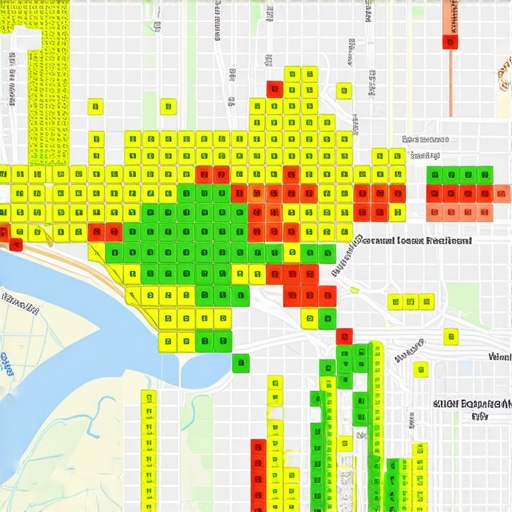
I didn’t truly understand the technical layers myself until I started using grid-tracking software like Local Falcon or BrightLocal’s Local Search Grid. Before that, I was flying blind. Once I saw my ranking as a heatmap rather than a single number, everything changed. I could see exactly where my relevance dropped off—sometimes just a block away from the office. This is how we use local seo software to spot the visibility gaps your competitors miss, and it’s the first thing I do for any new client. If you aren’t looking at your visibility through a geographic lens, you’re missing the forest for the trees.
Ditch the static reports for real-time local heatmaps
The biggest mistake I see is business owners relying on their monthly PDF reports that claim they are ‘Number 1.’ As we discussed, that is usually a lie based on their own IP address. When I switch them to a grid view, they realize they are actually invisible to 80% of their target city. I use these tools to identify ‘weak spots’—specific neighborhoods where a competitor is barely beating us. Often, all it takes is one or two geotagged photos or a localized post to flip those red dots to green. You need to stop guessing your map rank and focus on these 4 data points instead to see where the real opportunities are hiding.
Small weekly actions that prevent ranking decay
SEO isn’t a ‘set it and forget it’ project. I’ve seen businesses climb to the top only to fall off a cliff because they stopped feeding the beast. Google loves fresh data. My secret weapon is the one weekly profile update that keeps your local leads from dropping: the Google Post. I’m not talking about a sales pitch; I’m talking about a 100-word update about what happened at the shop this week. It keeps the profile active and signals to the bot that you are still open and relevant. If you ignore this, you’ll eventually find that the map reporting data youre ignoring thats killing your roi will show a steady decline in phone calls, even if your ranking looks stable on paper.
How do I maintain my 3-pack rankings over the long haul?
Maintenance is about consistency over intensity. I recommend setting a calendar alert for every Tuesday morning to respond to reviews and upload three new photos from your phone. This simple habit outworks $5,000-a-month agencies every single time. According to the Whitespark 2024 Local Search Ranking Factors study, ‘conversion factors’ like review recency and high-quality images are now weighing heavier than ever in the 3-pack algorithm. Looking forward, I predict we are heading toward a massive shift where AI-generated answers will be pulled directly from your profile’s attributes. Preparing for 5 local seo trends for 2026 that are changing the 3-pack forever means getting your data structured correctly today.
If you want to see an immediate boost in your engagement, don’t just wait for reviews to happen. Use a specific text message template that doubles your google review response rate and watch your proximity signals strengthen as customers mention your neighborhood in their feedback. Try sending it to your last five happy customers today—it’s the fastest way to trigger the algorithm without spending a dime.
I spent years thinking that more citations always equaled better rankings. I was wrong. I eventually realized that quality beats quantity every single time. One mention in a local neighborhood newsletter did more for my client’s maps visibility than fifty generic global directories. It was a massive lightbulb moment: Google isn’t looking for the most famous business in the world; it is looking for the most relevant business in the zip code.
What I Learned the Hard Way While Chasing Local Pins
Another lesson that hit me hard was the danger of conflicting data. I remember how we fixed a map listing that was shadowbanned for no reason, and it turned out to be a simple suite number error that had been duplicated across three old sites. Google’s algorithm values consistency over brilliance. If the bot feels even a tiny bit of friction or confusion about where you are located, it will simply move on to the next competitor.
I also learned that your physical location is a filter, but it is never a death sentence. If you aren’t at the exact center of the city, you have to work twice as hard to be the most authoritative result for the outskirts. This involves layering in 3 simple profile fixes that turn map clicks into real phone calls, focusing specifically on user engagement rather than just raw distance. It changed my entire approach to map pack seo from a game of geography to a game of community trust.
Tools I Use to Stay Ahead of the Pack
For tracking, stop looking at single-point reports. I swear by grid-tracking tools like Local Falcon or BrightLocal. The reason is simple: why your local keyword tracking data is probably lying to you is usually tied to the proximity of your own office. You need to see the heatmap of your city to know where you are actually winning.
I also highly recommend keeping the Whitespark blog in your bookmarks. They are the gold standard for tracking the yearly shifts in local ranking factors. To keep your own profile from getting stale, I suggest implementing the weekly routine for dominating your neighborhood 3-pack. This ensures your data stays fresh and your ‘Post’ section stays active without you having to spend hours every day on the platform.
#IMAGE_PLACEHOLDER_E#
It Is Time to Own Your Local Neighborhood
The local map pack is the most valuable real estate on the internet for a small business owner. It is the bridge between a search and a sale. While it might feel like an uphill battle against big chains, remember that your local roots are your greatest advantage. You can be more specific, more reactive, and more personal than any national franchise. By focusing on google maps optimization that reflects your real-world presence, you aren’t just chasing an algorithm—you’re building a digital storefront that truly represents your hard work. Go out there and claim your spot in the top three; your future customers are already looking for you.
Have you ever noticed your rankings change significantly just by driving a few blocks away from your office? Let me know your experience in the comments below!